
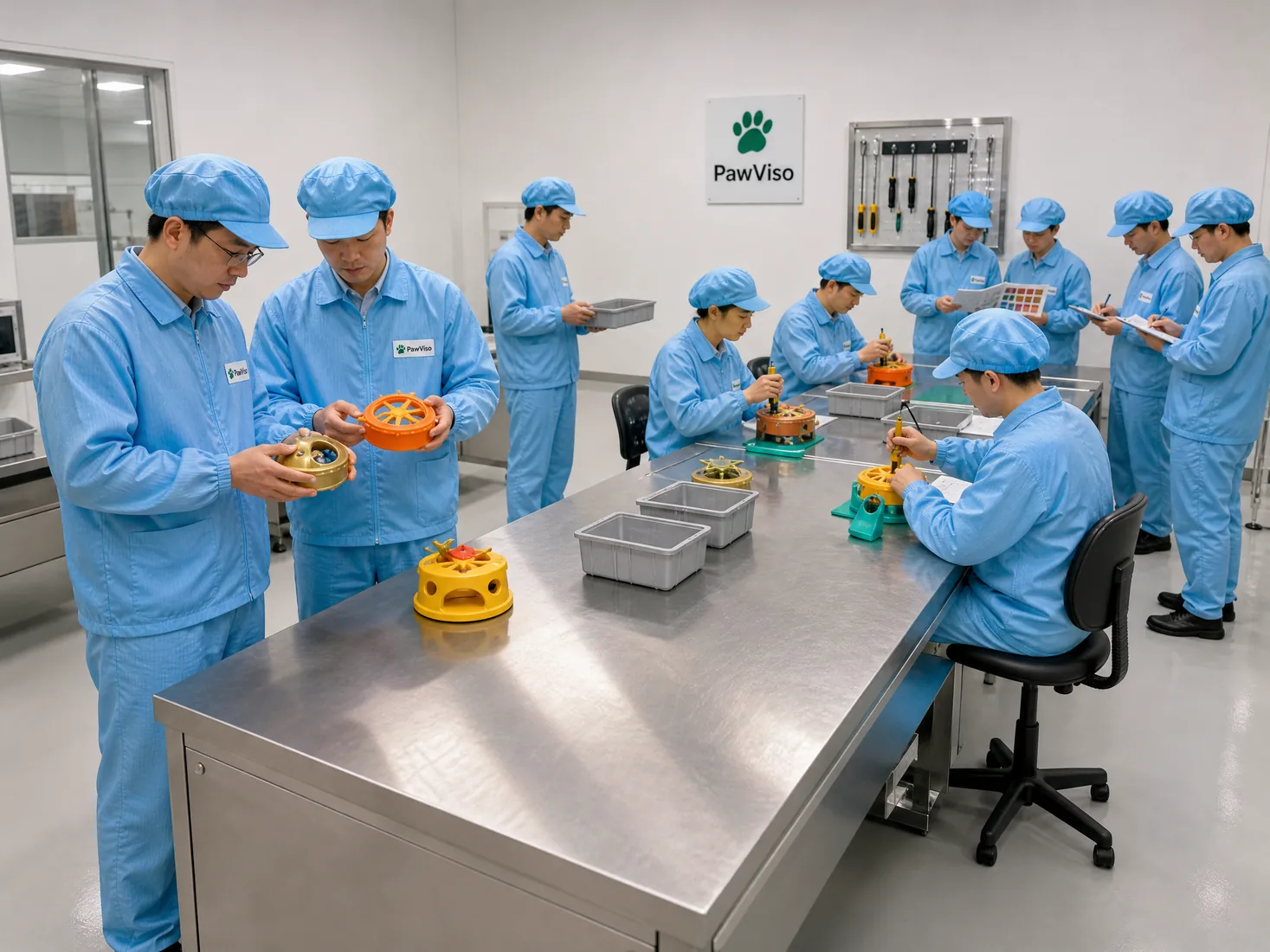
Transitioning a controlled pet product between factories or suppliers requires structured decision-making, readable evidence and deliberate handovers. This guide provides a modular framework for building a pet product supplier transition plan that protects product continuity, minimizes commercial disruption and documents factory transition evidence for traceability and approval. Buyer/importer confirmation is required for final product, claim, testing, documentation, contract and destination-market decisions.
Module 1 — Buyer intent and decision boundary
Define the transition objective and the limits of what will change. Common transition intents include cost, capacity, risk mitigation, compliance correction, or consolidation. Before you engage suppliers, document:
- The business driver (e.g., reduce lead-time risk, move to an alternate factory).
- Which attributes must remain unchanged (safety-critical materials, labeling, claims).
- Which attributes may change (secondary packaging, inner carton supplier, non-safety accessory variations).
- Acceptance criteria for go/no-go at each milestone.
Set a decision boundary that identifies which decisions the buyer will make and which the supplier may approve within agreed tolerances. A clear decision boundary prevents scope creep and ensures stakeholder alignment across product development, quality, sourcing, legal and sales.
Include stakeholders early: private-label product managers, compliance, QA, customs/import teams, and the buyer’s legal/contract lead. Assign a single accountable buyer lead to coordinate approvals and sign-offs. This person will own the pet product supplier transition plan and the final confirmation to import or ship.
Product continuity planning is a continuous activity during the transition: it spans design, validation, inventory, commercial terms and inbound logistics. Explicitly note any destination-market approvals or retailer acceptance that will be required and the evidence that will feed those approvals.
Module 2 — Scope, roles and evidence
Document the scope: which SKUs, which factories, which components and any excluded items. Map roles and responsibilities for each workstream—quality, commercial, packaging, logistics, regulatory/compliance and product development. Record required evidence for each role and milestone (see Module 3–6 for content types).
Typical role matrix (illustrative)
| Role | Responsibility | Evidence to produce |
|---|---|---|
| Buyer/Sourcing Lead | Final supplier selection, commercial terms | Signed confirmation, PO, acceptance checklist |
| Quality / QA | Define test/inspection plan, approve samples | Test results, inspection reports |
| Product Development | Approve component fit/function | Approved engineering samples, dimension drawings |
| Regulatory/Compliance | Verify labeling and claims | Certificates, safety test reports |
Note: the table above is illustrative; adapt roles to your organization.
Establish what constitutes acceptable evidence at each milestone: released technical drawing, golden sample, material certificates, batch-specific test reports, packaging dielines and artwork approvals, and inspection checklists. Make evidence requirements explicit and granular—release one step at a time.
If the product will carry environmental or sustainability marketing claims, any claim language must be backed by evidence that meets recognized standards; buyers should require supporting documentation and third-party verification where applicable 4. Include documentation requirements for claims in the scope so that suppliers cannot substitute unsupported materials or language.
All parties must understand the difference between an operational approval and a final buyer/importer confirmation. Operational approvals (factory-level release to begin manufacture) do not replace the buyer’s responsibility to confirm final product, claim, testing, documentation, contract and destination-market decisions.
Module 3 — Product and data control points
List and prioritize control points where change could affect safety, performance, compliance or market acceptance. Common control points include:
- Bill of materials (BOM) and material specifications.
- Critical dimensions and tolerances.
- Materials and finishes with restricted-substance implications.
- Labelling and GTIN/trade-item identification.
- Functional and safety-related components (e.g., closures, fasteners).
- Packaging and instructions for use.
Distinguish regulatory contexts. Guidance aimed at children’s toys has different regulatory intent and test methods; do not assume children's-toy guidance applies to a pet product without explicit legal review 2.
GTIN, UPC or other trade-item identifiers should be handled deliberately: changing a primary GTIN can have marketplace and logistics impacts. Document which items retain a GTIN, which will require new identifiers, and task the buyer to confirm any GTIN/trade-item identification strategy before purchase and listing 3. Use the buyer’s cataloging process to ensure SKU-to-factory provenance is captured.
Create a control-point checklist to track what must be identical, what can be equivalent and what is allowed to change. Example checklist (illustrative):
| Control point | Must remain identical | Can be equivalent | Evidence required |
|---|---|---|---|
| Core polymer for chew toy | Yes | No | Material COA, supplier spec |
| Outer carton artwork | No | Yes (buyer-approved) | Artwork proofs, print-run sample |
| GTIN | Buyer decision | N/A | GTIN assignment record 3 |
| Instruction manual | No | Yes (buyer-approved languages) | Approved PDF, proof |
Every control point should tie back to the decision boundary in Module 1. When the product contains parts that affect pet safety or human interaction, require stricter controls and supplier declarations.
Module 4 — Supplier communication and approvals
Communicate the plan and evidence requirements in writing before production transfer begins. A typical approval flow includes:
- Intent notification: buyer tells current and target suppliers of the planned transition and high-level timeline.
- Preliminary assessment: supplier provides capability statements, factory audit summaries, and reference production examples.
- Sample and documentation stage: supplier submits samples, material certificates, CAD/drawing releases and packaging mock-ups.
- Operational approval: buyer or designated QA grants permission to start production runs, often conditional on a pre-production inspection (PPI).
- Final buyer/importer confirmation: buyer reviews production samples and test evidence and gives final go/no-go for shipping or importing.
Document communication templates to avoid misunderstandings: an Intent to Transfer letter, a Request for Capability, a Detailed Evidence Request, and a Conditional Approval form. These documents should state exactly what evidence is required at each stage and who will sign.
Supplier changeover control is a specific discipline that defines how the supplier will execute change and what controls are in place to prevent undocumented substitutions. Require the supplier to maintain a change log with timestamps, responsible person, and associated evidence for every change that occurs during the transition. A concise supplier change log (illustrative) can be:
| Date | Change description | Responsible | Evidence filed |
|---|---|---|---|
| 2026-05-03 | Substituted inner bag material | QA Manager | Material COA v2, buyer approval pending |
Encourage suppliers to provide photographic or video evidence of tooling, first-article setups and in-process control points. Still images are useful, but paired side-by-side comparisons to existing production and measurements provide stronger factory transition evidence.
Insist that all approvals be captured with a timestamped electronic record or signature and that any conditional approvals explicitly list outstanding items. Remember: operational approvals are not the final confirmation. Buyer/importer confirmation is required for final product, claim, testing, documentation, contract and destination-market decisions.
Module 5 — Sample, packaging and operational checks
Samples are the primary way to validate that the new supplier can meet requirements. Define sample types and purposes:
- Engineering sample: for fit, assembly and functionality checks.
- Pre-production sample: made from production tooling and intended materials; used for testing and buyer review.
- Golden sample: signed-off reference sample kept by buyer and supplier.
- Packaging production sample: final printed pack and inner pack verification.
Establish a sample approval matrix that assigns decision authority, evidence required and permissible deviations. Example sample matrix (illustrative):
| Sample type | Who approves | Evidence required | Typical use |
|---|---|---|---|
| Engineering sample | Buyer PD | Dimensional report | Fit/function |
| Pre-production sample | Buyer QA + Use Test | Test reports, label proofs | Test and market sample |
| Golden sample | Buyer QA sign-off | Retained sample, photos | Ongoing comparison |
| Pack sample | Buyer Packaging | Dieline, CMYK proof, print sample | Import and retail readiness |
For packaging, require full artwork approvals and print proofs before bulk production. Confirm that barcode placement, GTIN mapping and regulatory information meet destination-market requirements. Document the acceptable tolerance for color, trim size and material—small changes in pack can affect retail placement and perceived quality.
Operational checks include run-rate validation, in-process quality checks, and first-article inspection (FAI). Define the FAI criteria and who will perform it—buyer QA, third-party inspector, or supplier QA under buyer oversight. Require the supplier to provide process flow diagrams, critical control points and in-line inspection frequency.
Factory transition evidence should include:
- Photographs of tooling and line set-up.
- Tooling serials or identifiers tied to production lots.
- Pre-production run records and process parameters.
- Retained golden sample and comparison report.
A small operational checklist for a PPI (illustrative):
| Item | Accept/Reject | Notes |
|---|---|---|
| Tooling ID matches records | ||
| First 50 pcs dimensions | ||
| Material COA on file | ||
| Packaging proof approved |
Require the supplier to produce this evidence and to allow remote or in-person inspection. Where the buyer cannot visit, insist on independent third-party inspection plus unedited video capture of key steps.
Module 6 — Quality controls and exception decisions
Define the transition quality plan and how exceptions will be handled. Use established quality-system practices as the baseline for inspection and sampling plans, non-conformance handling, and corrective actions 1. The plan should include:
- A sampling plan for pre-production and production lots (e.g., inspection levels and AQLs if used).
- Non-conforming product disposition rules (rework, reject, scrap).
- Root-cause analysis expectations and timelines for corrective action.
- Hold-and-release procedures for flagged lots.
Decision gates must specify who can approve exceptions and under what circumstances. For safety or compliance exceptions (e.g., a material substitution that affects test outcomes), only the buyer may authorize release following risk assessment. For non-critical aesthetic variations, define the tolerance band and allow the supplier to proceed if within limits.
Use a concise exception matrix to guide decisions:
| Issue type | Immediate action | Approval required | Escalation |
|---|---|---|---|
| Safety-critical non-conformance | Stop production, quarantine | Buyer + QA | Legal & Compliance |
| Labeling/Artwork mismatch | Hold shipment | Buyer sign-off | Retailer notification (if required) |
| Minor cosmetic variation | Document & evaluate | Supplier QA | Buyer if outside tolerance |
Require documented corrective action plans with timelines and verification steps before any exception is closed. Maintain an exceptions log as part of the project file; this becomes part of factory transition evidence.
Testing strategy should be explicit: which tests are required, sample sizes, accredited labs, and whether batch-specific test certificates are needed. Include the buyer’s acceptance criteria and who bears the cost—a contractual decision (see Module 7) and one that requires buyer/importer confirmation before tests or releases proceed.
Where applicable, run a pilot production batch and route samples to the same labs and test setups used for the original factory to enable direct comparison. If different test methods are necessary due to material or process changes, document the rationale and buyer approval.
Module 7 — Commercial and change-control tradeoffs
Evaluate commercial tradeoffs alongside technical control. The contract should allocate cost, risk and responsibility for tooling, testing, inspection, returns, obsolescence and inventory write-offs. These allocations are contractual decisions and should be explicit in the purchase order or transition addendum 5.
Key commercial considerations:
- Tooling ownership: who owns and maintains tooling? Define transfer or duplication terms.
- Sample and testing costs: who pays for pre-production tests, re-tests and retain samples?
- Inventory disposition: who pays for residual inventory at the outgoing supplier?
- Warranty and liability: how are defects discovered post-shipment handled?
Create a simple decision table to weigh options (illustrative):
| Option | Pros | Cons | Typical buyer decision factor |
|---|---|---|---|
| Buyer funds duplicate tooling | Faster parallel production | Higher upfront cost | Speed to market |
| Supplier funds tooling | Lower buyer cash outlay | Supplier may limit rights | Long-term relationship trust |
| Buyer pays testing | Ensures independent lab choice | Higher cost | Regulatory risk tolerance |
| Supplier pays testing | Lower buyer cost | Potential conflict of interest | Contractual guarantees |
Change-control tradeoffs—how strictly you enforce “identical” vs “equivalent”—are commercial as well as technical. A stricter approach reduces risk to continuity but can increase cost and lead times; a looser approach can lower cost but requires stronger evidence and contingency plans.
Document any financial responsibilities for rework, returns or test failure. Tie these terms to conditional approval gates so that responsibility is clear when decisions are made. Use the contract to record who bears costs for corrective actions and retesting; ensure buyer/importer confirmation is captured before contractual sign-off 5.
Module 7 is also the place to plan for intellectual property, tooling custody, and confidentiality protections in the transition. Record expectations for tooling maintenance, spare parts and end-of-life handling.
Module 8 — Logistics, handover and record retention
Plan logistics handover and retention of records in a way that supports traceability and potential recalls. Key logistics items:
- Minimum and maximum inventory levels to cover in-flight production during cutover.
- Transit and lead-time buffers based on historic performance.
- Lot and batch numbering conventions tied to factory and tooling identifiers.
- Customs and import paperwork requirements for the destination market.
Handover checklist (illustrative)
| Handover item | Who provides | Retention requirements |
|---|---|---|
| Tooling records & images | Supplier | Buyer retains copy |
| Golden samples | Supplier + Buyer | Retained 24 months minimum (buyer decision) |
| Batch test certificates | Supplier | File with shipment records |
| Packing list & GTIN mapping | Supplier | Retain per customs requirement |
Decide record retention periods based on business needs, regulatory obligations and retail contracts. Document where physical samples will be stored and who controls access. Ensure that lot-level traceability is possible from finished goods back to material COAs and production records.
For complex transitions, plan a staged logistics handover: initial pilot consignments, limited regional releases, and then full-scale distribution. Use controlled shipments with tagged lots and maintain separate stock-keeping units if necessary until the new supplier is proven.
Factory transition evidence must be filed in a searchable system (ERP, PLM or document-management system). Required documents typically include signed approvals, sample photographs, test reports, inspection reports, tooling documentation and any email approvals. Ensure document naming conventions and metadata (supplier, factory, date, SKU, lot number) are consistent so evidence can be retrieved quickly if issues arise.
Record retention and access rights should be part of the contract and recorded in the supplier change log. Buyers should retain final copies of all evidence needed for audit, retailer queries or regulatory review.
Module 9 — Buyer implementation plan
Turn the modules into an implementable schedule with milestones, owners and handover criteria. The implementation plan should be a living document with the following sections:
- Executive summary and objective.
- Scope and decision boundary (from Module 1).
- Roles and contact list.
- Timeline with milestone dates.
- Evidence list tied to approval gates.
- Commercial terms summary.
- Risk register and mitigation actions.
- Communication protocol.
Milestone example (illustrative)
| Milestone | Target completion | Owner | Required evidence |
|---|---|---|---|
| Supplier capability accepted | Week 1 | Buyer Sourcing | Audit summary, capability statement |
| Pre-production sample approved | Week 3 | Buyer QA | Pre-pro sample, test reports |
| Pilot shipment received | Week 6 | Logistics | Packing list, batch test cert |
| Full commercial production | Week 10 | Buyer Sourcing | Production test + inspection |
Develop a risk register that documents key risks, likelihood, impact and mitigation. Include contingency suppliers if applicable. Assign a single owner to each mitigation action and require periodic status updates. Example risks include material lead-time interruption, test failures, tooling damage and artwork delays.
Communication cadence should be regular and documented: weekly status calls during the critical phases, escalation process for issues, and a sign-off meeting for each milestone. Keep minutes and link them to the project evidence folder.
Crucially, the implementation plan must require buyer/importer confirmation at the final gate before any product is released for broad distribution or import. That confirmation must reference the amassed factory transition evidence and commercial terms and be recorded in writing.
Product continuity planning should be revisited after the transition is complete to update ongoing monitoring plans and incorporate lessons learned into future changeover control procedures.
Module 10 — Frequently asked questions
Q1 — What is the minimal evidence I should require before approving a new supplier for an existing pet product?
Minimal evidence varies by product risk profile, but as a starting point require: pre-production sample from production tooling (signed), material COAs for critical materials, full packaging proofs, and third-party or accredited-lab test reports for safety-relevant characteristics. The buyer must confirm whether this is sufficient given their market and product specifics.
Q2 — Can the supplier’s own QA sign-off be enough to start production?
Supplier QA sign-off is a useful input but should not replace buyer-controlled approvals. Accept supplier QA sign-off for internal process confirmation, but require independent evidence (samples, third-party tests, or buyer inspections) linked to conditional approvals before large-volume production or shipment. Final go/no-go rests with the buyer/importer.
Q3 — How do I handle a small aesthetic variation that the supplier asks to implement?
Document what counts as “aesthetic” vs “functional.” If within pre-agreed tolerance, permit a controlled release with documented photographic evidence and updated blamed-for tolerances. If outside tolerance, require a corrective action and buyer approval. Keep an exceptions log and specify the decision authority in the implementation plan.
Q4 — What records do I need to retain and for how long?
Retention periods depend on contractual, retailer and regulatory requirements. At a minimum, retain: pre-production and golden sample records, batch test certificates, inspection reports, tooling documentation and signed approvals. Determine retention length based on your risk profile and any contractual obligations; record retention responsibilities explicitly in the transition plan.
Module 11 — Conclusion and buyer action plan
Supplier changeover control for pet products is a combination of technical, commercial and documentary discipline. The buyer’s job is to set clear decision boundaries, require appropriate factory transition evidence, and confirm final product, claim, testing, documentation, contract and destination-market decisions before import or full distribution.
Immediate buyer action checklist:
- Finalize the decision boundary and obtain stakeholder sign-off.
- Produce a scope document listing SKUs, control points and acceptance criteria.
- Send the supplier communication pack with evidence requirements and templates.
- Schedule an initial pilot/engineering sample and identify the lab and inspectors.
- Clarify contractual allocations for tooling, testing, inventory and exceptions 5.
- Establish a document-retention folder with naming conventions and metadata.
Keep the plan practical: use concise evidence lists, clear approval gates and unambiguous decision authorities. Maintain the records that demonstrate factory transition evidence and the chain of approvals. Remember that every transition should be reviewed in the context of the buyer’s market requirements and final confirmations; buyer/importer confirmation is required for final product, claim, testing, documentation, contract and destination-market decisions.
Authoritative quality systems and audit best practices provide guidance on controls and inspections—refer to established quality-system frameworks as appropriate when defining inspection and exception processes 1. If trade-item identification changes are involved, ensure GTIN/trade-item identification decisions are recorded and mapped to SKUs 3. When differentiating regulatory guidance, confirm whether children’s-toy guidance is relevant before applying it to a pet product 2. For environmental or sustainability claims, require evidence that meets recognized standards and third-party verification where appropriate 4. Finally, record all buyer/supplier allocations for costs, risk and responsibilities in contract terms to avoid later disputes 5.
Use this modular approach as a template: adapt each module to the specific product, market and internal governance of your organization.
Final CTA — Prepare a focused supplier evaluation brief with PawViso.
Share the intended product or process scope, target channel, evidence already available, packaging direction and order structure for a practical B2B discussion.
Email: info@PawViso.com
WhatsApp: +86 186 8106 4480
Related PawViso resources
- Continue with How to Control Material Changes in Pet Product Sourcing for a related buyer-controlled sourcing route.
- Browse the PawViso product catalogue to identify relevant product formats for an enquiry.
- Follow the PawViso sourcing process and review the B2B buyer FAQ before sharing project requirements.
External reference
For product identification and supply-chain data context, review GS1 guidance on Global Trade Item Numbers (GTINs). Confirm the product- and channel-specific records required for the selected SKU.