
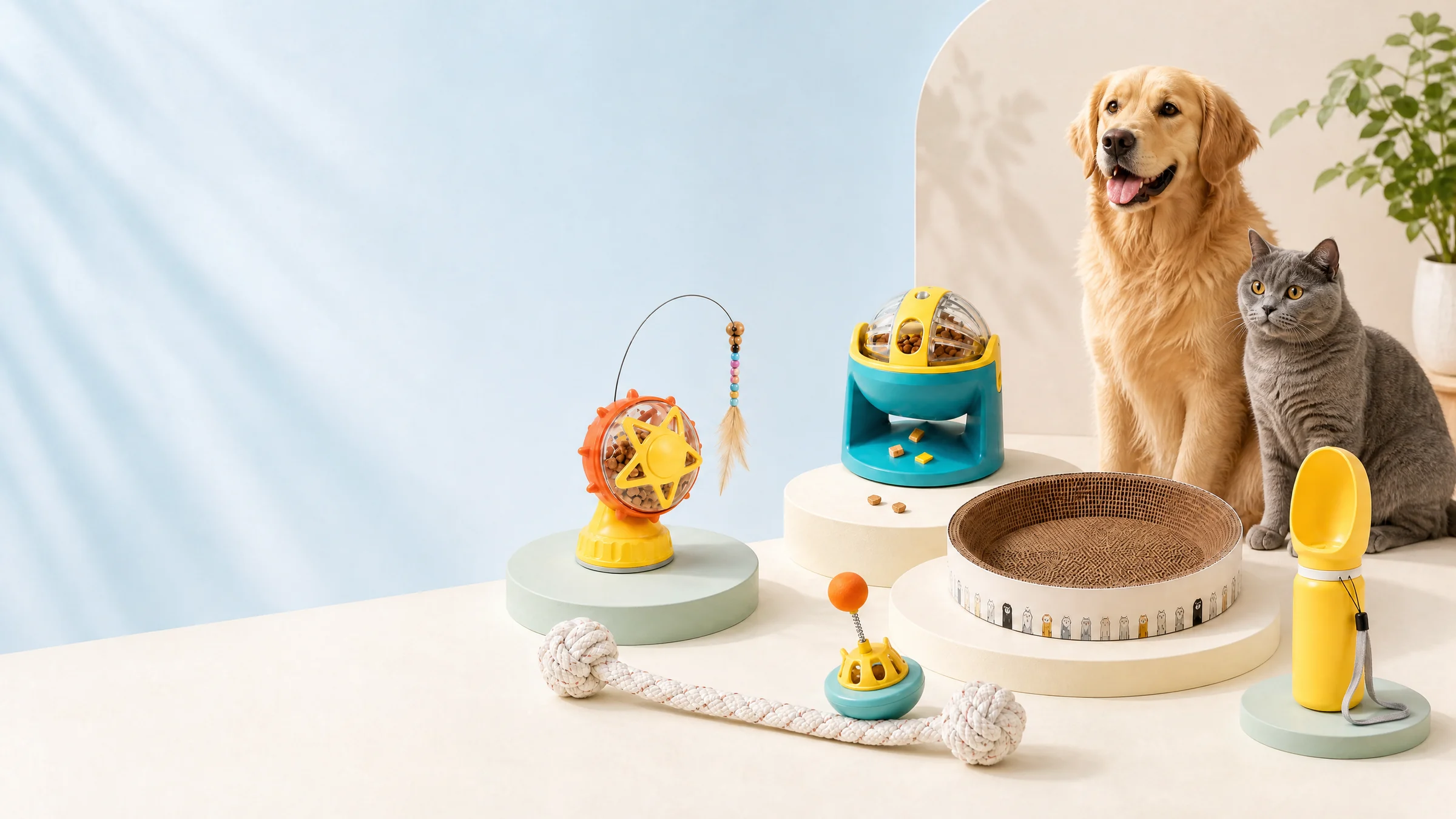
Yes—a well-designed cat tree can help protect furniture from scratching, but it cannot guarantee that a cat will stop using a sofa, rug, door frame, or other household surface. Scratching is a normal feline behavior used for stretching, claw maintenance, communication, and scent marking. The practical goal is to give the cat a more attractive and stable place to perform that behavior, then make the furniture less rewarding by comparison. 1 2
For owners, this means choosing more than a tower with platforms. For B2B buyers, it means evaluating the scratching function as carefully as the visual design: surface material, orientation, stability, placement flexibility, cleanability, and replacement possibilities all affect whether the product is likely to be used.
Why cats scratch furniture in the first place
Scratching is not simply a bad habit. A cat may scratch after waking, near a sleeping area, along a route through the home, or beside a socially important doorway. The action provides a full-body stretch and leaves visible and scent signals. If a sofa corner is tall, firm, prominent, and located in a cat’s daily pathway, it may be more appealing than a small post placed in an unrelated corner. 1 3
A cat tree can respond to several of these preferences at once. It may place a vertical surface at a useful height, create a familiar resting area nearby, and give the cat a prominent location from which to observe the room. However, individual preferences vary. Some cats prefer horizontal cardboard or carpet-like surfaces, while others seek vertical sisal or another textured material. Offering choice is often more realistic than expecting every cat to use one universal design.
How a cat tree may protect sofas and other furnishings
It provides a designated scratching surface
The most direct benefit is substitution. A built-in scratching panel or post gives the cat an approved target instead of leaving the sofa as the easiest option. The surface should be long enough for a comfortable stretch, firmly attached to the frame, and positioned so the cat can apply force without the post sliding or tipping.
Product teams should avoid assuming that one material or orientation fits every market and household.
It combines scratching with resting and climbing
Cats may use furniture because it is already part of a valuable routine. A sofa can be a place to scratch, rest, interact with people, and survey the room. A cat tree that combines scratching, perching, hiding, and resting can offer a broader alternative. It can give the cat more reasons to approach.
It can redirect behavior through placement
Placement is often as important as construction. A new post hidden behind a cabinet may be ignored, while one placed beside the previously scratched sofa arm may be noticed immediately. International Cat Care recommends positioning scratching resources in relevant areas and, in multi-cat homes, providing enough options for individual choice. 3
Owners can gradually move a frequently used post after the cat begins using it. Any change should be observant and gradual rather than based on a promise of instant behavior change.
What to evaluate before choosing a cat tree
The following checklist separates features that directly influence scratching use from features that mainly affect convenience or merchandising.
| Evaluation area | Questions for owners and buyers | Why it matters |
|---|---|---|
| Scratching orientation | Does the design include vertical, horizontal, or angled surfaces? | Different cats show different scratching preferences. |
| Surface construction | Is the scratching material securely attached and replaceable where appropriate? | Loose or rapidly damaged material may reduce appeal and create maintenance concerns. |
| Stability | Does the base remain steady during vigorous stretching and climbing? | A wobbling structure may discourage use and can create a safety concern. |
| Dimensions | Is the post tall or broad enough for a meaningful stretch without crowding? | A cramped surface may be less attractive than a sofa side. |
| Placement options | Can the tree sit near a sofa, doorway, window, or sleeping area? | The product must fit the locations where scratching actually occurs. |
| Cleaning access | Can fur and debris be removed from platforms, fabric, and corners? | Easier routine care supports continued household use. |
| Household fit | Does the footprint suit the room and the number of cats? | A large product that cannot be positioned well may underperform. |
| Information quality | Are assembly, use, care, and safety instructions clear? | Clear information helps reduce misuse and supports responsible retailing. |
For sourcing teams, these questions belong in a validation checklist. Do not publish exact materials, dimensions, test results, certifications, pricing, MOQ, lead time, or compliance statements until they are confirmed for the specific item and market.
Practical ways to improve redirection
Start by observing where, when, and how the cat scratches. Record whether the target is vertical upholstery, a horizontal rug, a rough door frame, or another surface. Then place a suitable scratching option close to that location. A cat may be more interested when the resource is near a familiar resting place or route rather than isolated in a low-traffic area.
Positive encouragement can help. When the cat investigates or uses the approved surface, an owner can calmly reinforce the behavior in a way the cat enjoys. The household should avoid shouting, physical punishment, or forcing the cat’s paws onto a post. Those responses may increase fear and do not teach the preferred alternative.
Furniture can also be made temporarily less attractive with humane, removable barriers or protective coverings, provided they are secure and do not create entanglement or ingestion risks. The purpose is to support redirection, not to trap, frighten, or injure the animal. If a cat tree becomes damaged, owners should inspect it regularly and follow the product’s care and replacement guidance.
A sudden change in scratching, pain, a damaged claw, limping, bleeding, or suspected injury deserves professional attention. Consult a veterinarian for health concerns or a qualified behavior professional for persistent behavior problems. This article is general information, not a diagnosis or treatment plan.
Owner and buyer decision criteria
An owner should prioritize the cat’s observed preference, the furniture location, the available floor area, and the household’s ability to maintain the product. A compact horizontal scratcher may be more useful than a tall tree if the cat consistently targets carpets. Conversely, a stable vertical structure may be a better match for a cat that reaches up against a sofa arm.
A retailer or distributor should also assess packaging, assembly clarity, replacement parts, cleaning instructions, product photography, and claim substantiation. A product page should describe redirection support, not promise furniture protection for every cat. For private-label or wholesale enquiries, PawViso-related product details must be confirmed case by case before any commercial commitment is made.
Frequently asked questions
Will a cat tree completely stop a cat from scratching the sofa?
No. A cat tree may redirect scratching when its surface, orientation, stability, and placement match the cat’s preferences, but scratching remains normal behavior. Some cats may continue to use more than one surface.
Should a cat tree be placed next to the furniture being scratched?
Often, starting nearby is sensible because it places the alternative at the point of existing interest. After consistent use, the owner may try moving it gradually. The best position depends on the cat’s routine and the room layout.
Is sisal always the best scratching material?
Not necessarily. Sisal is common, but cats can prefer cardboard, wood, carpet-like textures, or other surfaces. Buyers should consider offering different textures and should verify the construction quality and care requirements of the specific product.
How many scratching areas does a multi-cat home need?
There is no single universal number for every household. Each cat should have meaningful access to suitable resources, with additional options helping reduce competition and provide choice. International Cat Care discusses providing multiple scratching locations in multi-cat homes. 3
What if scratching suddenly changes or appears painful?
Do not assume it is only a training issue. If scratching is accompanied by pain, limping, bleeding, a damaged claw, or another concerning sign, consult a veterinarian. For ongoing behavior concerns without obvious injury, a qualified behavior professional can provide individualized guidance.
Conclusion
A cat tree can protect furniture indirectly by giving cats a stable, appealing place to scratch before the sofa or carpet becomes the default. Its effectiveness depends on matching the cat’s preferred orientation and texture, placing the product where the behavior occurs, maintaining stability, and reinforcing appropriate use without punishment. For product buyers, the strongest evaluation is therefore functional: inspect the scratching surface, frame stability, dimensions, placement options, care access, and documentation—not just the silhouette or number of platforms.
For a cautious B2B discussion of cat furniture specifications, care information, or sourcing requirements, contact PawViso. Product availability, materials, dimensions, pricing, MOQ, lead time, and compliance should be confirmed for each enquiry before publication or purchase.
References
- 1ASPCA — Destructive Scratching
- 2The Ohio State University Indoor Pet Initiative — Scratching
- 3International Cat Care — Scratching on Furniture and Carpets
- 4AAFP and ISFM Feline Environmental Needs Guidelines
Review pending: PawViso Editorial Team should verify all product-specific statements, links, claims, and market requirements before publication.
道具用量: 1201 weighted tokens left