
Comparing pet supply brands for a wholesale program requires more than collecting catalogue links and unit-price quotations. Importers, retailers, distributors, and private-label buyers need to compare the same product assumptions, documentation requests, packaging requirements, and approval steps. A structured review helps distinguish a useful sample from a supplier relationship that is commercially workable for a particular channel and destination market.
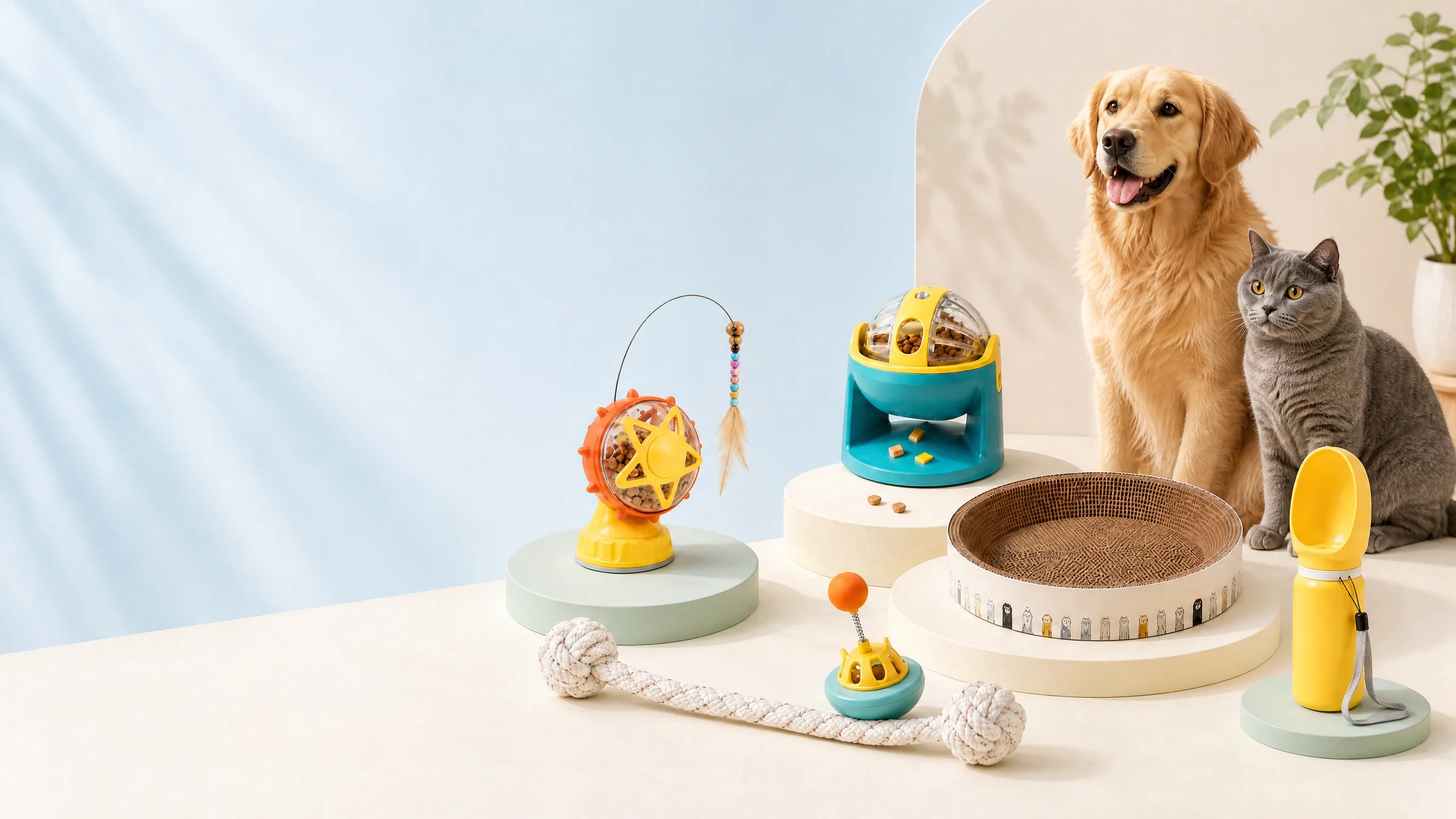
This guide applies to categories such as interactive puzzle toys, cat scratching boards, teaser toys, grooming tools, cotton-rope tug toys, travel water bottles, and slow-feeding bowls. A slow-feeding bowl is treated here as a non-food pet accessory: the comparison concerns the physical product, materials, construction, cleaning information, packaging, and market documentation—not food, recipes, feeding quantities, nutrition, allergies, medical matters, or veterinary advice. Actual specifications, materials, packaging, compliance documents, MOQ, pricing, and lead times must be confirmed with the supplier and buyer for each SKU and destination market.
What should the buying brief define before supplier comparison?
Before contacting brands, define the sales channel, intended market, customer segment, price architecture, launch quantity, packaging language, and required documentation. A specialty retailer may need shelf-ready dimensions and a coherent visual range. An e-commerce distributor may focus on protective packaging, product photography requirements, carton data, and fulfilment constraints. A private-label buyer may also need artwork control, barcode coordination, approval samples, and written rules for changes between orders.
The brief should identify the exact product families under review. For a slow-feeding bowl, for example, record the intended accessory use, size options, surface features, cleaning instructions to be verified, and packaging claims that may require review. Do not ask suppliers to compare unlike products. Send the same brief to each candidate and mark every response as confirmed, conditional, or awaiting evidence.
How can buyers compare product fit rather than catalogue size?
A large catalogue does not by itself demonstrate suitability. Review whether the proposed assortment makes sense for the channel: complementary categories, consistent presentation, manageable packaging variation, and clear differentiation between price tiers. Compare the physical sample with the quoted specification, including dimensions, visible finish, components, logo application, assembly, and packaging route.
Ask for samples that represent the version being considered for production. If a later change affects material, construction, color, packaging, or branding, request a new approval record. Descriptions such as durable, safe, washable, non-toxic, or suitable for a particular animal should not be treated as automatic credentials. The buyer and supplier should define the claim, identify the evidence required, and confirm whether the wording is permitted in the destination market.
Which evidence should appear in a supplier comparison matrix?
The following matrix provides a neutral first-round framework. Empty fields are intentional: technical and commercial information must be confirmed with the supplier and buyer rather than inferred from a general catalogue.
| Comparison area | Questions for the buyer | Evidence or confirmation to request |
|---|---|---|
| Product fit | Does the SKU match the channel, use case, and target price tier? | Current specification, sample reference, product images |
| Materials and construction | Are materials, components, finish, and intended accessory use clear? | Written specification and approved sample |
| Packaging | Is the pack suitable for shelf display, e-commerce, and export handling? | Dieline, artwork requirements, carton details, packing photos |
| Customization | What may change: logo, color, packaging, bundle, or form? | Written scope, artwork workflow, and approval gates |
| Quality control | How are incoming materials, in-process work, and finished goods checked? | Applicable inspection steps, records, and defect procedure |
| Compliance file | Which destination-market rules and documents apply? | Relevant reports, declarations, labels, and traceability records |
| Commercial terms | Can the order support a controlled launch and reorder? | MOQ, quotation validity, payment, packing, and freight assumptions |
| Communication | Who owns samples, artwork, updates, and corrective actions? | Named contacts, escalation route, and change-control method |
For U.S. programs, the U.S. Consumer Product Safety Commission explains that businesses must understand their product-safety responsibilities and applicable certification requirements.1 The exact document depends on the product and rules that apply; one certificate should not be assumed to cover an entire catalogue. Ask the supplier to identify the product scope, testing basis, issuing party, and date, then have the importer or qualified compliance adviser review the final file.
How should buyers evaluate private-label readiness?
Private label adds operational decisions beyond selecting an existing product. Compare how each supplier handles artwork versions, logo placement, color references, translations, barcodes, carton marks, and approval samples. Record which changes are technically possible, which require separate confirmation, and which may alter packaging or compliance review.
Ask how buyer-approved specifications are controlled across reorders and how substitutions are communicated. Confirm ownership and permitted use of artwork, molds, photographs, product names, and packaging files in written purchase documents. Exclusivity, territory, tooling, and intellectual-property arrangements should never rest on a verbal promise; they require written terms reviewed by the buyer’s procurement or legal team.
How can a buyer assess total landed risk?
A useful comparison includes more than factory price. Build a product-level cost view covering sampling, packaging changes, inspection, freight assumptions, duties, local testing, relabeling, storage, and possible rework. These variables depend on quantity, destination, incoterm, packaging route, and order timing, so all figures must be confirmed with the supplier and buyer rather than copied from a generic quotation.
Operational fit is equally important. Ask what happens if artwork changes after approval, a sample is rejected, a carton is damaged, or a quality issue appears before shipment. Agree on the evidence required, responsible contact, approval point, and corrective-action path. The OECD describes due diligence as an ongoing process for identifying, preventing, mitigating, and accounting for adverse impacts in business operations and relationships.2 In sourcing practice, that means recording risks, requesting proportionate evidence, documenting decisions, and following up on open items.
What is a practical first-order workflow?
Start with a shortlist based on category coverage and the destination-market brief, not unsupported rankings or “best” labels. Send identical questions to each candidate and score the replies against the same matrix. Select samples around the most important commercial risks, such as material clarity, packaging protection, branding control, or documentation gaps. Review the sample, specification, packaging mock-up, and available evidence as one approval package.
Before placing an order, record the exact SKU version, materials, dimensions, colors, logo treatment, packaging language, inspection expectations, and unresolved questions. Confirm the applicable market requirements with the importer and qualified advisers where necessary. A supplier comparison is complete only when the buyer knows what is confirmed, what is conditional, and what still requires written agreement.
Frequently asked questions
Is the lowest quotation the best basis for choosing a wholesale supplier?
No. Price is one comparison input. Product fit, sample consistency, packaging, documentation, communication, change control, and the cost of correcting a problem may materially affect the commercial result. Compare equivalent specifications and assumptions, and confirm all commercial terms with the supplier and buyer.
Should a private-label buyer select the supplier offering the lowest MOQ?
Not automatically. A lower MOQ may support a controlled test, but the buyer should also confirm sample fidelity, packaging setup, reorder terms, evidence requirements, and quality-control procedures. MOQ, pricing, and lead time are SKU- and order-specific and must be confirmed with the supplier and buyer.
Can one certificate cover every item in a pet-supply catalogue?
Do not assume so. Applicable requirements and documents can vary by product, materials, claims, destination, and sales channel. Request product-specific evidence and arrange importer or qualified compliance review before sale.1
What should be recorded after sample approval?
Record the approved sample reference, specification, packaging artwork, logo placement, color information, inspection criteria, open deviations, and the person approving each item. This record gives both parties a shared reference for production and reorders.
How can buyers begin a PawViso sourcing discussion?
Buyers comparing pet supply brands can use this framework to prepare a focused enquiry covering categories, intended market, channel, branding requirements, packaging expectations, and launch assumptions. PawViso-related product availability, materials, customization scope, documentation, MOQ, pricing, and lead time are not assumed in this guide; each detail should be confirmed with the supplier and buyer for the requested SKU.
Contact PawViso with the destination market and buying brief so the relevant questions can be reviewed before quotation, sampling, and approval.
Related PawViso resources
- Continue with How to Build a Private Label Pet Product Line. Use this guide to connect customization, packaging and MOQ decisions.
- Browse the PawViso product catalogue to identify product formats for a sourcing brief.
- Follow the PawViso sourcing process and review the B2B buyer FAQ before sharing project requirements.
External reference
For independent product identification and barcode context, review GS1 guidance on Global Trade Item Numbers (GTINs). Confirm the requirements that apply to the selected product, target market and order.