
Introduction
Direct answer: A structured reorder-review process should let the buyer decide whether to continue, tweak or discontinue an SKU using sales feedback, quality inputs, inventory position, commercial terms and controlled change steps. Use a modular checklist that captures sales data, quality findings, packaging and regulatory needs, inventory economics and a clear change-control path. From a Chinese factory and procurement-partner perspective, we recommend a documented decision agenda, supplier proposals tied to quotes, verified sample gates, a defined inspection scope for release, and a post-shipment learning loop to close the feed-back cycle.
Explanation and next steps: Begin with two immediate actions—(1) gather the last 6–12 months of sell-through and returns data and pair it with quality incident records from the factory, and (2) run a rapid SKU review workshop with procurement, sales, supplier quality and operations to agree measurable decision triggers (sales rate, complaint rate, MOQ fit, lead time and landed cost). Record decisions and required evidence in a single reorder-review record that travels with the PO and future change requests. This article lays out an 11-module buyer-led workflow, supplier inputs, supplier/buyer ownership, and practical sample, quote and inspection controls you can adopt for repeatable pet product reorder planning.
Module 1 — Sales feedback and SKU continuation decision
Direct answer: Decide first whether sales performance alone justifies continuation. If weekly or monthly sell-through meets your threshold, continue; if not, the default decision is to pause automatic reorders until corrective changes (pricing, pack size, marketing) are confirmed. Require the buyer to produce a short sales-performance brief and the supplier to provide any production-related constraints that affect availability.
Explanation and evidence: Sales feedback should be structured: sell-through %, reorder frequency, velocity per channel, returns and customer comments. The factory can supply production consistency metrics (on-time delivery, lead-time variability, scrap rate) but should not be expected to judge market fit. Pair sales statistics with quality incident logs from the supplier — e.g., percentage of lots with nonconformance and common failure modes — then weigh those against target KPIs. Documented thresholds such as “less than X% return rate and Y units/month” should be buyer-defined.
Tradeoffs and practical next steps: If you continue an SKU without change, reduce risk by confirming minimum run-sizes, lead time commitments and an inspection plan. If you pause or discontinue, capture the reasons (price, packaging, function, safety reports) and assign tasks: marketing to test relaunches, product development to propose changes, and supplier to stop raw-material allocations. Create a compact action log with owner and target date to avoid lost decisions.
Table: Roles in the decision
| Decision item | Buyer role | Supplier/Factory role |
|---|---|---|
| Sales performance brief | Provide data and threshold decision | Review capacity impact |
| Continue/hold/discontinue | Final decision maker | Provide supply constraints |
| Immediate corrective actions | Specify required actions | Propose technical fixes and cost impact |
Module 2 — Quality feedback: accept, rework or reject incoming lots
Direct answer: Make acceptance criteria explicit. The buyer must decide whether nonconforming lots will be accepted with rework, returned, or rejected. Use defined gates (minor vs major defects), documented rework instructions from the buyer, and a cost-recovery agreement documented before shipment.
Explanation and evidence: Quality feedback comes from two sources: post-sale customer complaints and incoming inspection at buyer warehouses or third-party inspection results. The supplier should maintain nonconformance records and present root-cause analysis when requested. Distinguish between cosmetic deviations that can be reworked at the factory and functional failures that require a stop-sale. The management system used by the supplier and buyer should be considered separately from SKU conformity: system certification (e.g., ISO 9001) indicates process controls but does not guarantee individual SKU conformity. Cite management system standards as system-level evidence only 1.
Tradeoffs and practical next steps: Accepting a lot with factory rework avoids production waste but requires clear rework scope, SOPs and verification samples. Returning lots delays replenishment. For every nonconformance event, require the supplier to submit a corrective action plan with timeline and verification sample. Record financial responsibilities and who covers inspection and logistics costs.
Table: Quality decision controls
| Nonconformance type | Typical buyer choice | Supplier input required |
|---|---|---|
| Cosmetic, reworkable | Accept with rework instructions | Rework SOP, photos, verification sample |
| Performance failure | Reject and investigate | Root cause, containment, replacement plan |
| Packaging damage | Accept if repackable | Repacking process and inspection evidence |
Module 3 — Product identification, SKU data and master data decision
Direct answer: Confirm whether the existing SKU identifiers, GTINs, barcodes and packaging labels remain usable or must be changed. The buyer decides whether to retain the same GTIN or request a new one. The supplier must provide sample labels and a barcode image for verification.
Explanation and evidence: Product identification affects downstream systems for retail and distribution. The buyer owns GTIN/UPC decisions and should confirm master-data changes with trading partners; the supplier provides label proofs and print-ready files. Use GS1 GTIN guidance when discussing barcode and item-identification changes 2. Any change to net contents, dimensions, or the primary identifier requires a formal change notice because ERP and retailer feeds will need updates.
Tradeoffs and practical next steps: Changing an identifier will reduce confusion but increases SKU setup time and can disrupt F&B/retailer feeds. If the buyer wants a new GTIN, include a lead time in the reorder review and allocate a short run for updated labels. Confirm who prints labels (buyer-supplied vs supplier-printed) and document label approval sign-off steps including sample label attachment to the reorder-review record.
Module 4 — Packaging decisions and claims or labelling changes
Direct answer: The buyer must approve any primary or transit packaging change and any marketing claims printed on packaging. Request supplier proofs and pre-production samples for packaging, and set a separate approval gate for label claims. If a packaging change affects regulatory content or country-of-sale requirements, the buyer must confirm market acceptability before production.
Explanation and evidence: Packaging changes can be purely cosmetic, protective, logistical (e.g., different carton dimensions) or marketing-related (claims, ingredient lists). Regulatory and marketplace confirmations are the buyer/importer responsibility—bring market confirmation for compliance with local product-safety or claim rules 3. Any environmental or performance claim on packaging is a buyer-controlled claim and must be defined with evidence requirements in the reorder record; follow guidance on marketing and environmental claims when specifying evidence needed 4.
Tradeoffs and practical next steps: More protective packaging reduces transit damage but increases cost. Changing artwork may require new plate-making and lead times. Ask the supplier for a packaging cost-impact statement and a mock-up sample. For claims, require substantiation documents (test reports, lab certificates) from the buyer or third-party labs — do not rely solely on supplier assertions. Record who will retain the original packaging proofs and the approval timestamps.
Table: Packaging approval gate (compact)
| Gate | Buyer deliverable | Supplier deliverable |
|---|---|---|
| Artwork approval | Final artwork file, claims list | High-res dieline mock-up |
| Structural approval | Packaging spec confirmation | Pre-production sample photo |
| Transit pack approval | Accept/reject transit test | ISTA or equivalent test plan 5 |
Module 5 — Inventory, reorder quantity and safety stock decision
Direct answer: Use combined inventory and sales forecasts to set the reorder quantity and any safety stock. The buyer decides reorder quantities; the supplier provides minimum run sizes and lead-time constraints. Confirm target days-of-cover and agree a buffer that accounts for production and freight variability.
Explanation and evidence: Inventory decisions should tie to realistic lead-time numbers and variability from supplier performance. Supplier-provided lead-time reliability metrics help the buyer set safety stock. Avoid using theoretical lead times; instead use historical lead-time distributions from supplier records to compute safety stock. Capture both production lead time and total replenishment lead time (factory ready to arrival), and document the assumed transit times.
Tradeoffs and practical next steps: Larger orders reduce unit cost but increase holding cost and risk of obsolescence. For slow-moving SKUs, consider smaller, more frequent reorders with negotiated run sizes, or plan a phase-out timetable. Document agreed reorder quantity, acceptable lead times, and the revision date for next review in the reorder-review record.
Module 6 — Commercial inputs: price, payment terms and lead-time confirmation
Direct answer: The buyer must confirm price, payment terms, and lead time before releasing the PO. Request firm written quotes from the supplier with clear validity windows and any conditional pricing for design or material changes. Treat the supplier quote as an input to a commercial decision that the buyer finalizes.
Explanation and evidence: Supplier quotes should be itemized: unit price, tooling amortization (if any), packaging, inspection fees, freight responsibility, and any change costs. Require the quote to include lead-time commitments and the specific trade terms (Incoterms) that define handover and responsibilities. Use Incoterms 2020 guidance to confirm handover and cost allocation 6. Keep quotes tied to a versioned spec so that price changes after a spec change are traceable.
Tradeoffs and practical next steps: Shorter lead times generally increase price. Negotiate clearly which party pays for inspection, testing, and rework. When commercial terms change materially (e.g., currency exposure, freight surcharges), set an approval threshold for buyer internal sign-off. For complex changes, consider a small pilot order with agreed acceptance criteria and a price hold for the pilot period.
**Mid-article CTA — If you want a reusable reorder-review template and a compact checklist of required supplier attachments (quotes, label proofs, photos, sample gates, corrective actions), email our procurement support team. We provide practical templates that are already used in factory-supplier handovers.
Module 7 — Change control: when to issue a formal change notice
Direct answer: Issue a formal Engineering Change Notice (ECN) or change request whenever the specification, artwork, material, supplier of a critical sub-component, or declared performance parameter changes. The buyer decides which changes require a formal ECN; the supplier must implement changes only after an approved change notice with agreed samples and cost/time impact.
Explanation and evidence: A management system certifies processes but does not replace SKU-level change control; use system-level evidence as support and maintain SKU conformity records separately 1. A formal change-notice workflow should include: change description, reason, affected documents, sample requirements, impact on cost and lead time, and rollback criteria. For each change, define verification steps and who signs off on production release.
Tradeoffs and practical next steps: Minor changes (e.g., ink color shade within tolerance) may be handled by a low-level change note; material or functional changes require full ECN cycles. Require the supplier to freeze production until the buyer approves final pre-production samples for any ECN that affects outward appearance, content, or fit with pack-out. Maintain a change log attached to the reorder-review record and ensure traceability back to specific lots.
Table: Specification and quote control (compact)
| Spec area | Buyer approval needed? | Supplier to provide |
|---|---|---|
| Material change | Yes | Technical spec, sample |
| Artwork/Claims | Yes | Print-ready artwork, mock-up |
| Component supplier switch | Often | Traceability and test evidence |
| Minor tolerances | Possibly | Production confirmation |
Module 8 — Quote confirmation, PO release and version control
Direct answer: Require a signed written quote or confirmed costing sheet as the basis for the Purchase Order. The buyer issues the PO referencing the quote version and the SKU/spec version. The supplier must confirm PO acceptance in writing, explicitly noting any exceptions.
Explanation and evidence: Version control avoids misunderstandings between commercial and technical teams. A confirmed quote should reference the spec document and the reorder-review record. The supplier’s PO confirmation should restate key commercial clauses: unit price, lead time, packing instructions, inspection conditions, payment milestones, and the change-control procedure. If the supplier marks an exception, the buyer must resolve before production starts.
Tradeoffs and practical next steps: Avoid verbal agreements. Keep all confirmations in an auditable folder — quote, PO, supplier confirmation, pre-production sample approval, and inspection reports. If a supplier fails to provide timely PO confirmation, delay production until written acceptance is received to avoid disputes.
Module 9 — Samples and sample gates for approval
Direct answer: Define sample gates and acceptance criteria. Use at least three sample gates: engineering/concept sample, pre-production sample (PPS) for tooling and fit, and final shipment sample or golden sample for inspection reference. The buyer approves each gate in writing; the supplier supplies labeled samples and supporting evidence.
Explanation and evidence: Samples are the contract representation of the finished good. Define exactly what a sample demonstrates: materials, color, assembly, print, dimensions and pack-out. Describe testing that must accompany samples (e.g., functional bench tests, accelerated aging if relevant) and who supplies test labs. Make acceptance conditional (e.g., "PPS accepted means production may start for batch X") and require the supplier to attach accepted sample photos to the production lot records.
Tradeoffs and practical next steps: Increasing sample gates increases time and cost but reduces rework. For low-cost routine SKUs, a more streamlined sample gate may be sufficient, but record that choice. For new tooling or major changes, enforce a mandatory golden-sample retention in the factory and a buyer-approved sample in the buyer’s quality file.
Table: Sample gates and ownership
| Gate | Purpose | Buyer action | Supplier action |
|---|---|---|---|
| Engineering sample | Confirm concept | Review, feedback | Provide sample, photos |
| Pre-production sample (PPS) | Confirm tooling/run | Approve PPS for production | Provide PPS, test data |
| Golden sample | Standard for inspection | Sign-off and retain copy | Retain on-site, attach to lots |
Module 10 — Inspection scope, acceptance criteria and release for shipment
Direct answer: Define an inspection scope before production runs. Decide whether to use in-line process checks, full AQL-based inspection at the factory, or third-party inspection at holding warehouses. The buyer must specify acceptance criteria, lot-release rules and who pays for failed inspections.
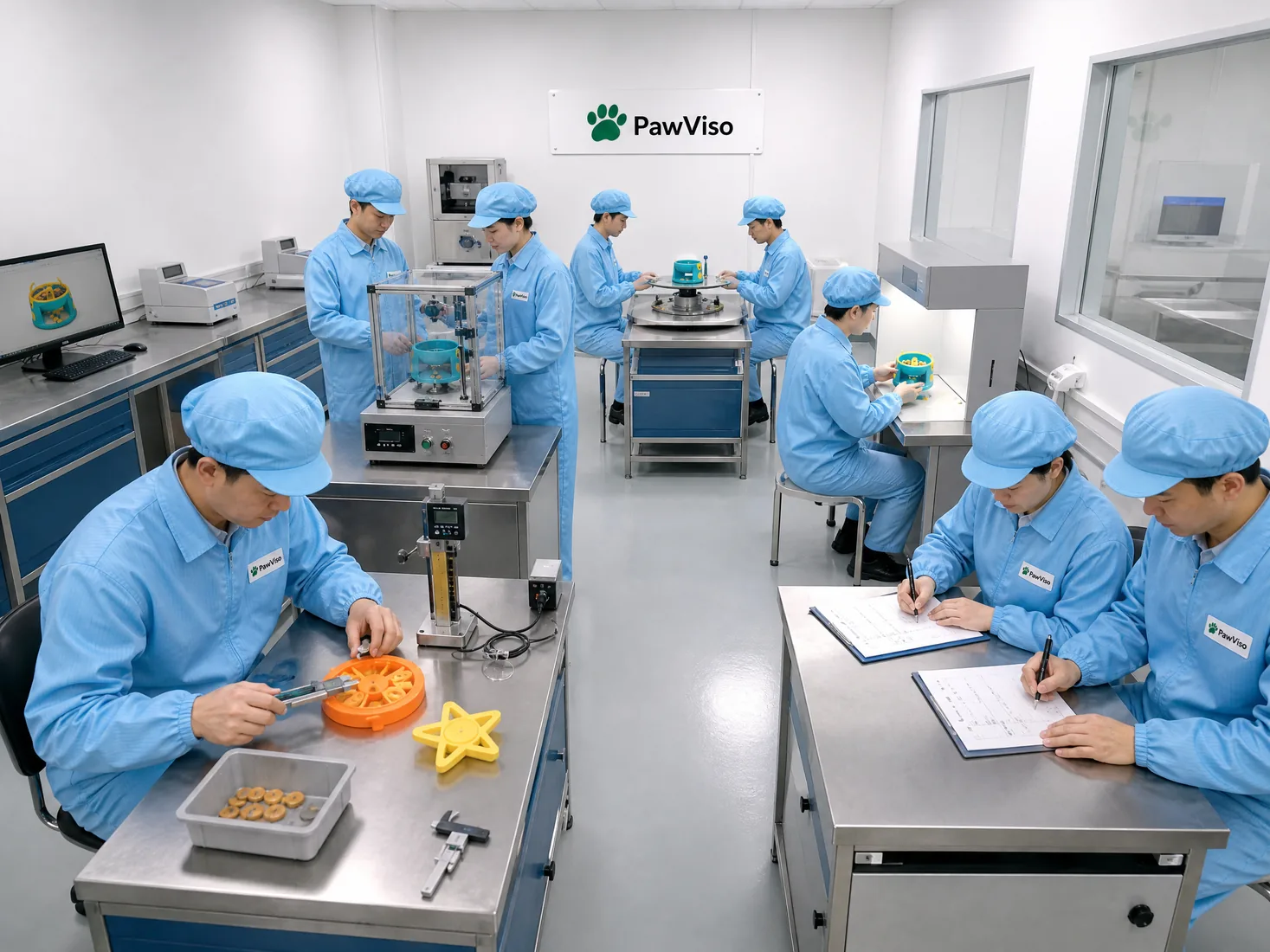
Explanation and evidence: Inspection is evidence-based: list inspection points by criticality (critical, major, minor), define sampling plans (or request the supplier to propose one), and require documented inspection checklists. The buyer should be explicit about what constitutes a release-for-shipment condition. Use a snapshot procedure where factory inspection records are attached to the lot and a third-party inspection report, if required, is attached to the shipping documents.
Tradeoffs and practical next steps: Third-party inspection increases assurance at a cost. In-process checks reduce end-of-line failures but require cooperation and documentation. For complex or regulated markets, more stringent inspection is justified. Ensure inspection reports include photos and measured data; where disputes occur, retain failed-sample photos and chain-of-custody notes.
Table: Inspection scope (compact)
| Inspection area | Frequency | Evidence required |
|---|---|---|
| Dimensional checks | Per lot sample | Measurement sheet, photos |
| Visual/cosmetic | Per lot sample | Photos, defect log |
| Functional tests | Per sample set | Test report, operator sign-off |
| Pack-out verification | Per lot | Pack count, carton photos |
Module 11 — Shipment release, handover and the learning loop
Direct answer: Release shipments only after all prior modules’ gates are satisfied: confirmed PO, approved samples, inspection sign-off, and a documented release-for-shipment authorization. Use the agreed Incoterm to confirm who is responsible for shipment at each handover point. After shipment, run a short learning-loop review that records early sales, any field failures and lessons for the next reorder.
Explanation and evidence: Shipment release should be a simple checklist: PO match, pack counts, inspection report attached, shipping marks and GTINs verified, and carrier booking confirmed. Use the Incoterms clause agreed in the PO to handle responsibilities such as carriage, insurance and delivery 6. For transit-pack concerns or shock/vibration failures consider pre-shipment testing under ISTA or equivalent test plans when the buyer deems transit risk high 5.
Tradeoffs and practical next steps: Releasing shipments faster reduces stockouts but increases exposure to unresolved quality issues. Keep a controlled release policy: a single authorized person signs the release record. After goods land, collect early-sales and quality feedback within the first 30 days and hold a short review meeting with supplier and buyer to capture corrective items, improvement opportunities and update the reorder-review template. This learning loop turns one-off reviews into continuous improvement.
**Final CTA — Need a factory-side checklist for release-for-shipment and a sample learning-loop template? Email: info@PawViso.com WhatsApp: +86 186 8106 4480 — https://wa.me/8618681064480 We can provide editable checklists used in supplier handovers and inspection attachments on request.
Frequently asked questions
Q: Who should own the reorder-review record? A: The buyer should own the decision record and retain the canonical copy; the supplier should attach required deliverables (quotes, label proofs, samples, inspection reports) and keep a copy for production control.
Q: How many months of sales data should I use to decide continuation? A: Use at least 6 months of sell-through data to capture seasonality; extend to 12 months for seasonal SKUs. The buyer defines the minimum acceptable velocity as part of the reorder-review thresholds.
Q: Do suppliers decide if a defect is minor or major? A: No. The supplier provides defect data and proposed classification; the buyer defines what is minor vs major for acceptance and rework purposes, and documents that in the quality acceptance criteria.
Q: What sample documentation is required for packaging claims? A: The buyer must provide the list of claims and required substantiation. The supplier supplies pre-production packaging samples, artwork, and any requested evidence or third-party test reports if claims require testing. Buyers should reference guidance on claims substantiation 4.
Q: When is third-party testing for transit necessary? A: Use transit testing (e.g., ISTA procedures) when pack-out changes, fragile items, or prior transit damage occurrences indicate risk. The buyer decides testing requirements and pays for tests unless otherwise negotiated. Refer to ISTA procedures for typical test options 5.
Q: How should disputes on measurement or inspection be handled? A: Define dispute resolution steps in the PO: retain failed samples, allow retesting or a witness test, and negotiate cost allocation for retest. Maintain photos and measurement sheets as evidence to expedite resolution.
Conclusion
Direct answer: A disciplined reorder-review combines sales inputs, quality evidence, spec/version control, samples, inspection, and a clear change-control path so the buyer can make reproducible SKU decisions. Require written confirmations for quotes and PO acceptance, define sample gates and inspection scope, and codify release and handover responsibilities. Closing the loop with a short post-shipment review makes the next reorder faster and less risky.
Practical next steps: Adopt a simple reorder-review template that lists required buyer decisions and supplier deliverables, implement version control for specs and quotes, and keep a change log attached to each PO. Use the tables and sample gates included here as starting points and adapt thresholds to your SKU economics and risk tolerance.
Disclaimer: Requirements and compliance expectations must be confirmed project-by-project with the buyer/importer and may vary by destination market and product application.
Related PawViso resources
- Continue with How to Build a Private Label Pet Product Line. Use this guide to connect customization, packaging and MOQ decisions.
- Browse the PawViso product catalogue to identify product formats for a sourcing brief.
- Follow the PawViso sourcing process and review the B2B buyer FAQ before sharing project requirements.
External reference
For independent product identification and barcode context, review GS1 guidance on Global Trade Item Numbers (GTINs). Confirm the requirements that apply to the selected product, target market and order.