
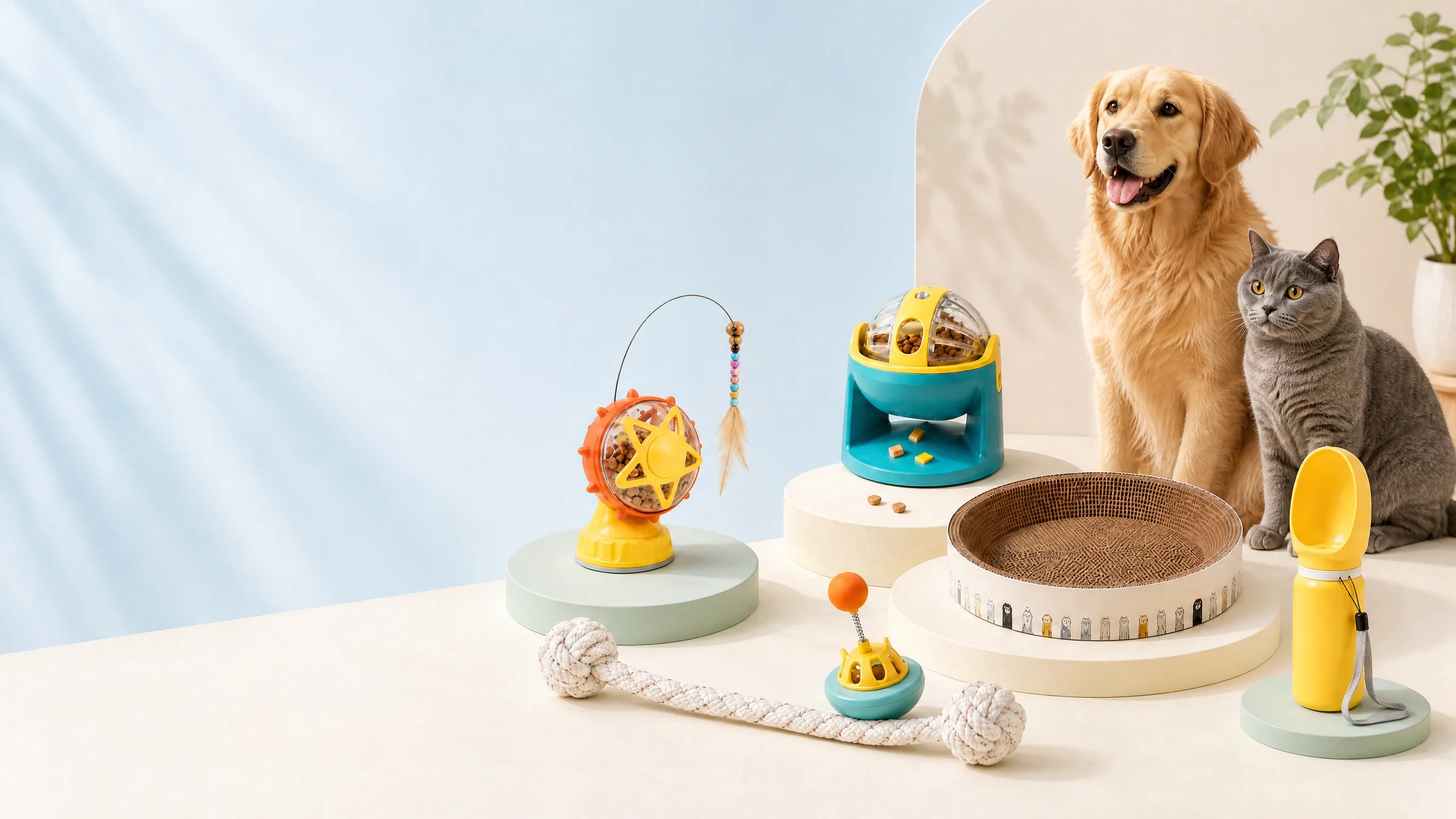
The safest materials for cat toys are not defined by a single label such as “natural” or “non-toxic.” In practice, a safer choice combines a suitable material with durable construction, secure seams, no easily detachable small parts, and clear instructions for the intended type of play. Commonly considered options include tightly woven fabric, well-finished wood, appropriately selected rubber or silicone, cardboard, and securely wrapped sisal. However, the material alone does not guarantee safe use: a loose thread, sharp edge, unstable coating, or chewable decoration can change the risk profile of an otherwise suitable toy. [1] [2]
For B2B buyers, the right question is therefore not simply “Which material is safest?” It is “Which material and construction are appropriate for this toy’s size, function, user market, and foreseeable use?” This guide explains how to make that assessment without relying on unsupported product claims.
What makes a cat toy material safer?
Veterinary guidance commonly emphasizes avoiding toys with small pieces or linear parts, including feathers and string, that may separate when chewed and be ingested. Electrical cords should also be kept away from cats that chew. [1] These points are useful for both owners and buyers because they shift attention from marketing language to foreseeable failure modes.
A “safer” material should also be free from obvious defects at delivery. Edges should be smooth, stitching should be secure, seams should not open under normal handling, and any bell, eye, bead, magnet, or plastic insert should be designed so it cannot be readily removed.
Common cat toy materials compared
The following comparison is a screening tool, not a certification or a universal ranking. Availability, specifications, pricing, MOQ, lead time, and compliance must be confirmed for the specific enquiry.
| Material or material group | Useful applications | Points to verify | Best suited to |
|---|---|---|---|
| Tightly woven polyester, cotton, or blended fabric | Plush toys, kicker toys, tunnels, padded toys | Tear resistance, seam strength, filling, colorfastness, wash instructions, loose fibers | Soft play and supervised or independent use, depending on construction |
| Natural or synthetic felt | Small soft toys, teaser components, enrichment shapes | Fiber shedding, edge durability, dyes, moisture retention, securely attached details | Light-duty toys with simple shapes |
| Rubber or silicone compounds | Balls, chew-resistant shapes, treat or puzzle elements | Exact formulation, hardness, odor, bite marks, fragmenting, cleaning compatibility | Active play and interactive enrichment when dimensions are appropriate |
| Cardboard and paper | Boxes, scratchers, simple chase and hide toys | Staples, adhesives, coatings, printed inks, dust, collapse or shredding | Low-cost enrichment and short-life play |
| Wood | Batons, puzzle parts, rolling or batting toys | Splinters, surface finish, small components, moisture and cleaning limits | Rigid enrichment toys with smooth, rounded surfaces |
| Sisal and other woven natural fibers | Scratchers, wrapped posts, texture toys | Fraying, attachment strength, loose strands, contamination and odor | Scratching and texture-based enrichment |
| Plastic components | Balls, track toys, housings, puzzle parts | Brittle fracture, sharp edges, detachable pieces, coating and material disclosure | Rigid toys where parts are captive and appropriately sized |
A closer look at the main material choices
Fabric and plush construction
Fabric is popular because it is lightweight, printable, and comfortable for carrying or kicking. A tightly woven textile with reinforced seams is generally easier to evaluate than a loosely knitted surface that sheds fibers quickly. Buyers should ask what filling is used and whether it can escape if the outer shell is punctured. Oregon Humane advises that soft toys should be washable and that potentially hazardous fillings, including nutshells and polystyrene beads, should be avoided. [2]
Rubber and silicone
Rubber-like materials can provide bounce, flexibility, and resistance to surface wear. They are not automatically safe simply because they are soft or odorless. The specific compound, additives, pigments, hardness, and dimensions matter. A supplier should be able to identify the material family and provide relevant documentation for the target market when requested.
Cardboard and paper
Cardboard boxes, paper bags with handles removed, and paper-based toys are widely used for hiding, pouncing, and batting. Cornell’s Feline Health Center notes that paper bags, cardboard boxes, and ping-pong balls can provide entertaining options without requiring expensive technology. [1] Oregon Humane similarly recommends cardboard while cautioning against plastic bags because of chewing and suffocation concerns. [2]
Wood and natural fibers
Wood can work in rigid toys when it is smooth, rounded, and free from splinters; review the surface treatment and drilled holes. Sisal is useful for scratching, but its wrap and edges need inspection for loose strands and attachment failure.
Materials to treat with extra caution
Be especially cautious with loose string, yarn, ribbon, elastic bands, long feathers, glitter, plastic film, magnets, and small bells or eyes that can be removed. Cornell specifically warns about linear strand-like parts such as feathers and string, while the University of Wisconsin School of Veterinary Medicine advises avoiding feathers, strings, and sparkles for cats that chew aggressively. [1] [3]
Interactive wand or feather toys may be appropriate for supervised play, but instructions should require supervision and secure storage afterward. Independent-play products should not depend on an owner noticing a loose strand in time.
A buyer and owner checklist
Before approving a cat toy material or finished product, document the following:
- Use case: Is the toy for batting, carrying, scratching, kicking, food enrichment, or supervised interactive play?
- Cat profile: What size, age, chewing behavior, and activity level is the product intended for?
- Construction: Are seams, knots, joins, eyes, bells, and inserts secure under foreseeable handling?
- Wear pattern: Does the material fray, splinter, crack, shed, or produce sharp fragments?
- Cleanability: Can the toy be cleaned as instructed without damaging coatings, fillings, or electronics?
- Documentation: Can the supplier identify materials, coatings, colorants, fillings, and applicable test or compliance documents?
- Instructions: Do packaging and listings state supervision, inspection, cleaning, and replacement guidance where needed?
- After-use review: Is there a documented process for removing damaged stock and updating the design?
Owners should inspect toys regularly and remove a toy if it becomes torn, cracked, sharp, or missing a component. If a cat may have swallowed string, a fragment, or another foreign object, contact a veterinarian promptly rather than attempting home treatment. This article is general information, not a diagnosis or treatment recommendation.
FAQs
Is natural material always safer for cat toys?
No. Natural fibers and wood can be useful, but they may fray, splinter, retain moisture, or carry coatings and contaminants. Evaluate the finished construction and documentation rather than the word “natural” alone.
Are plastic cat toys safe?
Some plastic toys may be suitable when they are durable, smooth, appropriately sized, and designed without readily detachable parts. Buyers should verify the exact plastic, brittleness, edges, coatings, and intended-use instructions.
Can cats play with string or feather toys?
String and feather toys can present ingestion risks when parts separate, particularly for cats that chew. They are better treated as supervised interactive toys, stored out of reach after play, and removed when damaged. [1] [3]
What is a good material for an independent-play toy?
A simple, sturdy design with captive parts and no loose strands is easier to assess than a highly decorated toy. Cardboard, track toys, and appropriately sized soft or rigid shapes may be considered, but each finished product still requires inspection and clear instructions.
What should a B2B buyer request from a supplier?
Request a full material list, construction details, filling and coating information, product dimensions, care instructions, available test reports, and market-specific compliance documentation. Confirm all specifications for the particular SKU and order before making a purchasing decision.
Conclusion
The safest cat toy materials are those selected for the play function and combined with robust, inspectable construction. Tightly woven fabric, suitable rubber or silicone, clean cardboard, smooth finished wood, and securely attached sisal can all be reasonable starting points. None is a blanket guarantee. Small detachable parts, loose strands, sharp edges, unstable coatings, and inaccessible documentation can undermine an otherwise sensible material choice.
For buyers, the most reliable process is to define the use case, review the finished product, request evidence, and confirm market requirements before approval. For owners, regular inspection and supervision are as important as the material label. If you are sourcing cat toys and need to compare materials, construction options, or documentation requirements, contact PawViso for an enquiry. Product availability, specifications, pricing, MOQ, lead time, and compliance remain subject to confirmation for your specific request.
References
[1] Cornell Feline Health Center, “Safe toys and gifts”