
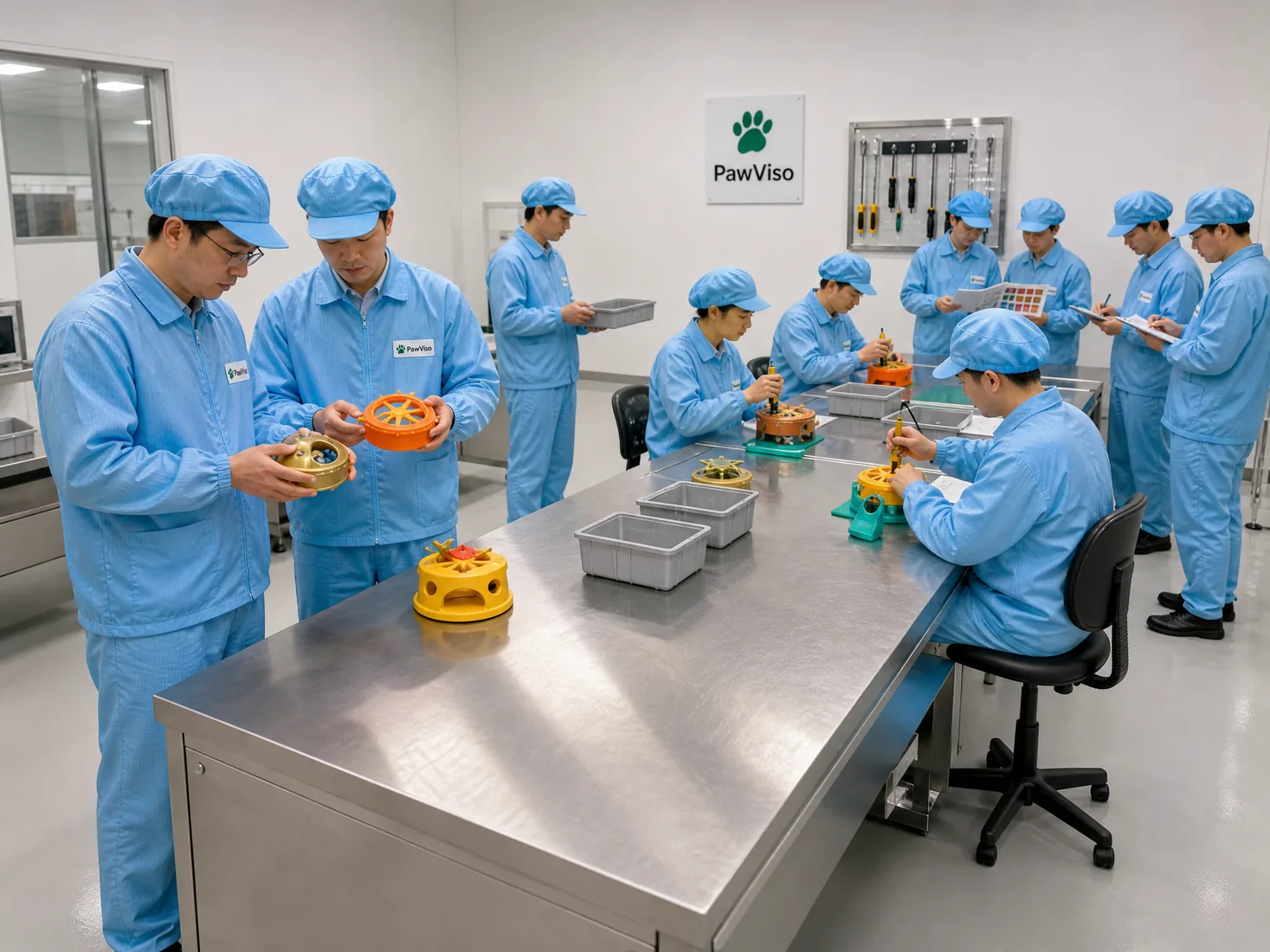
This guide is written for U.S.-market retailers, importers, distributors, and private‑label buying teams who need a practical, repeatable approach to sourcing cat supplies in bulk. It focuses on procurement decisions — supplier screening, product specifications, material/component evidence, sampling and pilot‑run verification, packaging and retail readiness, quality controls, and the commercial tradeoffs teams must weigh. It does not make product‑performance, veterinary, safety, or regulatory guarantees. Final compliance and importer/buyer confirmation are required for any market claims or regulatory obligations.
Decision framework
Begin with a decision framework that defines the program goal, acceptable risk, and commercial constraints. Use the following three‑step process to align procurement, product development, and compliance functions before you contact suppliers.
-
Program definition (market fit)
- SKUs and variants (sizes, scents, finishes, electrical vs non‑electrical).
- Target retail channel(s): e‑commerce, mass, specialty, subscription.
- Price points (MAP or target retail vs landed cost target).
-
Requirements and acceptable risk
- Mandatory items (materials, regulatory test requirements, labeling).
- Nice‑to‑have items (sustainability claims, premium packaging).
- Risk tolerances (inspection frequency, recall contingency fund).
-
Decision gates and timeline
- Supplier shortlist → sample approval → pilot run (e.g., first 500–2,000 units) → full production.
- Clear acceptance criteria at each gate with owner and measurable KPIs.
Use the supplier scorecard below as a working tool to move suppliers through the gates.
| Scorecard item | Weight (%) | Minimum pass |
|---|---|---|
| Technical capability (tools, molds, engineering) | 25 | 70/100 |
| Compliance evidence (test reports, certifications) | 20 | Documented |
| Capacity & lead time | 15 | Meets program timeline |
| Quality systems (AQL, IQC/FQC) | 15 | AQL ≤ 2.5 common |
| Commercial terms (MOQ, payment, incoterms) | 15 | Matches budget |
| Communication & responsiveness | 10 | 48‑hour SLA |
Repeat this scoring for each product category (e.g., litter, enclosures, toys) and use the scores to prioritize sample orders and onsite audits.
Supplier screening (module 1)
What to verify before placing a single purchase order.
- Company profile and legal standing: confirm legal entity, export license (if applicable), typical buyer industries, and export experience to the U.S.
- Production capability: ask for photos or short videos of relevant production lines, tooling ownership, and production lead times for comparable SKUs.
- Minimum order quantities (MOQ) and tiered pricing: get FOB/CIF/Landed cost examples for multiple volumes to understand unit economics.
- Compliance readiness: request existing test reports, factory certificates, and a list of third‑party labs used. For pet toys and some containment products, specific mechanical and chemical tests may be advisable; treat the supplier’s test reports as starting evidence, not final acceptance.
- Subcontractors: identify whether critical components (motors, electronics, molded parts, textiles) are made in‑house or subcontracted. Subcontracting raises traceability and QC needs.
- References and client examples: ask for anonymized references (other retail chains or distributors), and inspect recently produced packaging samples.
During screening, collect the following documents in a folder for each candidate:
- Business license, export registration, and W‑8/W‑9 equivalent for invoicing.
- Recent audit or certification summaries (e.g., ISO 9001, BSCI evidence).
- Sample product labeling and a bill of materials (BOM) with supplier names for critical components.
When you shortlist, include at least one factory capable of making bespoke items such as cat enclosures custom made and one lower‑cost option for resale or entry SKUs.
Product specifications and material/component evidence (module 2)
Write unambiguous product specifications and require material evidence from suppliers.
- Spec sheet template: dimensions, tolerances, weight, materials (with resin grade, textile composition, finishes/coatings), color references (Pantone or physical swatch), functional performance targets, and environmental conditions (temperature range, UV exposure) if relevant.
- Bill of Materials (BOM): itemize each component, the supplier of that component (if known), and any preferred material grades. For integrated items (e.g., electronic cat fountains), include part numbers for motors, pumps, switches, and cable specs.
- Test requirements: list required tests with acceptance criteria. For toys and interactive items, consider mechanical durability and small‑part tests; for surfaces in contact with animals, identify chemical testing (e.g., heavy metals, phthalates) when relevant. State buyer/importer confirmation is required for final test scope and regulatory obligations.
- Certificates and material declarations: ask for material safety data sheets (MSDS/SDS) and supplier material declarations for plastics, woods, textiles, adhesives, and coatings.
- Traceability map: require suppliers to map where each raw material originates. This is critical for risk analysis (e.g., restricted substances, supply disruptions).
Include a short table that clarifies evidence types and buyer action.
| Evidence type | What to ask for | Buyer action |
|---|---|---|
| Raw material grade | Resin grade, textile composition, adhesive spec | Verify with lab samples |
| Chemical/contaminant tests | Heavy metals, phthalates, formaldehyde (as applicable) | Require third‑party report |
| Component spec sheets | Motor RPM, pump flow, fastener grade | Cross‑check BOM |
| Conformity declarations | Supplier self‑declaration of restricted substances | Use as provisional evidence pending testing |
Remember: supplier declarations are useful but not substitutes for third‑party testing when the market or product risk demands it. Always document who will pay for testing in contracts.
Keyword usage: when sourcing cat litter or litter accessories, include cat litter wholesale suppliers in your outreach list and require clear material and dust metrics from them.
Sampling and pilot‑run checks (module 3)
Samples must be treated as controlled experiments — each sample must be logged, tested, and reviewed to justify a production ramp.
-
Sample types and priorities
- Engineering sample (ES): for form, fit, and major function checks.
- Production sample (PS)/First article: produced using full production tools (molds, dies) and intended process parameters.
- Pre‑shipment sample (PSS): packaged and labeled exactly as the shipment will be.
-
Sample acceptance criteria
- Conformance to spec sheet tolerances and finish.
- Functional performance testing (e.g., moving parts cycles, leak tests for fountains).
- Aesthetic checks (color match, surface defects), odor and off‑gassing where applicable.
-
Pilot runs
- Run a pilot of a measurable batch size that reveals production capability and rate (commonly 1–2% of initial order or a fixed quantity such as 500–2,000 units depending on complexity).
- For larger, more complex items (cat enclosures custom made), choose pilot size that tests shipping, assembly, and packing methods.
-
Documentation and retention
- Keep retained samples for each batch and test them against your approved PSS.
- Create a nonconformance log with photos, measured deviations, root cause, and corrective action plans per defect.
Use the following checklist during pilot acceptance:
- Packaging meets drop and compression standards for intended retail channels.
- All labels and UPC/GTIN barcodes scan and match product data.
- Assembly instructions are complete and validated by a third party or internal team.
- Warranty, parts replacement, and spare parts logistics are confirmed.
When assessing pet products manufacturers for more complex lines like automated litter systems or enclosures, insist on electrical safety and EMC test scopes where applicable and confirm that the supplier has experience delivering to the U.S. market.
Also include some pet toys bulk and pet toys manufacturer samples in early testing if toys are in scope for the same supplier or program.
Packaging and retail readiness (module 4)
Packaging is a live sales asset and a logistical decision. Design choices affect landed cost, damage rates, and time to shelf.
-
Retail vs e‑commerce packaging
- Retail shelf packaging must consider hang tags, windowing, UPC visibility, shelf blocking, and retailer size/label requirements.
- E‑commerce packaging should prioritize protection, unboxing experience, and dimensional weight for carriers.
-
Regulatory and labeling
- Provide label templates that include country of origin, net content, manufacturer/importer ID, and any required safety warnings. Buyer/importer confirmation is required for final labeling claims and regulatory language.
-
Packaging test matrix (suggested)
- Drop test: 1 corner, 3 edges, 6 faces at retailer or carrier specified heights.
- Compression test: stackability for palletized shipments.
- Vibration and transit tests for long‑distance sea/rail shipments.
-
Costs vs speed tradeoff table
| Packaging choice | Unit cost impact | Lead time impact | When to choose |
|---|---|---|---|
| Standard corrugated boxed retail pack | Low | Short | High volume, cost‑sensitive SKUs |
| Retail ready display / shelf ready | Medium | Medium | Brick‑and‑mortar priorities |
| Custom printed, premium unboxing | High | Longer | Premium private label, gift market |
| Reduced‑dimensional e‑commerce pack | Medium | Short | Online‑first SKUs, reduce shipping DIM |
-
Palletization and master carton strategy
- Design master cartons for efficient pallet stacking to reduce damage and handling. Confirm standard pallet sizes for destination warehouses.
- Agree on carton markings, GS1 labels, and ASN requirements with each retailer or 3PL.
-
Packaging sustainability claims
- If you require recycled content or recyclability claims, ask suppliers for chain‑of‑custody evidence and supplier declarations; then verify with a recognized third party if you will make public sustainability claims.
For cat enclosures custom made, include assembly manuals and pre‑drilled holes as part of retail readiness to reduce returns and complaints.
Quality control, inspection, and commercial tradeoffs (module 5)
Quality systems protect margins and brand reputation. Balance inspection frequency, AQL, and commercial concessions based on SKU value and risk.
-
Inspection types
- Pre‑production meeting (PPM): confirm tooling and process before production.
- During production inspection (DPI)/In‑process quality control (IPQC): sample at predetermined intervals.
- Final random inspection (FRI): AQL inspection (e.g., 2.5/1.0 for visual and functional defects depending on risk).
-
AQL and sampling plans
- Use internationally recognized sampling standards to define acceptance criteria. For critical safety items, consider 0% critical defects tolerance.
- For lower risk consumable items (e.g., neutral packaging cat litter bags), a higher AQL may be acceptable to maintain cost targets.
-
Nonconformance handling and penalties
- Define corrective action times (e.g., root cause within 5 business days), rework thresholds, and financial penalties or buyback conditions.
- Consider escrow of a portion of payment until FRI passes for new suppliers.
-
Commercial tradeoffs: choose intentionally
- Cost vs quality: lower unit cost often means lower QC margins, higher defect rates, and higher return handling costs.
- Lead time vs packing quality: expedited lines may bypass some packaging optimization increasing damage.
- MOQ vs price: higher MOQs can reduce per‑unit cost but increase inventory risk; evaluate working capital and obsolescence risk.
-
Inspection logistics
- Use an independent inspection provider for DPI and FRI with photo evidence and signed reports.
- For complex items with electronics or motors (e.g., automated feeders), add functional burn‑in testing during FRI.
-
KPI dashboard suggestions
- Incoming defect rate, vendor defect trend, on‑time delivery %, pilot yield %, damage in transit %.
Keep a negotiation matrix where you score tradeoffs to make them explicit during supplier negotiations.
Keyword integration: ask your shortlisted pet toys suppliers and pet toys manufacturer candidates for documented QC processes and historic inspection reports when evaluating toys and interactive items.
Frequently asked questions
Q1: What documentation should I require from cat litter wholesale suppliers? A1: Require a product specification (particle size, dust %, absorbency metrics as available), MSDS/SDS for any additives, packaging specs, country of origin, FOB pricing, MOQ, and any third‑party test reports. Buyer/importer confirmation is required for final claims.
Q2: How many samples should I order before scaling? A2: At minimum: one engineering sample, one production first article from final tooling, and a pre‑shipment sample. Add pilot quantities (e.g., 1–2% of intended launch quantity or 500–2,000 units) for functional and logistics validation.
Q3: Are factory self‑declarations sufficient for chemical safety? A3: Self‑declarations are initial evidence but generally insufficient for regulatory or retail requirements. For substances of concern, require third‑party lab testing and retain test reports in your compliance dossier. Final importer confirmation is required for any legal claims.
Q4: How do I compare quotes for cat enclosures custom made? A4: Compare on landed cost by SKU at target MOQs, factoring tooling amortization, packaging, freight, duties, inspection, and expected returns/repair costs. Also compare lead times, warranty handling, and spare‑parts availability to quantify total cost of ownership.
Conclusion
Sourcing cat supplies in bulk for the U.S. market requires clear program definition, strict specification discipline, staged sampling and pilot runs, retail‑grade packaging, and a pragmatic quality‑control system that matches product risk and commercial goals. Use a scorecard to compare suppliers, insist on traceability for materials and components, and document acceptance criteria for each decision gate. Balance commercial tradeoffs deliberately — short‑term unit savings can create long‑term costs through defects, returns, or compliance failures.
This guide provides a practical procurement path, but it does not replace legal or regulatory advice. Buyer/importer confirmation is required for any final claims, labeling, or compliance obligations in the target market.
Buyer search scope
This guide addresses the following U.S. B2B procurement search phrases. Each phrase is considered in the context of supplier selection, product specifications, samples, packaging and quality evidence rather than as a consumer recommendation.
| Search phrase | Buyer use |
|---|---|
| cat supplies in bulk | Primary procurement focus for this guide |
| cat litter wholesale suppliers | Related specification, supplier or range-planning query |
| cat enclosures custom made | Related specification, supplier or range-planning query |
| pet products manufacturers | Related specification, supplier or range-planning query |
| pet toys bulk | Related specification, supplier or range-planning query |
| pet toys suppliers | Related specification, supplier or range-planning query |
| pet toys manufacturer | Related specification, supplier or range-planning query |
Final CTA — Prepare a focused private label & supplier sourcing sourcing brief with PawViso.
Share your target U.S. channel, product format, estimated order structure, packaging direction and customization requirements for a practical B2B discussion.
Email: info@PawViso.com
WhatsApp: +86 186 8106 4480
Related PawViso resources
- Continue with How to Build a Private Label Pet Product Line to compare a related supplier, sample and quality-control route.
- Browse the PawViso product catalogue to identify product formats for your purchasing brief.
- Follow the PawViso sourcing process and review the B2B buyer FAQ before sharing requirements.
External reference
Use ISO 9001 quality-management systems guidance as general quality-system context, and confirm the product-specific evidence that applies to the selected SKU, channel and target market.