
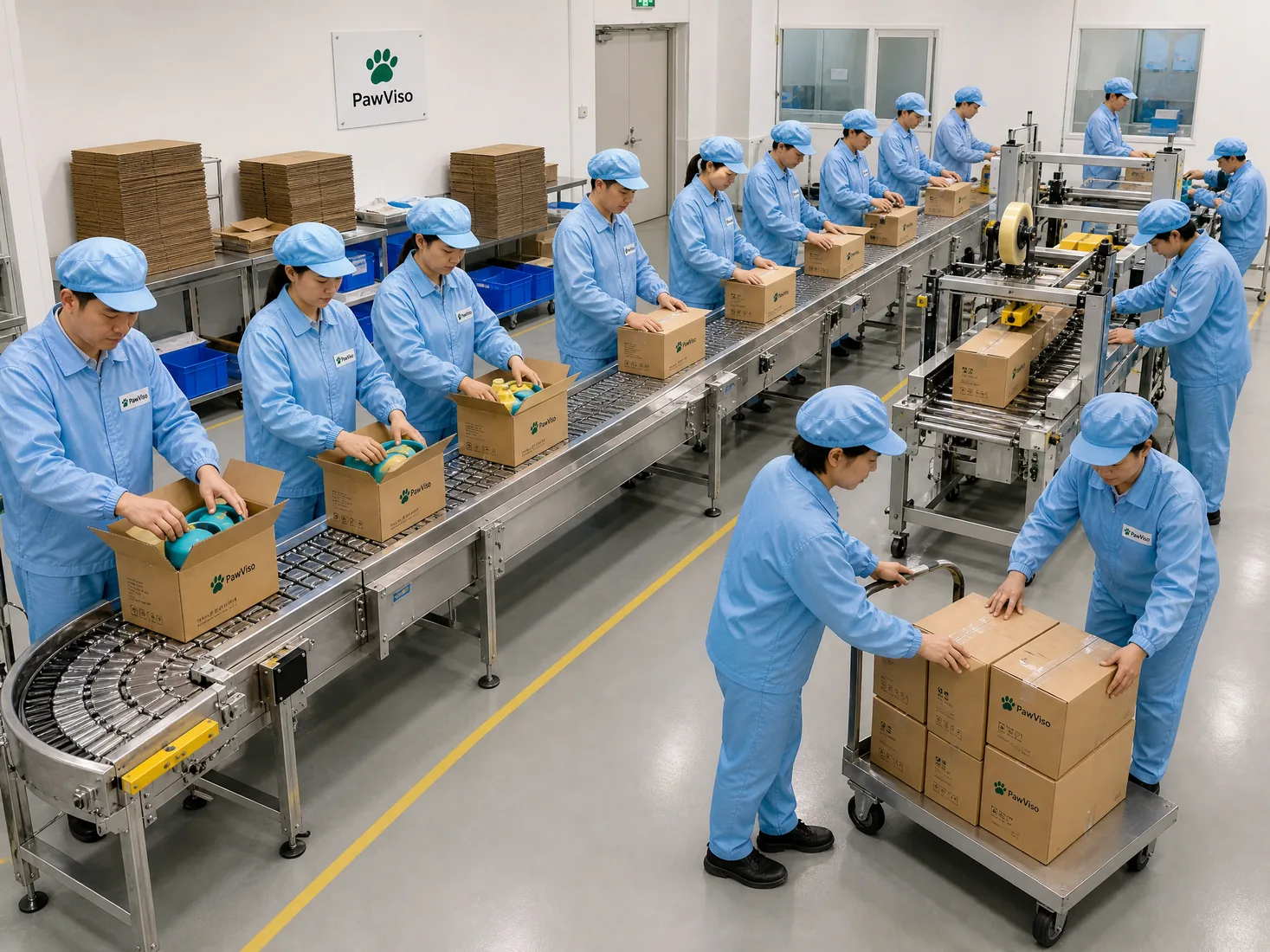
This guide helps U.S.-market retailers, importers, distributors, and private-label teams evaluate, select, and onboard a dog waste bags manufacturer. It lays out a practical decision framework and five targeted procurement modules: specifications, material and component evidence, sampling and pilot-run checks, packaging and retail readiness, and quality-control & compliance. The content is operational and commercially focused; it does not make regulatory, performance, or veterinary guarantees. Buyer/importer confirmation is required for final claims and target-market obligations.
Decision framework — quick roadmap for sourcing
Start with a simple sourcing checklist that converts needs into supplier questions and pass/fail criteria. Use this when you screen leads, request quotes, and plan pilots.
- Business needs: SKU types (bags by roll, flat packs, dispensers), volumes (monthly/annual), private-label vs. co-branded.
- Technical specs: size, thickness (gauge), material, closure style, dispenser compatibility.
- Commercial constraints: target landed cost, payment terms, minimum order quantity (MOQ), lead time.
- Evidence & risk: test certificates, audit reports, material statements, factory capabilities.
- Validation: samples, pilot batch, in-market shelf test, QC acceptance criteria.
Decision checklist (use when talking to suppliers):
- MOQ ≤ target, lead time ≤ acceptable, price within target range
- Material evidence provided (spec sheet + third-party test)
- Samples passed internal QA and packaging meets retail spec
- QC plan includes accepted defect levels and corrective actions
This guide expands each procurement step into concrete actions and negotiation points.
Specification module — define what you will buy
Clear, measurable specifications reduce ambiguity with manufacturers and prevent costly rework. For each SKU capture the following.
Essential product specs
- Function: single-roll walk bags, multi-roll retail packs, scented or unscented.
- Dimensions: length × width in inches; handle or tie type (e.g., no-handle, drawstring, grip).
- Thickness: specify in microns or mil (1 mil = 25.4 microns); provide acceptable range and sampling method (e.g., ASTM or internal gauge).
- Material: HDPE, LDPE, linear-low-density polyethylene (LLDPE), compostable polymer (PLA, PBAT blends), or paper-laminates. Specify material grade and supplier if required.
- Strength metrics: puncture resistance, tear resistance, elongation at break — define target numbers or test method.
- Additives: scent, colorant, metal detection beads, slip agents — list allowed/forbidden substances.
Packaging and SKU attributes
- Rolls per pack, bags per roll, rolls per carton.
- Retail-ready pack vs. bulk dispenser refills.
- Labeling: barcode (UPC), hang-hole or shelf-ready configuration, private-label artwork placement.
- Shelf-life considerations for scented bags or adhesive closures.
Commercial specs
- Target landed cost per bag (or per roll), MOQ, standard lead time from order confirmation, target currency and payment terms.
Example short spec (for RFQ)
- “Dog waste roll, 150mm × 300mm; 15 bags per roll, 12 rolls per master carton; material LLDPE 30 microns; unscented; print: one-color private label; UPC applied; MOQ 5,000 cartons; lead time 60 days.”
Document specs in an RFQ template and require supplier confirmation of each line item.
Material and component evidence — what to request and how to evaluate
Material claims are central to buyer risk (performance, sustainability claims, compliance). Require documented evidence before signing a PO.
Minimum evidence list to request
- Material safety data sheet (MSDS / SDS) for each polymer or additive.
- Resin certificates or delivery assurance showing polymer grade and origin.
- Third-party test reports for compostability (if claimed) or biodegradability using recognized standards.
- Certificates of analysis (CoA) from resin suppliers for colorants, scents, or additives.
- Factory technical datasheet showing bag gauge tolerance, typical tear strength, and other mechanical properties.
Evidence evaluation guidance
- Cross-check SDS/CoA substance lists against your target market restrictions (e.g., regulated phthalates, heavy metals). Buyer must confirm regulatory obligations for your target market.
- For compostable claims, require a test report to a recognized standard (see next section for preferred standards). Do not accept supplier statements without a lab certificate.
- Verify that any scent or coating used will not compromise recyclability in your target market; request technical data on recycle compatibility.
Conservatively assess supplier evidence: a scanned certificate is a starting point, but you should validate source authenticity (contact the issuing lab, confirm serial numbers) and request packaging-level declarations.
Table 1 — Quick material tradeoffs (compact)
| Material type | Strength / thinness | Sustainability tradeoff | Typical price direction |
|---|---|---|---|
| LLDPE / LDPE | Good puncture, can be thin | Widely recyclable where film recycling exists; contamination risk | Mid |
| HDPE | Stiffer, less stretch | Similar recycle caveats | Lower |
| Compostable polymers (PLA/PBAT blends) | Varied strength; may need thicker gauges | Compostable only if ASTM/EN standards met and industrial composting available | Higher |
| Paper or laminated | Lower moisture resistance unless laminated | Potentially recyclable or compostable depending on lamination | Higher |
Table 2 — Evidence required per claim (compact)
| Claim | Minimum document | Recommended verification |
|---|---|---|
| Recyclable film | SDS + resin CoA | Check local film recyclability programs |
| Compostable | Third-party lab test (ASTM D6400/EN 13432) | Confirm certificate ID with issuing body |
| Metal-detectable | Test report from accredited lab | On-site trial through metal detector |
| Food contact safe | Regulatory compliance statement + CoA | Buyer import confirmation for US FDA applicability |
Caveat: documentation needs should be tailored to the product claim; buyer/importer confirmation is required for final claims and target-market obligations.
Sampling and pilot-run checks — what to inspect and how to structure a pilot
Samples reduce risk but must be accompanied by a structured test protocol. Plan a two-stage sampling approach: pre-production samples and pilot-run batch.
Pre-production samples
- Ask for bag samples in final material, color, and thickness with mock-up printing if printing is part of the product.
- Request full retail pack sample (roll on core, outer wrap, barcode label) and a master carton for logistics fit-check.
Pre-production inspection checklist
- Physical dimensions: measure length, width, gauge at three points.
- Function: tie/drawstring function if applicable; dispenser fit check.
- Visual: color consistency, print registration, defect count (punctures, pinholes).
- Packaging: label content, UPC scannability, pack integrity.
Pilot-run batch
- Negotiate a small pilot production run that replicates production conditions and uses actual materials and packaging. Typical pilot size: 0.5%–2% of intended first full order, or a fixed number of master cartons (e.g., 50–200 cartons) depending on MOQ and complexity.
- Require full QC on pilot with agreed acceptance criteria and failure resolution process.
Pilot QC metrics and sample sizes
- Use ANSI/ASQ Z1.4 single sampling plans for acceptance by lot size to determine inspection sample sizes for visual/functional checks.
- Define acceptable quality level (AQL) for major and minor defects upfront (e.g., major defects AQL 1.0, minor 2.5) — negotiate based on product value and risk.
Performance and field tests
- Simulate retail and end-use conditions: dispenser loading, exposure to heat/cold during transport, shelf storage test for scented varieties.
- If selling to service providers (parks, municipal clients), test dispenser compatibility with existing dog poop bag dispenser station formats.
Record and act on pilot results
- Define corrective action timelines for failures, re-sample if required, and only approve full production after pilot pass and written corrective-action closure.
Packaging and retail readiness — design, compliance, and logistics
Packaging is how product meets the retailer and the consumer. For B2B buyers, it must be retail-ready, on-shelf attractive, and transport-robust.
Packaging essentials
- Retail artwork and barcodes: supply print-ready files and confirm UPC/EAN accuracy. Request color proofs and pre-production photos.
- Retail-ready formats: decide between hanging card packs, shelf boxes, or counter displays. Ensure master carton dimensions optimize palletization.
- Dispenser compatibility: if offering rolls for dispenser refill, confirm core diameter and roll width to match common dog poop bag dispenser station specs.
Labeling and claims
- Be precise with on-pack claims (e.g., “compostable,” “biodegradable,” “recyclable”). Support every environmental or performance claim with documentation.
- Include country of origin, importer/distributor information, and any market-required handling or safety labeling. Buyer/importer confirmation is required for final claims and obligations.
Logistics and master carton design
- Optimize master carton size to fit standard pallet (e.g., 40" × 48" in the U.S.) and reduce air freight cube. Provide gross weight and carton dimensions on RFQ.
- Inner packing must protect roll edges and printed surfaces; consider polybagging or slip-sheeting to prevent abrasion.
Sustainable packaging options
- Discuss recyclable or biodegradable secondary packaging, but require verification that the packaging stream exists in your target market. Avoid unverified sustainability claims.
Table 3 — Packaging decision points (compact)
| Requirement | Buyer question to supplier |
|---|---|
| Dispenser refill compatibility | What is roll core ID and width (mm)? Provide sample to confirm dispenser fit. |
| Retail-ready hang pack | Can you die-cut and affix euro-hook hang card? Provide sample. |
| Bulk municipal packs | Can you supply tamper-evident or weather-resistant packaging for outdoor dispensers? Provide field-test data. |
Quality-control & compliance module — safeguard reliability
A defensible QC and compliance program prevents rejects and protects brand reputation. Ask suppliers for their QC systems and align contractual inspection points.
Supplier QC capabilities to verify
- Incoming material inspection: what checks are run on resin and additives? Request incoming CoA handling examples.
- In-line production checks: gauge profiling, print color control, and defect monitoring frequency.
- Final inspection: sample size, acceptance criteria (AQL), and inspection certificate format.
- Traceability: lot/batch coding on master cartons to allow recalls or root-cause analysis.
Third-party inspection and audits
- Specify third-party pre-shipment inspection (PSI) or in-line quality inspections and make PSI a contractual gate for release. Use industry-accepted inspection firms and define scope (e.g., 100% check for labels, sampling for bag integrity).
- Factory audits: request recent audit reports (social, technical, environmental). If audits are absent, plan for a supplier-commissioned audit before larger orders.
Testing labs and methods
- Insist on tests from accredited laboratories for mechanical properties and compostability claims (if used). Specify test methods or standards (e.g., ASTM test numbers where applicable).
- Define re-test rights in the contract: who pays if a failed lot is retested and results differ?
Contractual QC clauses to include
- Rejection and remediation: define timelines and financial responsibility for rejected lots.
- Warranty and indemnity: limited to defects in production or material; avoid over-reaching guarantees.
- Sampling plan: reference ANSI/ASQ Z1.4 or equivalent, with agreed AQLs for critical defects.
Compliance considerations
- Product safety and claim compliance: buyers must verify that on-pack claims comply with FTC Green Guides and other market rules before use 1.
- Import compliance: ensure supplier provides required documentation for U.S. Customs, including country of origin and commercial invoices. Buyer/importer confirmation is required for final obligations 2.
Note: Do not accept claims without documentary proof. Buyer/importer confirmation is required for final claims and target-market obligations.
Commercial tradeoffs — pricing, lead time, MOQ, and product choices
Every procurement decision involves tradeoffs among price, lead time, customization, and inventory risk. Lay out how each variable affects cost and timing.
Price versus lead time
- Lower unit prices often require larger MOQs and slower production schedules (full-container loads). Faster lead times (air or priority manufacturing) increase cost.
- Negotiate ramping MOQs and pricing tiers: e.g., pilot price per unit, tiered pricing at defined breakpoints.
Customization versus flexibility
- Private-label printing, unique die-cuts, scented formulas, or special dispensers raise setup costs (plates, tooling, scent development) and increase MOQ. Evaluate whether custom SKUs deliver sales lift to justify costs.
- Stock-standard SKUs reduce unit price and lead time; consider a mixed approach: core stock SKUs plus seasonal or test-market private-label runs.
Inventory and logistics tradeoffs
- Larger shipments reduce unit freight but increase inventory carrying costs and risk of obsolescence.
- Consolidate SKUs to improve packing density and reduce per-unit logistics cost.
Quality versus cost
- Cheaper materials risk higher returns, brand complaints, or shelf failures. Factor the cost of returns, replacements, and brand damage into pricing decisions.
- Consider total landed cost (product + freight + duties + inspection + expected returns) when comparing quotes.
Negotiation levers
- Commit to multi-year or multi-SKU volumes to unlock better pricing.
- Offer longer payment terms in exchange for price reductions, but assess supplier cashflow impact.
- Agree on pilot-to-production conversion clauses that set timelines for scale-up and pricing adjustments.
Commercial scorecard
- For each supplier, score: price, lead time, MOQ, documentation completeness, QC practices, and willingness to support pilots. Use the scorecard to prioritize suppliers for pilots.
Frequently asked questions
Q: What specific documentation should I insist on before placing a production order? A: Require SDS/MSDS, resin CoA, third-party test reports for claimed properties (e.g., compostability), factory capability statements, and confirmation of MOQ/lead time. Verify certificates directly with issuing labs or bodies when possible.
Q: Are compostable dog waste bags acceptable for the U.S. market? A: Compostable bags can be sold, but claims must be documented to recognized standards (e.g., ASTM D6400/EN 13432) and be paired with market-appropriate disposal instructions. Buyer/importer confirmation is required for final regulatory obligations and claims 3.
Q: How should I structure a pilot to minimize commercial exposure? A: Run a small, fully documented pilot batch sized to test production, packaging, and a short retail placement. Define AQLs, inspection points, and corrective action terms before production. Limit pilot spend with fixed-price clauses and clear acceptance criteria.
Q: What are typical minimum order quantities and lead times for private-label runs? A: MOQs vary widely: standard stock SKUs can have lower MOQs (few hundred cartons), while private-label printed runs often require larger MOQs tied to tooling costs (thousands of cartons). Lead times commonly range 45–90 days depending on factory schedule and shipping; priority production adds cost. Always confirm with specific suppliers.
Conclusion
Sourcing a dog waste bags manufacturer for the U.S. market requires a disciplined, evidence-led approach: define exact specifications, require material and testing documentation, run structured samples and pilot batches, ensure packaging and dispenser compatibility, and implement clear QC and contractual protections. Balance commercial tradeoffs deliberately—customization, MOQ, lead time, and price all influence total landed cost and market risk. Use the checklists, sample protocols, and tabled decision points in this guide when drafting RFQs, negotiating terms, and accepting pilot production. Buyer/importer confirmation is required for final claims and obligations in your target market.
Buyer search scope
This guide addresses the following U.S. B2B procurement search phrases. Each phrase is considered in the context of supplier selection, product specifications, samples, packaging and quality evidence rather than as a consumer recommendation.
| Search phrase | Buyer use |
|---|---|
| dog waste bags manufacturer | Primary procurement focus for this guide |
| dog waste bags bulk | Related specification, supplier or range-planning query |
| dog potty pads bulk | Related specification, supplier or range-planning query |
| dog poop bags wholesale | Related specification, supplier or range-planning query |
| dog poop bags manufacturer | Related specification, supplier or range-planning query |
| dog poop bags custom | Related specification, supplier or range-planning query |
| dog poop bag dispenser station | Related specification, supplier or range-planning query |
Final CTA — Prepare a focused dog training & waste accessories sourcing brief with PawViso.
Share your target U.S. channel, product format, estimated order structure, packaging direction and customization requirements for a practical B2B discussion.
Email: info@PawViso.com
WhatsApp: +86 186 8106 4480
Related PawViso resources
- Continue with How to Compare Cost per Use for Dog Training Pads to compare a related supplier, sample and quality-control route.
- Browse the PawViso product catalogue to identify product formats for your purchasing brief.
- Follow the PawViso sourcing process and review the B2B buyer FAQ before sharing requirements.
External reference
Use ISO 9001 quality-management systems guidance as general quality-system context, and confirm the product-specific evidence that applies to the selected SKU, channel and target market.