
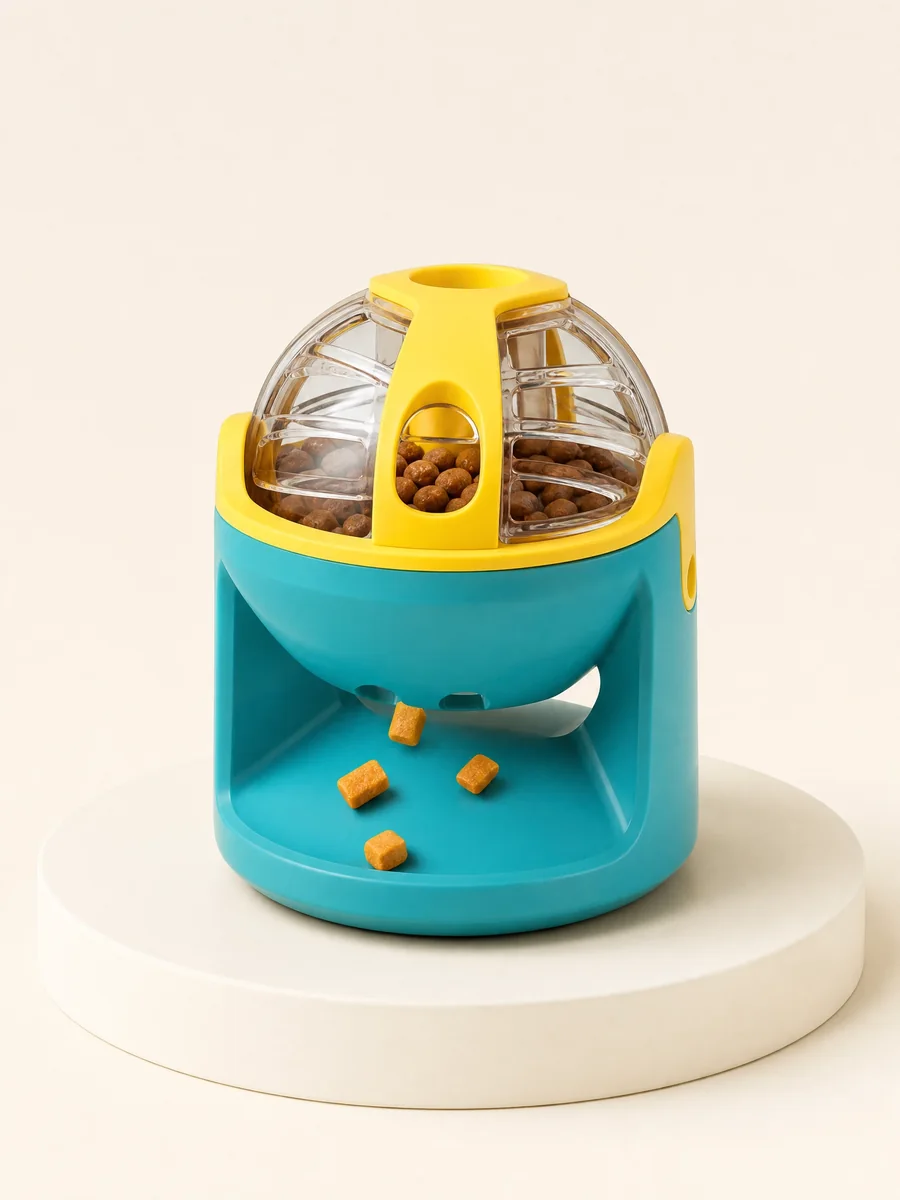
A slow feeder is a product system, not an interchangeable bowl. The buyer is procuring a format for a stated food type, surface, animal category, cleaning routine, retail journey and controlled product record. This guide takes the working perspective of a Chinese B2B pet-product factory and procurement partner: translate a retailer’s objective into a specification production, packaging, inspection and replenishment teams can use.
Start with use context, component-level material and food-contact questions, a functional sample and matched quotation scopes. Requirements are not portable across listings or countries. The responsible buyer or importer must confirm product, food-contact, labeling, chemical, retailer and marketplace requirements for the actual SKU, destination and sales channel. This is commercial sourcing guidance, not legal, veterinary, medical or safety advice.
Module 1 — Define the retail job before selecting a slow-feeder format
What should a retailer decide first? Write one sentence naming the retail role, intended animal category, food context and sales position. An entry dry-food accessory has a different brief from a premium gift-assortment item. Do not begin with “a slow feeder for dogs and cats”; it leaves size, food form, geometry, pack level and claims unresolved. A clear job statement lets the factory or procurement partner identify incompatible ideas before sampling or artwork.
| Assortment tier | Commercial role | Appropriate sourcing emphasis | Questions that must stay open until specified |
|---|---|---|---|
| Entry accessory | Accessible add-on or shelf companion | Simple use path, clear shelf communication and controlled pack cost | Exact food scope, finish level and consumer-pack configuration |
| Core range SKU | Repeatable everyday assortment item | Distinct format, cleaning access, stable presentation and reorder consistency | Variant logic, colour range and replenishment forecast |
| Premium or gift format | Differentiated presentation or feature-led item | Component fit, presentation, pack protection and unboxing sequence | Feature claims, accessories and display requirements |
| Online-exclusive bundle | E-commerce offer with several pieces or variants | Listing identity, nested packs, fulfilment handling and clear unit mapping | Bundle contents, return handling and marketplace fields |
Separate requirements from preferences. “Must remain within the agreed movement limit during the stated bench check” is a requirement; a colour family is a preference. Record the intended surface, who opens moving features, food form, and whether the item is sold alone or in a range. This does not judge individual-animal suitability. It gives retailer, China sourcing team and supplier a shared boundary for a controlled format decision.
Module 2 — Match the format to the food and interaction route
Which slow-feeder format fits the brief? Map the route: fill, place, provide food, allow access, remove leftovers, wash, drain and store. A maze bowl centres on footprint, wall height, channel width and fill area. A textured mat centres on surface pattern, edge profile, residue access and placement. A multi-window feeder adds covers or moving parts; a rolling dispenser adds loading, retention and release. Compare these as different retail propositions, not cosmetic variations of one universal design.
| Decision criterion | Maze bowl | Textured or lick-style mat | Multi-window feeder | Rolling dispenser |
|---|---|---|---|---|
| Food-use question | What piece size and fill depth are in scope? | What spreadable or moist-food description is intended? | What treat size enters each opening? | What food size loads and exits the dispenser? |
| Stability focus | Footprint, base form and stated surface | Flatness, edge lift and stated attachment method | Base position during opening action | Travel path, closure and unintended release |
| Cleaning focus | Channel corners and underside | Texture valleys, edges and drain path | Cavities, hinges and removable parts | Internal path, closure and retained residue |
| Retail differentiation | Visible maze pattern | Low-profile texture and colour | Interactive visual story | Motion and loading story |
Specify the design with annotated views, not an inspiration image. Identify nominal dimensions, food-contact zones, moving components, feet or inserts, removable parts, colours and food-use description. Do not print “works with every food,” “easy clean,” “anti-choke,” “for all pets,” or a health outcome unless final-SKU wording is substantiated and approved for the market. A precise use-context description is more useful than a broad promise.
Module 3 — Convert broad material names into component-level questions
What material information should the buyer ask for? Silicone, plastic, rubber or stainless steel is not a complete specification. It does not identify the component, colour system, surface treatment, construction, source or revision. Ask for a controlled component schedule for every food-contact or potential food-contact zone and parts affecting function or presentation. Name the part, visual reference, function, proposed material, colour, available declaration, document owner and revision. Include relevant feet, fasteners, inserts, coatings, labels and adhesives.
| Documentation question | Why it belongs in the RFQ | Approval record to retain |
|---|---|---|
| Which SKU and component does this document cover? | A generic declaration may not match the quoted configuration | SKU, component identifier and revision date |
| Which destination and intended use does it address? | Evidence and market expectations can differ by use and territory | Buyer’s target-market statement and reviewer |
| Is the colour or additive system identified? | A colour change can be more than a visual change | Colour code, source and change-control status |
| Who owns and issues the document? | Traceability needs a responsible document source | Issuer name, issue date and version |
| What must trigger written re-review? | Changes can alter form, fit, function or evidence relevance | Agreed change-notification procedure |
The U.S. Food and Drug Administration defines a food-contact substance, in its human-food context, as one that contacts food without a technical effect in it; its examples include packaging components, preparation surfaces and cookware.1 The European Commission explains that human-food contact materials placed on the EU market are subject to its framework.2 These sources help frame documentation questions, but they do not establish the status, evidence requirement or market acceptability of a pet-feeding SKU. Do not assume a document for another colour, component or source applies; the responsible buyer or importer should obtain project-specific review.
Module 4 — Specify cleanability and stability as observable sample checks
How can “easy to clean” and “stable” become usable sourcing requirements? Define a repeatable method rather than accepting an advertising phrase. State the test medium, fill condition, access points, wash sequence, drain position, surface, action and pass/fail record. The sample team can then record whether agreed grooves are reachable, residue remains inaccessible, removable parts return correctly and water stays trapped after the drain step. FDA consumer guidance says to wash pet food bowls and scooping or measuring utensils with soap and hot water after each use.3 This makes cleanability a practical design question, not a hygiene-performance claim.
| Check | Controlled question | Useful record | Avoid describing it as |
|---|---|---|---|
| Cleaning access | Can the stated channels, recesses and joins be reached by the agreed method? | Sample ID, method, images and observations | A universal hygiene guarantee |
| Drain and dry route | Does the sample retain visible water after the agreed position and interval? | Position, interval and result | Proof of sanitation performance |
| Stability | How does the sample behave on the agreed surface with the agreed action? | Surface, fill condition, action and result | A universal safety certification |
| Component reassembly | Can permitted removable parts be returned correctly under the instructions? | Step record and fit observations | Child-product compliance or a misuse test |
Keep the protocol proportionate to the SKU. A flat mat may need edge-lift and residue-access observations; a maze bowl may need interior-corner review; a puzzle may need cover alignment and internal access; and a rolling item may need closure and unintended-release observations. No bench check predicts every home environment or animal interaction. It is a commercial control for comparing samples and lots. Record unassessed food types, surfaces or actions, then let the buyer decide whether findings change the positioning, instructions or design.
Module 5 — Build a sample programme that leads to an approval baseline
What should the first sample prove? It should show that the proposed configuration is clear enough to evaluate, not that mass production is approved. Request annotated dimensions, a material and component schedule, intended food-use description, colour reference, moving-part description, draft instructions, preliminary packaging and known assumptions. Use the same agreed medium for comparative access or flow checks. Take dated images and video where motion, cover action or dispensing matters, so the record shows what was assessed.
| Sample stage | Buyer decision | Evidence to request | Change status |
|---|---|---|---|
| Concept sample | Is the format direction worth refining? | Views, basic function demonstration and open-issue list | Exploratory; not a production release |
| Development sample | Does the agreed configuration meet the brief sufficiently to quote and pack? | Dimension check, component schedule, functional observations and revised artwork input | Controlled revision under review |
| Packaging mock-up | Does the consumer unit communicate and protect the intended item? | Flat artwork, assembled pack, barcode placement and pack-out images | Artwork and pack construction review |
| Approval reference | What exact configuration may production follow? | Signed specification, dated images, defect guide and revision index | Baseline subject to written change control |
Treat a “golden sample” as a visual and functional reference, not a substitute for specifications. It can help an inspector recognize the approved maze pattern, fit, colour placement, pack sequence and general finish, but cannot define a tolerance, defect class or release decision. Link it to version-controlled artwork, component schedule, dimensions, packaging specification and open-item log. Record accepted variations or unresolved points explicitly. A China factory or procurement partner can then quote, produce and inspect against a known baseline rather than memory.
Module 6 — Compare quotations as matched project scopes
How should competing slow-feeder quotations be compared? Give every candidate the same RFQ package and ask each to price the same configuration. Include views, nominal dimensions, component list, intended food-use description, colour and finish direction, packaging concept, artwork status, quantity scenario, destination, documentation questions and inspection expectations. Require written assumptions and exclusions. A lower unit figure is not a lower project cost when it rests on a different material assumption, part count, consumer pack, setup scope or format.
| Quote-scope field | What to compare side by side | Typical clarification question |
|---|---|---|
| Product configuration | Format, dimensions, part count, colour placements and finish | Is every moving part, insert and foot included? |
| Commercial basis | Quantity scenario, price basis, sample and setup treatment | Which quantity and Incoterm assumption does this figure use? |
| Packaging | Consumer unit, inner pack, export carton and artwork scope | Are labels, inserts and carton marks included or excluded? |
| Documentation and controls | Available declarations, records and change-notification method | Which document belongs to which component and revision? |
| Delivery assumptions | Port, freight responsibility, consolidation and shipment readiness assumptions | What has not been included in the quoted scope? |
Compare scope before negotiating the number. A quotation sheet should make blank cells visible, because unspecified features often create later cost or delay. Separate one-time design, artwork or pack-development work from repeatable unit and packing assumptions. Suppliers may flag alternatives that improve cleanability, stability, packability or part count, but list them separately from the base offer. Before a purchase order, issue one summary naming the selected version, packaging revision, buyer-confirmed commercial terms and open decisions.
Mid-article CTA — Turn your concept into a comparable sourcing brief Share your intended animal category, food context, preferred format, target market, pack concept and quotation scenario with PawViso at info@PawViso.com. A structured brief makes sample feedback and supplier comparison more useful.
Module 7 — Control changes from sampling through repeat orders
When does a change require reapproval? Agree the answer before production. A colour or material-source substitution, geometry or coating change, new component supplier, moving-part adjustment, assembly change, revised pack, barcode change or instruction change may affect form, fit, function, appearance, documentation or retail data. The point is not to treat every adjustment as failure. Route it through a written decision so the responsible buyer can decide whether a new sample, document, artwork or inspection instruction is needed.
| Change category | First question | Minimum control response |
|---|---|---|
| Visual change | Does it alter the approved retail identity or colour documentation? | Submit a dated visual reference and buyer decision |
| Functional change | Does it alter access, movement, closure, stability or cleanability? | Reassess against the relevant sample protocol |
| Component-source change | Does the existing documentation still describe the actual part? | Review component schedule and evidence relevance |
| Packaging or data change | Does it alter barcode, instructions, labels or pack-out? | Revise artwork and confirm pack-level identifiers |
| Process change | Could it alter fit, finish or consistency? | Record process change and define verification needed |
Use a change log with an identifier, description, reason, affected SKU and market, supporting files, decision owner, effective lot and status. Do not rely on a chat confirmation that cannot be linked to a purchase order or inspection record. For reorders, send the approved revision index and ask the supplier to acknowledge product and packaging baselines. If a retailer adopts a new version, define the transition point, old and new stock, barcode implications, revised images and inspection reference. This prevents a small adjustment becoming a costly retail mismatch.
Module 8 — Design packaging as an identification and protection system
What packaging should be approved with the slow feeder? Approve the consumer unit, inner pack and export carton as one system. The consumer unit needs the correct SKU, variant, instructions, claims and barcode placement; the inner pack needs count and orientation; the export carton needs identifiable marks. Where a maze surface, raised feature or moving part could be compressed, scratched, distorted or activated in transit, assess it in the proposed pack rather than loose on a desk. This is a handling and presentation control, not a guarantee of damage-free delivery.
| Packaging level | Primary job | Controls to approve before production |
|---|---|---|
| Consumer unit | Shopper information and shelf or e-commerce presentation | SKU, variant, instructions, claim review, barcode position and visual orientation |
| Inner pack | Count and handling between carton and unit | Unit count, divider or nesting approach, orientation and label data |
| Export carton | Transport, receiving and lot identification | Carton mark, quantity, dimensions, weight fields, handling marks and seal method |
| Pallet or shipment unit | Warehouse movement where used | Carton pattern, wrap or restraint method, labels and destination-specific requirements |
GS1 explains that barcodes can encode product, shipment, location and attribute information, and that UPC/EAN barcodes are widely used in retail.4 Ask the brand owner or retailer to provide the identifier and confirm its packaging level; do not create or reuse a code from a similar product. Verify the printed code under the buyer’s process on the actual artwork and finished pack. Keep product identity, barcode data and carton marks under one artwork revision. The responsible buyer or importer must confirm retailer, marketplace and destination requirements for the actual SKU; pet products should not automatically be treated as children’s products.
Module 9 — Create a product-specific inspection and release plan
What should final inspection cover? Start with the approved specification, not a generic defect sheet. Identify the lot, selected units or cartons, configuration and colour, component count, relevant dimensions, visible finish points, agreed function check, packaging and barcode checks, carton marks, quantity, observations, required records, release authority and action on failure. Define critical, major and minor categories only for this product and commercial context. Missing parts, wrong artwork, incomplete packs, unfinished edges, failed closure action or a wrong barcode may be serious, but classifications must be agreed rather than copied from another product.
| Quality-control area | Example of an observable control | Record that supports the decision |
|---|---|---|
| Identity and configuration | Confirm format, colour, component count and revision | SKU, batch or lot reference and photos |
| Function and fit | Perform the agreed cover, closure, dispensing or reassembly check | Method, sample condition and observation |
| Workmanship | Check agreed visible surfaces, joins and edge finish | Defect images and defect classification |
| Packaging and data | Verify unit count, artwork revision, barcode and carton marks | Pack-out photos and scan or verification record |
| Release exceptions | Note incomplete goods, unapproved artwork or missing requested records | Exception log, owner and disposition |
ISO 2859-1 describes acceptance-sampling systems for inspection by attributes, including single, double and multiple sampling plans.5 If the buyer chooses one, state the standard edition or project method, lot definition, inspection level, defect classifications, acceptance criteria, release authority and action after failure. Sampling supports an agreed inspection decision; it does not replace approved design, project-specific evidence or complete specifications. The report should state its scope and limitations rather than imply that a partial sample proves all items or market requirements.
Module 10 — Align order execution with destination and receiving controls
What should be locked before a purchase order is released? Confirm the product revision, component schedule, approved reference, packaging revision, carton data, destination, commercial terms, shipment assumptions, inspection point and receiving requirements. Receiving may need carton dimensions, weight fields, SKU mapping, carton quantity, barcode hierarchy, pallet expectations or advance shipment information. Collect these as buyer inputs, not guesses from a prior programme. Identify undecided commercial, freight, customs, marketplace or retailer requirements as open items.
| Execution control | Owner to name | Evidence or decision needed |
|---|---|---|
| Purchase-order baseline | Buyer and supplier contact | Selected revision, quantity scenario and written acknowledgement |
| Destination requirements | Responsible buyer or importer | Market, retailer, labeling and import review for actual SKU |
| Shipping handoff | Buyer’s logistics contact or appointed forwarder | Booking, consolidation and carton-data instructions |
| Inspection and release | Named buyer representative or authorised party | Inspection plan, release criteria and exception route |
| Receiving and claims handling | Retailer or warehouse contact | Carton identification, count reconciliation and discrepancy process |
Use a single order-control sheet that links the product, pack and logistics decisions. Include dates only when they are agreed in the project; do not convert an indicative production discussion into a fixed commitment. Before shipment release, reconcile the approved product and packaging revisions against the purchase order, the inspection record, outstanding document requests and carton marks. After receipt, compare the receiving discrepancy record against the shipment and inspection evidence. This creates a practical feedback loop for the next order and avoids treating production, logistics and retail receipt as separate sources of truth.
Module 11 — Build reorder discipline and a usable supplier scorecard
How should a buyer manage repeat slow-feeder orders? Begin with the approved baseline, prior exceptions and next season’s changes. Keep the specification, component schedule, artwork, reference images, quotation sheet, sample approvals, packaging record, inspection report, shipment data and receiving feedback together. Ask whether the SKU or component source changed, artwork is current, pack level matches the channel, receiving found damage or count issues, and the forecast alters the plan. This is more reliable than “the same as last time.”
| Scorecard category | Review question | Useful qualitative outcome |
|---|---|---|
| Specification control | Did the delivered version match the approved revision? | Consistent, exception managed or needs corrective review |
| Communication | Were assumptions, changes and open items documented promptly? | Clear, incomplete or requires escalation |
| Sample-to-production match | Did approved function, finish and pack-out translate to the lot? | Aligned, partially aligned or requires reapproval |
| Packaging and data | Did SKU, barcode and carton identification match the order? | Ready, corrected or blocked pending review |
| Reorder readiness | Is there a current baseline and an owner for each open item? | Ready to quote, ready after updates or not ready |
Keep the scorecard factual and SKU-specific. Do not infer factory capacity, test capability, certifications or future performance from one successful delivery, or make a public supplier claim from an internal score. A useful Chinese factory or procurement partner relationship uses clear inputs and traceable decisions: retailer requirements, production-side manufacturability and a controlled baseline. This makes format, colour, packaging and replenishment changes easier to evaluate without silently changing the product.
Frequently asked questions
Can one slow-feeder SKU be positioned for both dogs and cats?
Only if the buyer has defined that intended-use scope and the final product, instructions, positioning and project-specific market review support it. Dog and cat positioning should not be a default label added to a generic bowl. Start with the relevant use context, food form, access route and retail narrative, then decide whether one SKU or separate formats better serve the assortment. Avoid universal suitability or outcome claims unless separately substantiated and approved for the actual market.
What is the minimum useful first-sample request?
Ask for the proposed configuration, annotated dimensions, component and material schedule, intended food-use description, colour direction, moving-part explanation where applicable, draft cleaning and assembly instructions, preliminary pack concept, visible assumptions and a sample-review checklist. The first sample should create decisions, not merely confirm that an item exists. Record how it was reviewed, which food substitute or test medium was used, which surface was used for the stability observation and which points remain unresolved.
Is a broad “food grade” statement enough for approval?
No. It may be a marketing phrase or a high-level description, but it does not by itself connect a particular component, colour, intended use, target market and document to the actual SKU. Ask what document exists, who issued it, what it covers, which revision it identifies and whether it remains relevant after a component or colour change. The responsible buyer or importer must confirm what documentation and review are required for the actual product and destination.
Why can two apparently similar quotations be far apart?
They may not be pricing the same scope. One proposal may include a different component count, finish, consumer pack, artwork treatment, inner-pack assumption, carton requirement, sample route, quantity basis or delivery assumption. Put every offer into the same quotation comparison sheet and make exclusions visible. Ask the supplier to price alternatives separately so an improved feature or different packaging choice is a transparent commercial decision rather than an unnoticed substitution.
What should trigger a new sample or new inspection instruction?
Any change that could affect appearance, dimensions, component fit, food-use description, movement, cleaning access, packaging, barcode data, instructions or evidence relevance deserves written review. The buyer may decide that a small visual adjustment needs only an updated reference, while a material-source or moving-part change needs a revised sample and documentation check. Define the route in advance and preserve the decision with the order records.
Conclusion
A dependable slow-feeder programme moves from a defined retail job through format, component questions, observations, samples, quotations, packaging, inspection and reorders. Its core document is a buyer-approved specification that identifies the actual SKU, open points and decision owners. Confirm market, retailer, marketplace, food-contact, labeling and import requirements for the actual SKU with the responsible buyer or importer before production.
Final CTA — Discuss a slow-feeder sourcing brief Email: info@PawViso.com WhatsApp: +86 186 8106 4480
This article provides general B2B sourcing information only. It is not legal, regulatory, veterinary, medical or product-safety advice, and requirements must be confirmed for the actual SKU, destination market and sales channel.
Related PawViso resources
- Continue with How to Audit a Pet Product Supplier Before Ordering. Use this audit framework to compare supplier evidence and follow-up questions.
- Browse the PawViso product catalogue to identify product formats for a sourcing brief.
- Follow the PawViso sourcing process and review the B2B buyer FAQ before sharing project requirements.
External reference
For independent quality-management system context, review ISO 9001 quality-management systems overview. Confirm the requirements that apply to the selected product, target market and order.
References
- 1Food Packaging and Other Substances that Come into Contact with Food — U.S. Food and Drug Administration
- 2Food Contact Materials — European Commission
- 3Tips for Safe Handling of Pet Food and Treats — U.S. Food and Drug Administration
- 4GS1 Barcodes — GS1
- 5ISO 2859-1:2026 Sampling Procedures for Inspection by Attributes — ISO