
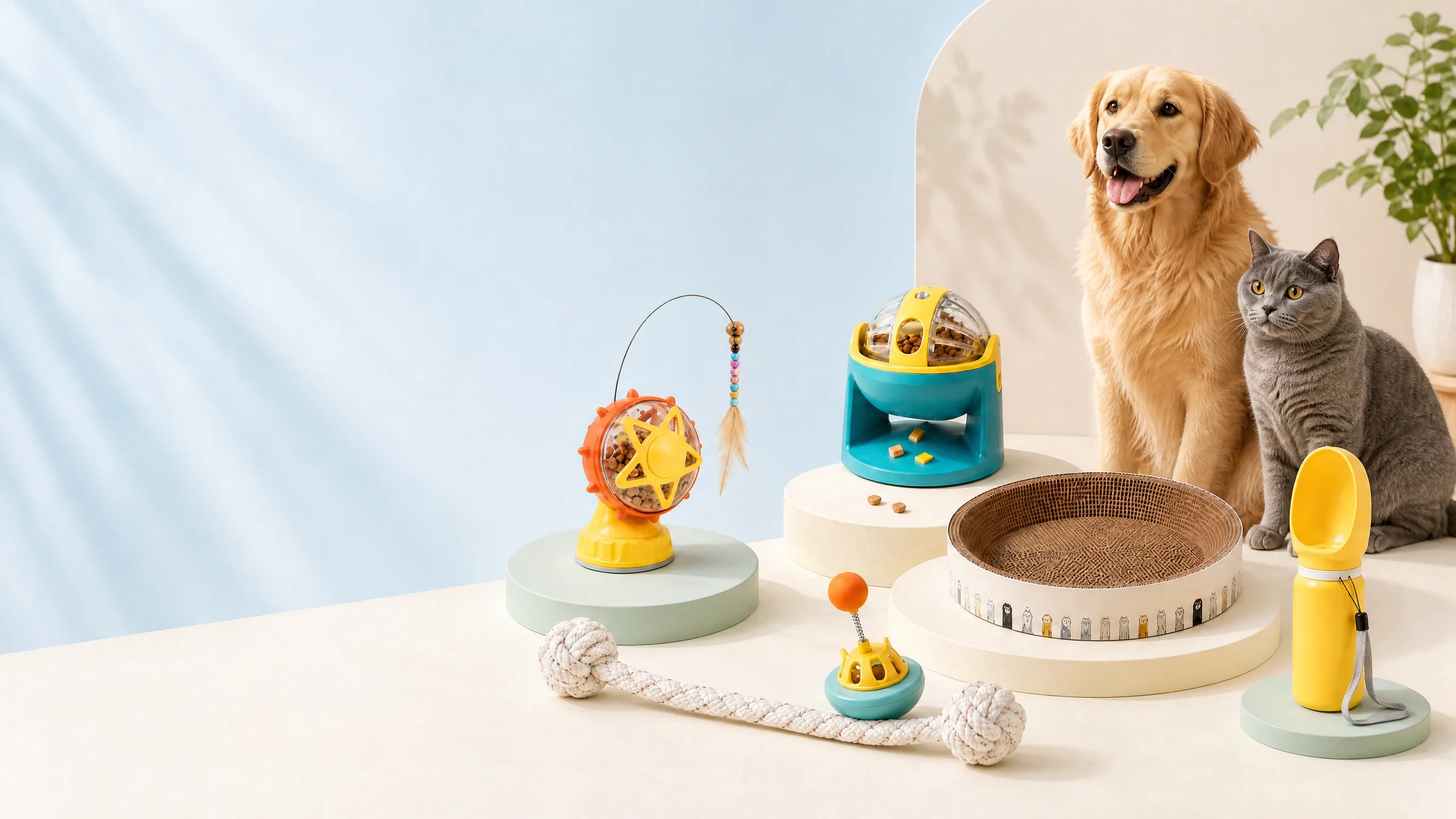
For an importer, distributor, retailer, or private-label team, building a wholesale dog and cat product range is an exercise in assortment architecture, not simply SKU accumulation. A useful range connects clear shopper missions with manageable packaging, documented specifications, channel-appropriate price logic, and a realistic replenishment plan. Sales copy should explain each item without unsupported performance, safety, or health claims.
The categories discussed here are procurement categories to evaluate, not confirmation of any specific PawViso product, material, configuration, customization service, certification, capacity, price, MOQ, lead time, or customer result. Confirm each proposed item’s version, specification, packaging, testing, and commercial terms with the supplier and buyer before quotation, listing, or production.
How should buyers define the role of each category?
Start with the shopping missions your channel intends to serve. A play-and-engagement collection may include puzzle formats, teaser toys, or rope-based tug accessories. A cat-at-home collection may include scratchers and other activity accessories. A routine-accessory collection may include grooming tools, while a travel collection may include water-bottle formats or other portable accessories. A slow feeder or slow-feeding bowl can be evaluated as a non-food pet accessory; this article does not provide food, recipe, portion, nutrition, allergy, medical, or veterinary guidance.
These labels support merchandising but do not replace a product review. Confirm the intended use, end user, display context, instructions, visual system, artwork, packaging language, barcode plan, and photography with the supplier and buyer.
What range architecture makes a wholesale program easier to manage?
Define a role for each candidate SKU before requesting a final quotation. A core item should have a clear use occasion and fit the retailer’s everyday assortment. A discovery item may add visual variety or a different interaction. A seasonal or test item can be reviewed under a limited launch plan. A private-label candidate should be assessed for artwork area, packaging control, documentation, and repeatability. These are planning roles, not claims about PawViso’s current offering or manufacturing capability.
| Assortment role | Category examples to evaluate | Questions to confirm with the supplier and buyer |
|---|---|---|
| Play and engagement | Puzzle toys, teaser toys, rope tug accessories | Intended animal size range, materials, warnings, dimensions, sample version, packaging and test records |
| Cat home activity | Scratchers and selected activity accessories | Finished size, assembly, surface materials, stability, carton volume, care instructions and artwork area |
| Routine accessories | Grooming tools and non-food accessories | Component materials, edge or tip details, instructions, packaging, labeling and destination-market review |
| Travel accessories | Portable water-bottle formats and carriers | Capacity, closure design, leak-test method, transport protection, carton configuration and claims wording |
| Slow-feeding accessory | Slow feeder or slow-feeding bowl | Exact material, dimensions, cleaning instructions, intended use wording and confirmation that no food or health claim is made |
| Bundle or test set | Cross-category combinations | Contents, barcode plan, inner-pack quantity, packaging language, sample approval and reorder assumptions |
The table is deliberately a confirmation framework. Do not copy a supplier description into a catalog until the approved version, images, packaging, and market obligations have been checked. Where a product is sold in the European Union, the applicable product-safety responsibilities should be reviewed using official European Commission resources 1. For the United States, importers and retailers should consult the Consumer Product Safety Commission’s import guidance and determine whether any product-specific rule applies 2. The relevant obligation depends on the item, claim, country, and sales channel.
How should buyers balance breadth, depth, and channel fit?
Breadth is the number of product concepts; depth is the number of variants within each concept. A controlled range can be easier to sample, explain, and replenish than a collection with many colors, sizes, or pack formats. Balance depends on shelf space, ecommerce navigation, working capital, and listing capacity.
Use a review gate: identify the shopper mission, request current specification and packaging files, review materials and components, identify warnings and tests, inspect a sample, and record approved commercial assumptions. Confirm dimensions, weight, carton data, materials, colors, accessories, and packaging with the supplier and buyer rather than inferring them from photographs or old quotations.
Which packaging and claim checks should be included in the sourcing brief?
Claims require the same discipline. Terms such as “safe,” “non-toxic,” “eco-friendly,” “sustainable,” “indestructible,” “best,” and “bestselling” should not be used unless the buyer has appropriate evidence and market approval. The U.S. Federal Trade Commission explains that its Green Guides address environmental marketing claims and the risk of misleading consumers 3. A claims matrix should record the wording, product or package element, evidence, permitted market, review owner, and recheck date.
What should a buyer request before placing an order?
A request for quotation should cover the product version, dimensions, weight, materials, components, packaging, sample process, artwork, labeling, quality checkpoints, carton data, payment terms, and production assumptions. Confirm MOQ, quotation validity, lead time, customization scope, and documentation with the supplier and buyer; do not present them as fixed PawViso terms without project records.
FAQ: What do wholesale buyers need to know?
Should a new buyer launch dog and cat products together?
It depends on channel strategy, shelf space, customer profile, and internal capacity. A mixed launch can create a broader merchandising story, while a focused launch can simplify sampling and listing work. Compare both options by collection role, packaging complexity, expected reorder logic, and the number of variants that can be supported. Confirm the final launch scope with the supplier and buyer.
How many SKUs belong in a first assortment?
There is no universal number. Select the smallest set that represents the intended collections and price architecture, then review samples, shelf or webpage space, packaging workload, and replenishment assumptions. Confirm the final SKU count, variants, MOQ, and commercial terms with the supplier and buyer.
Can PawViso provide private-label packaging or customization?
Feasibility must be assessed for the selected product and project. Confirm whether the requested artwork, packaging format, materials, barcode arrangement, documentation, sample approval, MOQ, lead time, and commercial terms are available. This article does not confirm that any PawViso customization or private-label service is offered.
What should importers verify before listing a product online?
Verify the approved product version, images, dimensions, materials, instructions, warnings, packaging information, and destination-market obligations. Review all claims and retain the relevant approval records. Do not rely on an unverified catalog description, and do not publish specifications that have not been confirmed with the supplier and buyer.
How can buyers start a PawViso range review?
Share the target market, sales channel, customer profile, preferred categories, packaging direction, and private-label requirements through the PawViso contact page. The supplier and buyer can then review the applicable product parameters, documents, samples, packaging, and commercial assumptions for the specific project. All specifications, compliance materials, customization scope, MOQ, pricing, lead time, and other terms remain subject to written confirmation with the supplier and buyer.
Related PawViso resources
- Continue with How to Build a Private Label Pet Product Line. Use this guide to connect customization, packaging and MOQ decisions.
- Browse the PawViso product catalogue to identify product formats for a sourcing brief.
- Follow the PawViso sourcing process and review the B2B buyer FAQ before sharing project requirements.
External reference
For independent product identification and barcode context, review GS1 guidance on Global Trade Item Numbers (GTINs). Confirm the requirements that apply to the selected product, target market and order.
References
- 1European Commission — Product safety
- 2U.S. Consumer Product Safety Commission — Import Resources
- 3U.S. Federal Trade Commission — Green Guides
Editorial note: This educational sourcing draft is not legal, medical, nutritional, or veterinary advice. Confirm destination-market requirements and every product, packaging, compliance, and commercial parameter with the supplier and buyer before purchase, advertising, or publication.