
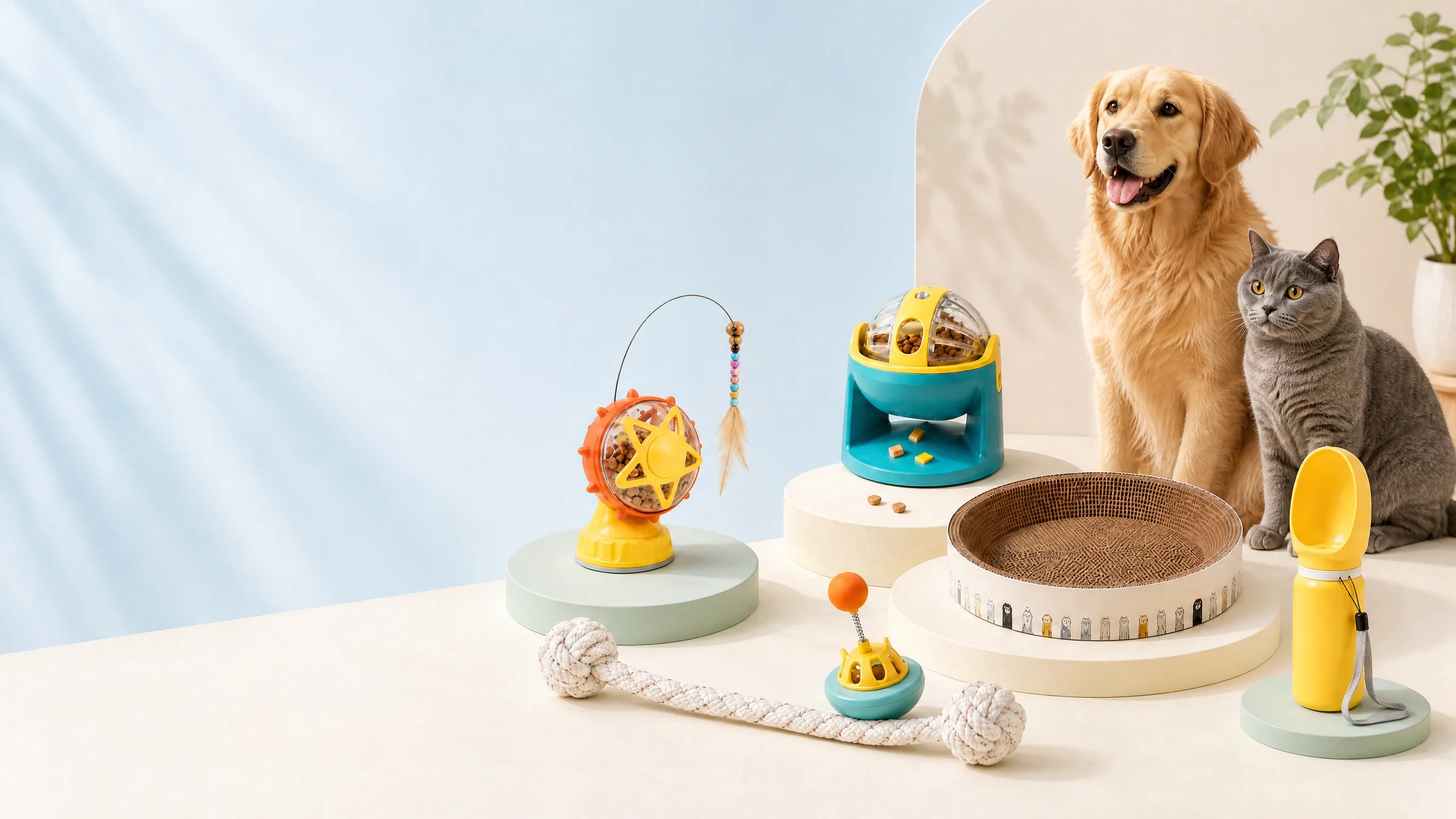
A factory-ready request for quotation (RFQ) answers one practical question before it asks for a price: what, exactly, is the supplier being asked to make and deliver? Send every candidate the same controlled brief, file revisions, and response schedule. A supplier can then disclose a feasible alternative, but cannot quietly price a different product. From the China-side factory and procurement perspective, this discipline prevents the late discovery that a quoted toy, leash, bed, bowl, apparel item, or grooming accessory had different components, packaging, or commercial assumptions from the buyer’s intent.
An RFQ is not a purchase order, a compliance approval, or a promise to place an order. It is a decision document that turns a product idea into comparable proposals. Start with direct choices—product role, target configuration, quantity, market, packaging, evidence, and trade basis—then keep open questions visible. Requirements for the actual SKU and destination market must be confirmed by the responsible buyer/importer before production or sale; a product photograph and a supplier’s general statement are not a substitute for that confirmation.
Module 1 — Decide what commercial role the product must play
Before asking a factory to quote, decide what job the product performs in the assortment. Is it an entry item that invites a first purchase, a core replenishment item, a premium giftable SKU, a bundle component, or a seasonal test? State the intended pet type, use setting, selling channel, and price-position objective without asking suppliers to infer them. “Dog accessory” is a category; “single retail grooming accessory for independent pet shops, intended to sit in a mid-range grooming set” is a sourcing direction. This context tells a supplier whether simple retail presentation, a coordinated series, or a compact fulfilment pack matters most.
The role also determines which tradeoffs deserve attention. A low-complexity add-on may benefit from a limited set of variants and straightforward packing. A hero SKU may justify more review of visible finish, brand presentation, and replacement components. Do not turn these choices into invented technical specifications. Instead, identify the buyer’s objective and ask each supplier to explain how its proposed configuration supports it. The table converts a merchandising intention into a quotation instruction without claiming a price, performance level, or market outcome.
| Assortment tier | Buyer’s product role | RFQ direction | Decision to make before quote comparison |
|---|---|---|---|
| Entry or impulse item | Easy addition to a broader purchase | Prioritise clear identity, simple variant logic, and efficient retail handling | Which functions and presentation details are essential? |
| Core replenishment item | Repeatable, stable range member | Prioritise configuration consistency, pack data, and change control | Which attributes must remain unchanged across reorders? |
| Premium or giftable item | Brand-building or higher-attention SKU | Prioritise finish references, presentation, and approval gates | Which visible details cannot be substituted? |
| Bundle component | Part of a multi-item offer | Prioritise interface with other units, counting, and kit assembly | Who owns the final bill of materials and packing sequence? |
Module 2 — Freeze the configuration suppliers must price
The first version of a comparable RFQ should define one target configuration per SKU. Give each item a buyer SKU or temporary project code, a clear name, intended use, variant list, and what is included in the retail unit. Attach only controlled references: drawing, annotated photograph, artwork, reference sample image, or bill of materials. Every attachment needs a file name, revision, and issue date. Describe whether it is a visual inspiration, functional reference, or required target. This prevents a supplier from treating an attractive online image as a complete production specification.
Use measurable or observable wording where the buyer has a settled requirement. Ask for the stated overall dimensions, component count, closure type, logo location, and retail-unit contents; where a dimension remains open, ask for the supplier’s proposed measurement and tolerance approach. Avoid vague instructions such as “high quality,” “strong,” or “luxury” unless the RFQ explains how the buyer will review that feature. A supplier should return a deviation list against the target configuration. No response on a requirement should be treated as unconfirmed, not as accepted.
| RFQ field | Buyer input | Supplier response needed | Comparison use |
|---|---|---|---|
| Project identity | SKU code, product name, reference revision | Quoted SKU and reference files used | Confirms the same project is being priced |
| Retail-unit contents | Included components, accessories, inserts, or exclusions | Itemised proposed contents | Exposes missing or substituted parts |
| Variant plan | Sizes, colours, prints, or bundle options | Availability and any configuration differences | Separates each variation from a generic quote |
| Visual direction | Approved colour reference, logo position, finish reference | Proposed method and visible deviations | Creates an approval list before artwork release |
| Open decisions | Questions marked “proposal requested” | Option, effect on quote, and stated limitation | Keeps uncertainty visible rather than buried |
Module 3 — Separate non-negotiables from proposals
A useful RFQ distinguishes mandatory requirements, preferences, and supplier proposals. Mandatory items are gates: if they cannot be met, the supplier must say so plainly. Preferences are desirable but may be traded against another project need. Proposal items invite alternatives and should require an explanation of the change. This structure is fairer to the supplier and more useful to the buyer than an overlong wish list that hides what is essential. It also avoids the factory having to guess whether an attractive but different material or construction is welcome.
Write the acceptance method beside each non-negotiable. A buyer can require confirmation against an approved sample, a labelled dimension drawing, an artwork proof, a component description, or a defined visual inspection point. The method is not a test claim unless the buyer has specified a suitable method and approval criterion. If the exact requirement is still under development, ask for a proposal, relevant evidence, and any quote impact. Record the answer as “confirmed,” “proposed deviation,” or “open,” and make the buyer’s disposition visible in the project file.
Module 4 — Set quantity, assortment and destination-market context
State initial quantities by SKU, variant, and packaging version, plus any non-binding future range that helps a supplier show quantity effects. Quantities are quotation inputs, not an order commitment. Ask for separate rows at the stated tiers rather than a blended headline price. Include the intended countries, channel, language needs, and the buyer or importer responsible for final market decisions. This matters because the same physical item may be prepared differently for a marketplace, retail chain, distributor, or direct-to-consumer fulfilment route. For U.S. pet food, FDA says labelling is regulated at federal and state levels and identifies federal label elements including product identification, net quantity, business identity, and ingredients; that example is not a universal template for pet accessories or other markets.1
Do not automatically import children’s-product rules into a pet-product brief. In the United States, the statutory definition concerns a consumer product designed or intended primarily for children aged 12 or younger, so classification turns on the actual product and its representation rather than the fact that it is sold near children’s goods.2 Likewise, EU product-safety obligations should be reviewed for the actual non-food SKU, economic-operator role, and sales route; the European Commission describes the General Product Safety Regulation as ensuring only safe products are available on the market and links businesses to relevant obligations.3 The responsible buyer/importer must confirm project-specific requirements, claims, labelling, documentation, and any testing or registration needs for the actual SKU and destination market.
Module 5 — Specify materials, components and claims at the right level
Materials need enough detail to identify the proposed product without pretending that an unverified description is a guaranteed composition. List each visible or functional component: body, fabric or substrate, filling if applicable, hardware, fastener, coating, print, trim, label, insert, and any adhesive or packaging material that matters to the project. State a required material family only when it is genuinely required. Otherwise, ask the supplier to name its proposed material, component source category if relevant, construction method, colour or finish reference, and any available supporting document. A declared alternative must be clearly labelled as an alternative.
Treat consumer-facing claims as controlled copy, not as factory shorthand. “Waterproof,” “non-toxic,” “calming,” “health,” “indestructible,” and similar language can imply different things to different parties and may raise product- or market-specific questions. Put the exact proposed wording in the RFQ, identify who will approve it, and ask what evidence—if any—the supplier says it can provide for the proposed configuration. Do not instruct a supplier to print a claim because a competing listing uses it. The buyer should resolve the claim, the relevant market review, and the approved artwork before release; this guide does not provide veterinary, medical, legal, or safety advice.
| Cost-driver category | Buyer should disclose | Supplier should clarify | Buyer comparison question |
|---|---|---|---|
| Product construction | Components, assembly expectation, visible details | Proposed construction and changes from reference | Is the proposal the same build? |
| Material and finish | Required family or acceptable options, colour reference | Material description, finish, and substitutions | Is a different input affecting fit or review? |
| Branding | Logo file, placement, print or decoration intent | Proposed application method and setup assumptions | Is branding included in the quoted scope? |
| Variant complexity | Colourways, sizes, prints, or mixed assortment | Any effect of each variant on the proposal | Are all variants priced and described? |
| Packaging | Retail and transit pack direction | Pack format, components, and unpriced open points | Are packaging assumptions aligned? |
Module 6 — Define retail, transit and barcode packaging
Specify packaging as a hierarchy: consumer unit, any inner pack, master carton, and pallet or shipment configuration when relevant. For every level, state the purpose, format, buyer-supplied or supplier-proposed artwork, language fields, handling marks, unit count, and who approves the proof. Ask for proposed dimensions, net and gross weight, units per carton, carton quantity, and volume as supplier-provided estimates until confirmed. This detail lets the buyer compare retail readiness and logistics assumptions without turning an early RFQ into an unsupported freight guarantee.
Clarify barcode responsibility early. A Global Trade Item Number (GTIN) is used to uniquely identify trade items—products or services priced, ordered, or invoiced in the supply chain—according to GS1.4 The RFQ should identify whether the buyer will provide the code and artwork, whether the supplier is merely applying a supplied barcode, which unit level carries it, and how the proof will be reviewed. It should not assume a factory may allocate or reuse a buyer’s identifier. A barcode image, a carton mark, and a retail label are different controlled items; list each separately.
| Packaging level | Minimum RFQ instruction | Approval checkpoint | Common comparison risk |
|---|---|---|---|
| Consumer unit | Format, display intent, required labels, artwork owner | Pre-production artwork proof | Quote assumes plain packaging rather than branded retail pack |
| Inner pack | Whether used, units per inner, identification need | Pack layout or count confirmation | Inner pack is omitted or quantity differs |
| Master carton | Units per carton, carton marking, protective intent | Carton marking and pack-out confirmation | Different carton counts obscure a unit-price comparison |
| Shipment configuration | Palletisation or loading direction if known | Supplier proposal reviewed by buyer | Freight assumption is mistaken for a product cost |
Mid-article CTA — Preparing a wholesale pet-product RFQ? Send PawViso the category, target market, SKU quantities, packaging direction, and controlled reference files so the quotation conversation can begin with one defined brief.
Module 7 — Ask for commercial terms on one comparable basis
Ask every supplier to complete the same quotation schedule. It should show currency, unit price for each SKU and quantity tier, any one-time charges stated separately, sample charges if applicable, quotation validity, payment proposal, requested delivery term, named place or port, and a clear list of inclusions and exclusions. Do not assume a unit price includes artwork adaptation, branding, sampling, inspection, export packing, local delivery, freight, insurance, duties, taxes, or destination services unless the supplier writes that it does. The goal is not to force a particular trade term; it is to make the basis intelligible.
When an Incoterms® rule is requested, write the rule, named place or port, and version into the RFQ and purchase documents. ICC describes Incoterms® 2020 as allocating costs, risks, and obligations and provides guidance for selecting a rule in a B2B contract.5 It does not remove the need to agree payment, product description, approvals, quality controls, or remedies elsewhere. Ask suppliers to flag price conditions, including changes caused by quantity, packaging, colour count, branding method, material option, or shipment consolidation. A conditional offer is usable when the condition is explicit; an unstated assumption makes it non-comparable.
| Quote-scope line | Supplier must state | Buyer should not infer |
|---|---|---|
| Product unit | Currency, SKU, quantity tier, and unit-price basis | That all variants share a price or configuration |
| One-time items | Separate description and commercial treatment | That setup, artwork, or development work is included |
| Packaging | Retail, inner, and export-pack assumptions | That branded packaging is included in a plain-product quote |
| Delivery basis | Trade term, named point, version, and stated charges | That freight, insurance, duty, or local charges are covered |
| Validity and payment | Quote-validity window and proposed payment structure | That terms remain available after specifications change |
Module 8 — Request evidence that is relevant to the actual SKU
Request evidence to answer defined questions, not to collect generic “certificates.” A proportionate evidence register may ask for a product specification, component or material declaration, artwork proof, packaging drawing, sample photographs, relevant test report, quality record, or traceability description. For each item, state the decision it supports and require the supplier to identify the covered SKU or configuration, revision, date, issuer where applicable, scope, and limitations. A document for another model, material, colour, market, or old revision is not automatically evidence for the proposed item.
Separate evidence review from compliance approval. A buyer may find a record helpful for deciding whether to advance a proposal, yet still need the responsible buyer/importer to confirm market requirements for the actual SKU. Ask the supplier to disclose what it can provide rather than promise an unspecified result. Maintain an evidence register with three statuses: received and relevant to the stated configuration; received but scope needs clarification; or not received. This approach protects the comparison process because a polished certificate title cannot conceal an unmatched product, unsupported claim, or unresolved destination-market question.
| Evidence request | Decision question | Minimum identity check | Status to record |
|---|---|---|---|
| Product specification | What is proposed to be made? | SKU, revision, components, and date | Matches / deviation / open |
| Artwork proof | What will appear on the unit? | Artwork revision, language, barcode location | Approved / revise / open |
| Report or declaration | What stated scope does it cover? | Product or component, method or subject, date, limitation | Relevant / scope gap / open |
| Quality record | How is the agreed check documented? | Checkpoint, configuration, and record identity | Proposed / agreed / open |
| Carton information | How is the item packed for shipment? | Pack-out, dimensions, weights, and marking revision | Comparable / needs alignment |
Module 9 — Normalize quotations before comparing suppliers
Do not rank suppliers from the first unit-price column. First transpose every reply into a buyer-owned comparison sheet using one row per supplier, SKU, quantity tier, and configuration revision. Preserve the supplier’s original wording and attach the quote, but record departures in a separate deviation column. Normalize only like-for-like information: the same unit contents, quantity, currency, packaging hierarchy, trade basis, and stated inclusion scope. If two offers differ on any of those foundations, label them not yet comparable instead of estimating a correction.
Then compare decision criteria in a transparent order: configuration fit, evidence relevance, packaging fit, commercial clarity, responsiveness to open questions, sample route, and change-control approach. Weighting is a buyer decision, not a universal formula. A supplier with a higher headline price may offer a clearer scope, while a lower number may exclude a required component or retail pack. Record why a proposal advances, needs clarification, or is rejected. This record is useful when several internal stakeholders revisit the selection after a sample or revised quote changes the project.
| Decision criterion | Normalized buyer view | Advance when | Pause when |
|---|---|---|---|
| Configuration fit | Target requirements and deviations side by side | Essential requirements are confirmed or consciously accepted | Unit contents or construction remains unclear |
| Commercial scope | Price, currency, quantities, inclusions, exclusions | Basis matches the buyer’s request | Delivery or packaging scope differs |
| Evidence relevance | Actual SKU, revision, date, and limitation | Evidence addresses the stated question | Record covers another configuration |
| Packaging fit | Retail, carton, and barcode assumptions | Channel and handling needs are visible | Pack level or artwork ownership is missing |
| Execution control | Sample, approval, change-notice route | Supplier can work to a documented approval path | Changes could proceed without buyer review |
Module 10 — Approve a sample and release production without losing the brief
A quotation selects a proposal; it does not approve mass production. Before a sample is made, issue a sample request that names the quoted configuration, required branding or artwork status, packaging level to be represented, requested photographs or measurements, and review date. Decide what the sample is intended to prove. It may be a visual reference, a fit check, a packaging proof, or a configuration confirmation; do not let a single informal sample silently stand for every possible quality or market question. Keep the supplier’s sample ID and the buyer’s observation record together.
After review, convert the accepted version into a release pack. It should identify the final SKU, approved sample or photo reference, component and material descriptions as declared, dimensions where applicable, logo treatment, artwork revision, packaging details, agreed inspection points, accepted deviations, commercial basis, and named approvers. Define a written change route for any proposed substitution to material, construction, artwork, packaging, or component. Production should not proceed against an unapproved change simply because the change seems minor. The release pack is the bridge between commercial selection and controlled execution, not a claim that PawViso or any supplier has a particular testing capability or approval.
| Sample-approval item | Buyer records | Supplier confirms | Release outcome |
|---|---|---|---|
| Configuration | Sample ID and target RFQ revision | Components and visible deviations | Approved target or revision required |
| Visual finish | Photos, colour reference, and observations | Proposed correction if any | Approved / revise / open |
| Branding and artwork | Proof revision and placement | Exact file applied | Print release or hold |
| Packaging | Retail and carton representation reviewed | Final pack-out proposal | Pack approval or clarification |
| Change control | Buyer approver and written route | No-change point and notice process | Controlled production release |
Module 11 — Build reorder learning into the first purchase
The first order should create a usable baseline for the next one. Keep the final RFQ, winning quotation, deviation log, release pack, approved artwork, approved sample record, carton information, and supplier correspondence in one version-controlled project folder. At receipt and after the first sales cycle, gather observations in the same language used in the RFQ: which SKU or variant moved as expected, whether retail presentation caused handling issues, whether carton data was usable, what customer-facing feedback should be investigated, and what change request is actually being proposed. Distinguish observations from conclusions; one comment does not by itself define a root cause or a revised specification.
Use the review to decide whether the reorder should be identical, revised, expanded, or stopped. A repeat order is easier to control when the buyer can point to a prior approved configuration and list only the intentional changes. Re-open the market-requirements review whenever the SKU, materials, claims, packaging, destination, channel, or importer arrangement changes. Ask the supplier to requote changed items on the same normalized basis and to identify the configuration revision. This learning loop makes an RFQ a reusable procurement asset rather than a one-time email, while preserving the responsible buyer/importer’s role in final product and market decisions.
Frequently asked questions
What is the minimum information needed for a wholesale pet product RFQ?
At minimum, identify the SKU or project code, target configuration, intended product role, quantity by variant, destination market and channel, packaging direction, requested quotation basis, response date, and decision owner. Attach the controlled files that define the item, and label all unresolved points as proposals requested. The minimum is not a fixed page count. It is the information needed to stop a supplier from guessing about the product, pack, market context, or price scope.
Should every supplier receive the same RFQ?
Yes. Send the same core brief, file revision, quantity schedule, and response table to every candidate. A supplier may propose a documented alternative, but the buyer should not quietly change requirements between candidates and then compare their headline prices. If a legitimate clarification is sent later, issue it to all relevant candidates as a dated revision. This preserves a fair comparison and makes later supplier selection easier to explain internally.
What if a supplier cannot answer an RFQ question immediately?
Mark the point open and ask for a proposed resolution, evidence available, commercial impact, and timing implication. Some questions should remain open during early sourcing, especially when the buyer is seeking a feasible construction or pack proposal. However, do not allow essential open points to migrate unnoticed into sampling or production. The comparison sheet should show whether each unresolved item is a buyer decision, supplier action, or destination-market confirmation owned by the responsible buyer/importer.
Does an RFQ approve a product for sale in my market?
No. An RFQ is a procurement communication. It can request documents and identify the market, but it does not determine regulatory classification, label adequacy, product safety, suitability, or legal compliance. The responsible buyer/importer should confirm applicable requirements for the actual SKU, intended claims, packaging, sales route, and destination market with appropriate qualified advisers before production or sale.
Conclusion
A comparable wholesale pet product RFQ does not need invented technical detail or a long price-list request. It needs one defined product role, a controlled configuration, clear mandatory and open items, quantity and market context, material and packaging instructions, visible commercial assumptions, evidence questions tied to the actual SKU, and a buyer-owned comparison method. Move the selected proposal through a documented sample and release path, then preserve first-order learning so a reorder starts from an approved baseline instead of a memory.
Final CTA — Ready to prepare a supplier-ready pet-product RFQ? Email your product category, target market, quantities, packaging direction, and reference files to Email: info@PawViso.com or contact WhatsApp: +86 186 8106 4480.
General-information disclaimer: This guide is general procurement information, not legal, veterinary, medical, product-safety, or compliance advice. Confirm requirements for the actual SKU and market with the responsible buyer/importer and appropriate qualified advisers.
Related PawViso resources
- Continue with How to Audit a Pet Product Supplier Before Ordering. Use this audit framework to compare supplier evidence and follow-up questions.
- Browse the PawViso product catalogue to identify product formats for a sourcing brief.
- Follow the PawViso sourcing process and review the B2B buyer FAQ before sharing project requirements.
External reference
For independent quality-management system context, review ISO 9001 quality-management systems overview. Confirm the requirements that apply to the selected product, target market and order.