
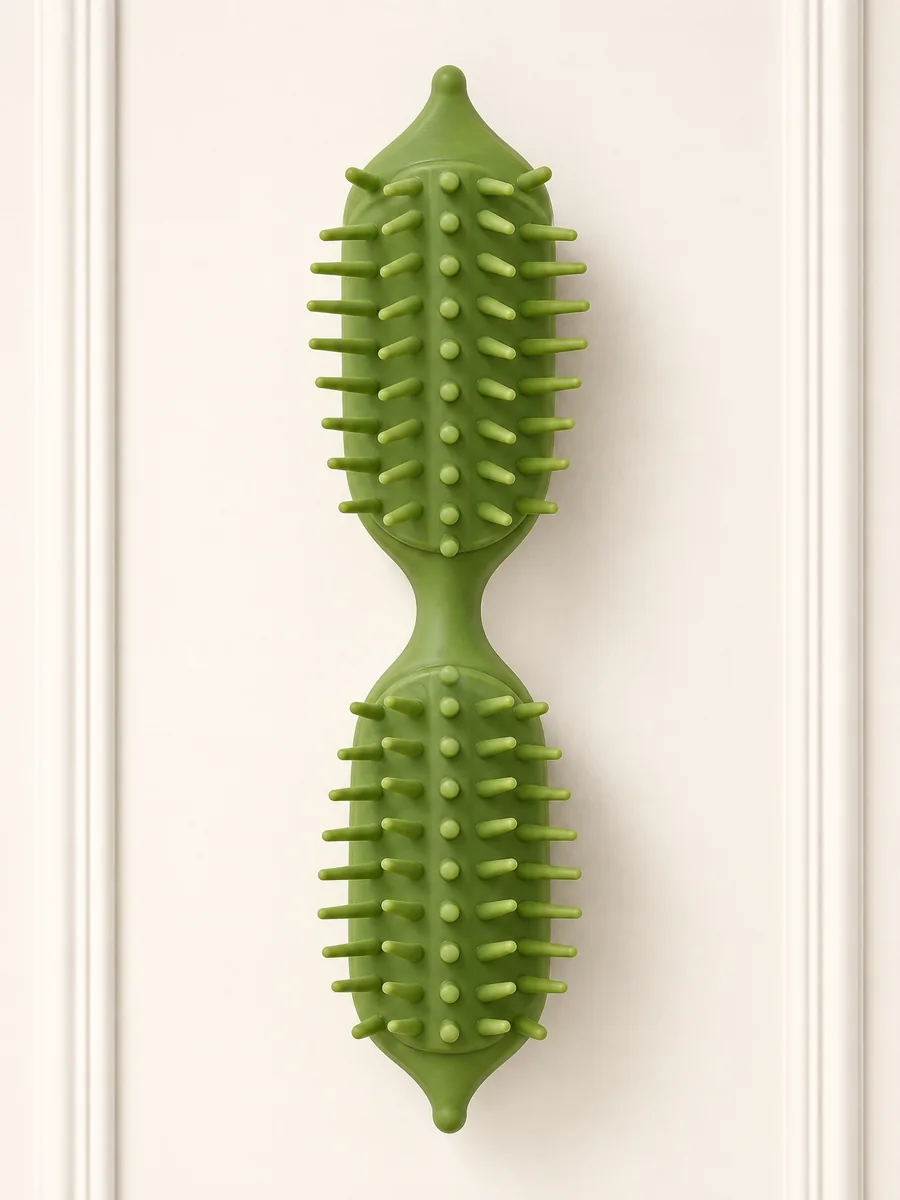
A useful cat care range is not a catalog of unrelated accessories. It is a deliberate system in which each product has a clear shopper job, a defined price and packaging role, and an approved route from factory to shelf or parcel. For a retailer, distributor, marketplace seller, or private-label owner, the goal is not to list every available cat item. The goal is to make buying easier for the end customer while making replenishment and quality management practical for the buying team.
From a Chinese pet-product factory and procurement-partner perspective, the strongest briefs start with range architecture rather than individual quotations. A wall brush, teaser toy, scratch board, lint roller, comb, and storage accessory may use different materials and factories, yet they should still read as one commercial offer. This guide explains how to make the major decisions in the right order: define roles, select a disciplined SKU set, approve samples, align packaging and quotations, and preserve the records that make later reorders predictable.
Module 1 — Decide the customer problem your range will solve
Decide the range promise before asking for products. State the customer, the sales channel, and the occasion that the assortment will serve in one sentence. For example, an apartment-living cat owner shopping online has a different buying problem from a specialist-store customer seeking an in-store gift. The first may value compact packs, clear installation information, and parcel resilience. The second may respond to tactile materials, visible color differentiation, and a product story that helps staff explain the choice. This decision prevents the range from drifting into a collection of individually attractive but commercially conflicting SKUs.
Then assign every proposed item a primary role: grooming, interactive play, scratch behavior, or home care. A product may support more than one outcome, but only one role should lead its merchandising, packaging headline, and place in the planogram. A self-grooming wall brush can sit between grooming and home care, for example, but the buyer must decide whether its first job is coat-contact convenience or a neat home solution. That decision directs the imagery, installation instructions, accessory selection, and comparable products used during price review.
| Range role | Shopper decision it supports | Suitable product families | Buyer discipline |
|---|---|---|---|
| Grooming | “How do I maintain the cat’s coat or collect loose fur?” | Brushes, combs, grooming mitts, self-grooming wall brushes | Distinguish hand-held, mounted, and travel use; avoid repeated handle shapes without a different job. |
| Play | “What can I use for a short interaction or rotation?” | Teaser toys, plush toys, ball sets, replacement attachments | Build visible variety through play format, not cosmetic color alone. |
| Scratch | “Where can the cat scratch in the home?” | Flat boards, lounges, vertical formats, replacement scratch elements | Define placement, footprint, and replacement logic before selecting styles. |
| Home care | “How do I keep the shared space organized and presentable?” | Fur-removal tools, storage, mat or furniture-protection accessories | Set realistic claims and make the storage or cleaning scenario obvious. |
Module 2 — Build the category architecture before selecting individual SKUs
Use a core–choice–test architecture rather than giving every item equal status. Core SKUs are the products that explain the range at a glance and deserve the most stable artwork, inventory attention, and reorder planning. Choice SKUs let shoppers select a format, color, size, or activity style once they understand the core. Test SKUs are controlled experiments with a stated review point. This structure stops the first order from being overloaded with permanent variants that have never earned shelf space.
For a four-role cat care assortment, begin by identifying one or two anchors in each role, then add only the variants that make a shopper decision easier. An anchor could be a hand-held grooming tool, a teaser format, a scratch format, and a home-care accessory. Choice items may then answer a specific question: compact versus display-led, hanging versus floor use, or a giftable multi-piece presentation versus a simple entry pack. A test item needs a hypothesis written in plain language, such as whether a different play silhouette or a new mounting method gains interest in a named channel. Without that hypothesis, a test SKU becomes a permanent exception.
Module 3 — Select SKUs by decision coverage, not by supplier catalog breadth
Approve a SKU only when it covers a distinct customer decision and has an operational owner. A supplier catalog is an ideation tool, not an assortment plan. Start with a candidate list and score each item against role clarity, channel fit, visual distinctness, packaging burden, repeatability, and replacement or replenishment logic. If two candidates receive the same customer explanation and must be sold in the same channel at the same position, select one unless a documented assortment reason supports both.
The scoring discussion should happen before requesting customized samples. It is cheaper to reject a redundant concept on a specification sheet than after creating artwork, labels, and physical prototypes. Buyers should identify the product family, construction option, branding route, sales unit, and anticipated pack format for every approved candidate. “Cat toy, blue” is not an SKU definition. “Interactive teaser; defined rod, connector and attachment version; branded header card; one retail unit; assigned internal item code” is a usable starting point.
| Selection question | Evidence the buyer should review | Keep the candidate when | Remove or defer it when |
|---|---|---|---|
| Does it have one clear job? | Role statement, product image, draft pack headline | A buyer or shopper can explain its primary role in one sentence. | It depends on several vague benefits to justify its place. |
| Does it add real choice? | Side-by-side comparison with planned SKUs | It changes use, placement, format, or gift/replenishment proposition. | It differs mainly by a minor color or decorative detail. |
| Can its variant be controlled? | Component list, material/color callouts, artwork version | The production version can be described and checked consistently. | The defining feature is informal or subject to unapproved substitution. |
| Does it fit the channel? | Shelf, marketplace, or parcel scenario | Its retail unit and information hierarchy suit the actual route to shopper. | Its pack assumes a channel the buyer will not use. |
| Is there a review decision? | Trial objective and named range owner | The buyer knows what result will trigger a reorder, revision, or exit. | It is added only because it “might sell.” |
Module 4 — Define product families and interfaces that work together
Specify the interfaces between products, packaging, and the home before discussing decoration. The practical interface is where a product meets the cat-care routine or the household: a mounting surface, a replaceable component, a grip, a hanging point, a storage location, or a retail hook. Define that interaction at a level that a factory, packaging supplier, and inspection team can understand. This is especially important for grooming and scratch items, where the range may include both fixed-place and portable formats.
Write the brief in observable terms. For a mounted grooming accessory, identify the intended installation approach, the supplied components, the surfaces the buyer wants addressed in the instructions, and the way loose components will be packaged. For a scratch product, identify the intended orientation, the expected retail configuration, and whether the commercial proposition includes a replaceable element. For a play item, list the parts that form the approved assembly and whether a replacement or refill concept belongs to the range. This is a sourcing brief, not a guarantee of fit for every home; the final user information and market requirements remain the buyer’s responsibility to confirm for the actual SKU.
Module 5 — Gate samples against written approval criteria
Treat samples as decision gates, not as a courtesy shipment. Request the sample that answers the next unresolved question. An early reference sample may confirm scale, format, and rough construction. A pre-production sample should represent the approved material, color, components, branding, and retail pack as closely as practicable. A packaging mock-up may be required separately when artwork readability, pack-out, or parcel protection is still uncertain. The buyer should state what the sample can and cannot prove before it is dispatched.
Approval needs a dated record, clear photographs, and a disposition: approved, approved with listed corrections, resubmit, or rejected. “Looks good” does not identify the accepted version. The record should show the buyer’s item code, supplier item reference, component or artwork version, review scope, and the exact change requests. Keep the approved physical sample identified and preserve its link to the final specification. Later production inspection is much more reliable when the team can compare against a controlled benchmark rather than a memory of what was discussed.
| Sample gate | Primary decision | Evidence to retain | Do not advance until |
|---|---|---|---|
| Concept/reference sample | Is this format worth developing? | Dated photos, dimensions or visual notes, role decision | The product has a defined customer role and a viable specification path. |
| Construction sample | Are the components and assembly aligned with the brief? | Component list, observations, change log | All decision-critical construction points are either approved or explicitly open. |
| Branded pre-production sample | Does the production-intent version match the approved SKU? | Artwork proof, color/finish notes, pack mock-up, sign-off | Product, branding, retail unit, and included parts are approved together. |
| Packing confirmation | Can the approved unit be packed and identified as planned? | Pack-out record, carton marks, barcode verification record | The buyer accepts the retail and shipping presentation for the intended route. |
Mid-article CTA — Build the range brief before you request quotations. Send PawViso your target channel, the four roles you want to cover, planned SKU count, brand files, target destination, and any existing samples or reference images. A structured brief makes it easier to align product options, packaging assumptions, and approval samples before production decisions are locked.
Module 6 — Design packaging as a three-level operating system
Decide the packaging job at retail, in transit, and in storage. A retail unit must help the shopper identify the product and its contents. An inner pack or bundle, if used, must support handling and count control. A master carton must protect and identify the shipment through the chosen distribution route. These are related levels, but they should not be treated as the same design problem. A visually attractive retail card may not provide adequate support in a mixed parcel shipment, while a heavy shipping solution may undermine a compact retail proposition.
First, define the sales unit. Is the item sold as a single tool, a coordinated set, a refill, or a display-ready group? Then map the path: factory to importer, importer to distribution center, store delivery, marketplace fulfillment, or direct parcel. The packaging must be reviewed in that actual sequence. ISTA distinguishes screening tests from general simulation tests and describes distribution-specific procedures, including parcel and retail-supply-chain contexts; the appropriate approach depends on the intended journey, not on a generic claim that a pack is “tested.” 3 Buyers should agree the test or evaluation scope for their own product and route rather than infer it from another SKU.
| Packaging level | Main decision | Information/control to define | Common sourcing failure to avoid |
|---|---|---|---|
| Retail unit | Can a shopper understand and select the SKU? | Product name, contents, variant, branding, buyer-approved user information, code location | Treating a supplier photo as final artwork approval. |
| Inner pack or set pack | Can units be counted and handled without confusion? | Quantity, component list, divider or bag logic, internal label if needed | Leaving mixed colors or versions indistinguishable during packing. |
| Master carton | Can the shipment be received and moved accurately? | Buyer item code, quantity, carton mark convention, destination or routing data, pack-out | Assuming generic carton marks satisfy a retailer or warehouse’s receiving process. |
Use packaging claims sparingly and evidence them before publication. This is particularly important when a pack refers to recycled content, recyclability, environmental benefit, or a performance outcome. The US Federal Trade Commission’s Green Guides explain that marketers should avoid deceptive environmental claims and provide guidance on specific claim types; claims require review in the market where they will appear. 4 The buyer should own the final claim approval, while the factory and packaging suppliers provide the actual material, component, and process information needed for that review.
Module 7 — Establish data, artwork, and barcode ownership before production
Create one controlled identity for every saleable variant and every shipping configuration. The buyer should issue or approve the item codes, the variant logic, the artwork version, and the barcode allocation plan before the production order is released. This prevents a common range problem: a grooming tool is manufactured correctly but arrives with a barcode or variant name that does not match the buyer’s product-information system. The correction then becomes a packaging, warehouse, and marketplace problem rather than simply an artwork correction.
A global trade item number (GTIN) is commonly encoded in retail UPC/EAN barcodes, and GS1 explains that barcodes can encode key identifiers and attributes used to identify and track products in the supply chain. 1 That does not mean every product needs the same data carrier or that a manufacturer should assign a buyer’s code without instruction. It means the range needs a deliberate identification plan. Confirm which party licenses or assigns the identifier, what each retail variant represents, how the code is checked on the final artwork, and how the carton or shipping level will be identified.
Module 8 — Request comparable quotes with an explicit scope
Ask suppliers to quote the same defined commercial scope, then compare assumptions before comparing prices. A low figure is not an actionable comparison if one quote includes retail packaging, an approved accessory, carton marks, and an inspection stage while another omits them. The range brief should therefore be transformed into a quotation schedule. It should identify each SKU, variant, product configuration, retail pack, outer-carton expectations, branding method, and the terms that remain open. Where a choice is genuinely undecided, request separately labeled options rather than allowing suppliers to choose silently.
The quote should make responsibilities visible, not simply list an amount and a trade term. Ask the supplier to state what is included in the offered scope, what is expressly excluded, which assumptions affect the offer, and what information is still required from the buyer. Do not request invented certainty. If the buyer has not set artwork, order quantities, destination requirements, inspection method, or shipment routing, those should remain open items. A transparent quote with declared unknowns is more useful than an apparently precise quote built on hidden substitutions.
| Quote scope area | Buyer should define or request | Why it changes comparability |
|---|---|---|
| Product configuration | SKU reference, variant, components, color/finish, included accessories | Determines whether suppliers are pricing the same physical item. |
| Branding and artwork | Branding method, artwork status, code ownership, languages, proof process | Separates a generic sample from the branded saleable unit. |
| Retail packaging | Pack type, inserts, labels, set composition, approved information owner | Changes material, assembly, and pack-out work. |
| Shipment presentation | Inner-pack logic, carton marks, carton packing rules, routing assumptions | Affects warehouse receipt and distribution suitability. |
| Quality and documentation | Sample gate, inspection scope, records requested, change-control route | Clarifies what evidence will accompany the shipment. |
| Commercial assumptions | Quantity basis, named delivery term, payment and timeline assumptions, exclusions | Makes uncertainty visible without fabricating a fixed operating condition. |
Module 9 — Build a quality plan around critical-to-range controls
Inspect the points that could break the shopper promise, identification, or pack-out—not an unfocused list of cosmetic observations. Quality control begins with the approved reference and specification, then identifies the observable checkpoints for each product family. For a grooming item, those may include the configured parts, finish, fit, branded position, and retail-unit contents. For a play item, they may include the approved assembly, visible components, and pack count. For a scratch or home-care item, they may include the stated configuration, presentation, and the included mounting or accessory components. The buyer must determine the actual acceptance criteria and any applicable market requirements for the SKU.
Use a control plan that tells the factory and any inspection party what to examine, how to record it, and what approval is needed if something differs. This is not a claim that a product is universally safe or compliant. It is operational evidence that the ordered version was made and packed against the buyer’s defined standard. The European Commission explains that the EU’s General Product Safety Regulation applies a general safety requirement to consumer products and assigns obligations across the supply chain; buyers placing products on a market should confirm the rules that apply to their products and sales model. 2 In the United States, CPSC’s business education materials direct businesses to resources on applicable regulations, testing, certification, labeling, and business-specific guidance. 5
| Control point | Record owner | Evidence at release | Escalation trigger |
|---|---|---|---|
| Approved product version | Buyer and factory | Signed sample or approval record, controlled specification | Any component, format, or branding difference from the approval. |
| Artwork and code | Buyer/brand owner, checked by factory | Final artwork release and code verification record | An unreadable, incorrect, or unapproved code or artwork revision. |
| Pack-out and contents | Factory | Packing list, retail-unit and carton count checks | Missing, mixed, or incorrectly identified units or accessories. |
| Change control | Buyer and factory | Written request, impact review, explicit approval or rejection | Any proposed material, component, source, or packaging substitution. |
| Shipment traceability | Factory and buyer/importer | Lot or order linkage appropriate to the buyer’s system | Inability to link goods back to the approved order and records. |
Module 10 — Confirm market requirements and claims for each actual SKU
Assign market confirmation to the buyer or importer before final launch, with factory inputs organized around the actual product. Cat care accessories may be simple consumer products, but their destination-market treatment can vary with construction, materials, claims, packaging, online presentation, and channel. A product that is appropriate for one market or retailer program may need different information or review in another. The factory can provide specifications, material details, product samples, and production records; the buyer or importer must determine what requirements apply when placing the SKU on the chosen market.
Do not rely on category labels such as “cat toy,” “grooming accessory,” or “eco pack” as compliance conclusions. Instead, use an SKU-by-SKU market checklist: destination, importer or responsible party, sales channel, product configuration, consumer-facing wording, required user information, labeling, documentation, and any requested assessment. The European Commission notes that GPSR covers consumer-product safety across sales channels, including online and distance sales, and that businesses in the supply chain have corresponding obligations. 2 This is a reason to validate the exact route and listing, not a reason to reuse an unrelated declaration.
Module 11 — Plan reorders as controlled range decisions
Set a reorder system before the first shipment, because the second order is where range discipline is tested. The buyer should define which records must be retrieved to reorder a SKU: item master, approved sample reference, component list, artwork revision, packaging specification, carton pack-out, quotation basis, and any accepted deviation. Reorders should cite the approved version, not just the product name or an old photo. This protects the buyer when staff change, a supplier catalog evolves, or a similar-looking version becomes available.
Separate routine reorders from changes. A routine reorder repeats an already approved specification and packaging arrangement. A change order proposes a different component, color, decoration, pack format, source, artwork, code, or shipment presentation. The buyer may decide that a minor visual difference is acceptable, but that decision must be written before it enters production. “Same as last time” is not a sufficient instruction if the approved version cannot be identified. A controlled change request should state the requested change, the reason, affected records, sample requirement, and who gives final release.
Frequently asked questions
How many SKUs should a first cat care range include?
Start with the smallest set that visibly covers the intended roles and customer decisions. The right count depends on channel, retail space, online taxonomy, branding resources, and the buyer’s ability to control samples and packaging. A first range should not add variants merely to look comprehensive. Add an SKU when it gives a shopper a distinct reason to select, gift, replenish, or place the product differently in the home.
Should grooming, play, scratch, and home-care products share one packaging design?
They should share a governed brand system, but they do not need identical packaging. Common logo use, color discipline, typography, information hierarchy, and code placement can make the collection recognizable. Each role may still need its own imagery, pack dimensions, retail hanging method, and explanation of contents. Uniformity should support recognition, not obscure the specific product decision.
What should be included in a cat care product quotation request?
Include an SKU schedule, product configuration, variant or color, brand status, retail packaging, expected carton presentation, quality-record expectations, destination and channel, and all commercial assumptions that are known. Mark open decisions clearly. Ask suppliers to state inclusions, exclusions, and assumptions. This lets the buyer correct scope differences before treating quoted figures as comparable.
When does a sample become the production reference?
A sample becomes a production reference only after the buyer has approved its scope in writing. The record should identify which aspects were reviewed: product construction, materials or components, visual finish, branding, retail pack, and included accessories. If the sample does not include final packaging or final artwork, record that limitation. A reference without an approval boundary is easily misused during production or inspection.
Conclusion
A cohesive cat care assortment begins with a buyer decision, not with a supplier catalog. Define the customer problem and the role each product plays; select SKUs for distinct decision coverage; and use controlled samples, product data, packaging levels, and comparable quote scope to turn the idea into an orderable range. Then preserve the approved version through quality records, destination-market confirmation, and change-controlled reorders.
For buyers sourcing cat care products wholesale from China, this method creates productive factory conversations. Instead of asking whether a factory has “cat products,” ask whether the proposed product, pack, data, and shipment controls support a named role in your assortment. That produces clearer options, better approval decisions, and a range that can be replenished without losing its original commercial logic.
Final CTA — Turn your range plan into a sourcing brief. PawViso can help you structure product families, sample gates, packaging assumptions, and quote scope for a cat care assortment. Email: info@PawViso.com. WhatsApp: +86 186 8106 4480.
Disclaimer: This article provides general B2B sourcing information only. Project requirements, including product, packaging, claims, quality, and destination-market requirements, need confirmation by the buyer/importer for the actual SKU.
Related PawViso resources
- Continue with How to Build a Private Label Pet Product Line. Use this guide to connect customization, packaging and MOQ decisions.
- Browse the PawViso product catalogue to identify product formats for a sourcing brief.
- Follow the PawViso sourcing process and review the B2B buyer FAQ before sharing project requirements.
External reference
For independent product identification and barcode context, review GS1 guidance on Global Trade Item Numbers (GTINs). Confirm the requirements that apply to the selected product, target market and order.