
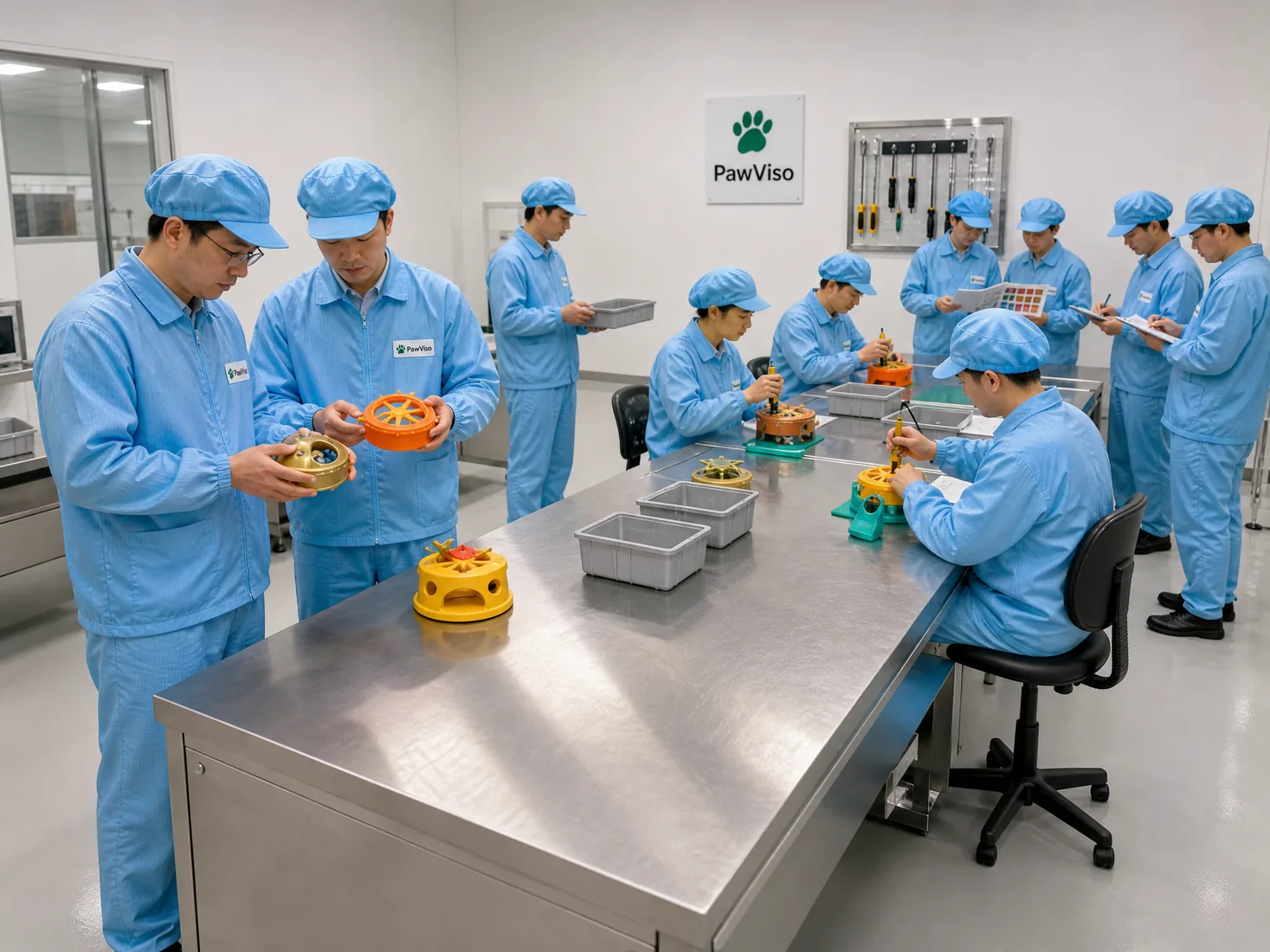
Creating a robust custom pet toy sampling plan reduces risk and speeds time to market for B2B buyers. A sampling plan documents the checkpoints and evidence you require from concept through pre-production so both buyer and supplier understand what "approved" means at each gate. For complex items — multi-material plush toys, interactive rubber toys, or composite feeder-toys — the plan should separate decision points for engineering, artwork, packaging, and production readiness to avoid late-stage rework.
This guide focuses on buyer actions, supplier inputs, evidence types, and realistic tradeoffs. It is deliberately production-focused: you will see which criteria are typically buyer-owned, how to structure versioning and change logs, and what concrete evidence is useful for quality-transfer and release decisions. Where you need regulatory, veterinary or market-specific confirmation, this guide flags that buyer/importer confirmation is required rather than replacing it 3. It also clarifies where SKU-level conformity and product data are separate from a factory quality-management system 1 2.
Module 1 — Concept approval: buyer criteria, supplier concept pack, and go/no-go
Buyers should begin with a clear concept pack that sets the non-negotiables for the first approval gate. The buyer criteria typically include target function (e.g., chew, puzzle, cuddle), core materials (eg. stuffing type, polymer family), target price bracket, intended age/size classes, and high-level packaging constraints. The supplier’s concept pack should provide 2–3 concept sketches, materials options, rough cost implications, and high-level tooling or process notes. Evidence at this stage is primarily design intent and manufacturability impressions; proofs of concept can be low-fidelity (foam mock-ups, paper prototypes) that demonstrate scale and basic function.
Tradeoffs at concept involve cost versus complexity and time-to-first-sample. A buyer may accept a simpler mechanism to hit a price target or choose a more complex interactive feature with longer lead times. Decision rules should be explicit: for example, a buyer may require that two material options are presented and at least one option aligns with existing supply chains. Once the buyer approves concept, record the approval as a versioned decision and require the supplier to maintain a simple change log for any subsequent deviations from the concept pack.
Compact evidence checklist (concept gate):
| Buyer deliverable | Supplier input | Acceptable evidence |
|---|---|---|
| Concept approval sign-off | Concept sketches & material shortlist | Signed PDF or system approval; annotated sketches |
| Budget constraint confirmation | High-level cost implication | Cost range note; BOM sketch |
Next steps after approval: instruct supplier to prepare engineering samples and a detailed bill of materials (BOM) for the Module 2 gate.
Module 2 — Engineering & materials: functional samples, material declarations, and fixed BOM
At the engineering approval gate the focus shifts to precise materials and functional behaviour. Buyers should require a fixed BOM that lists each component, material family, supplier source where known, and any required tolerances. The supplier should provide engineering samples that demonstrate the intended mechanism, dimensions, and assembly approach. Evidence includes dimensioned drawings, 3D files where applicable, material datasheets (source-level), and photos or short videos of functional tests conducted at the supplier (e.g., mechanical action repeated a set number of cycles).
Buyer decisions here usually balance performance expectations against validated materials and supply reliability. If a buyer specifies a proprietary material or color, expect longer lead times and higher minimums. The buyer should also decide on isolation of material approvals: do certain materials require separate pre-approval before proceeding to tooling? Record an explicit rule in the sampling plan. Versioning and change logs become important: any change to the BOM requires a documented change request, supplier justification, and buyer sign-off before molded or stitched pre-production samples are made.
Engineering evidence table:
| Evidence type | Who provides | Buyer decision point |
|---|---|---|
| Fixed BOM | Supplier | Approve or request alternative |
| Dimensioned drawings / 3D | Supplier | Confirm fit/function & tooling intent |
| Material datasheets | Supplier | Accept, hold for later verification, or reject |
If approved, the supplier moves to develop production-intent tooling or patterns. If rejected, the buyer issues a corrective direction and may request additional iterations or alternative vendors.
Module 3 — Artwork, colors and labelling: proofs, approvals, GTIN/data linkages
Artwork and labeling approvals require the buyer to control brand, product identity, and product data that will live in channels and logistics systems. At this gate the buyer must provide final artwork files, label art, and any text strings required for packaging, user instructions, or care labels. The supplier should return print-ready dielines, color proofs (Pantone or process details), and sample labels applied to a mock-up package. This stage is also where GTIN and product data alignment needs confirmation: the buyer should supply the GTIN and master product data or confirm when product data will be locked for listings and logistics 2.
Evidence should include applied proofs (a mock-up with printed artwork), a packaging BOM, and clear instructions for where permanent markings go on the toy or package. Tradeoffs include whether to finalize artwork before tooling (reducing change risk but potentially delaying tooling) or allow artwork changes while tooling is being made (faster sample progress but higher rework risk). The buyer’s decision must note whether packaging approvals are required before the first production run, or whether a pre-production packaging sample (PP sample) is sufficient.
Artwork approval quick checklist:
| Buyer input | Supplier evidence | Decision needed |
|---|---|---|
| Final artwork files & GTIN | Print-ready dielines + mock-up | Approve art & data for production |
| Required label text (care/assembly) | Label application photo on sample | Approve or request edits |
Once artwork and product data are locked, issue a controlled version number that ties the artwork files, packaging BOM, and GTIN into the product release bundle. Any later change to text, art, or GTIN mandates a change log and re-approval.
Module 4 — Pre-production samples and QC transfer: PP sample, inspection criteria, release rules
Pre-production (PP) samples are the critical technical prototype that should match production intent: final materials, finished tooling, final packaging. Buyers must define explicit acceptance criteria for PP samples, including dimensional tolerances, material appearance, functional tests, and packaging fit. Suppliers should deliver a small number of PP samples with full supporting documentation: photos, measurement reports, and batch identification of materials used. The buyer should clarify whether a PP sample must pass internal checks or independent laboratory confirmation before authorizing production.
Decisions at this gate include what evidence triggers production release: a photographic approval may be sufficient for low-risk SKUs, while higher-risk items could require destructive testing or third-party verification. The buyer should also define QC transfer requirements — how the supplier’s QC will reproduce the PP sample standards on the line. Require a documented QC checklist derived from the PP sample and a supplier commitment to hold materials and tooling unchanged unless a documented change request is approved.
Mid-article CTA — If you want a templated sampling-plan checklist for your product line, request PawViso’s customizable checklist. It maps the modules above to a printable approval record and change-log template for buyer use.
After PP approval, add the PP sample file and associated QC checklist to the product dossier. This is the baseline for ongoing in-line inspections, first-article inspections, and any customer complaints referencing the approved sample.
Module 5 — Versioning, evidence retention and change logs: traceability and decision records
A robust sampling plan requires strict version control and an auditable change log. Buyers must specify how versions are numbered (for example: concept v0.1, engineering v1.0, PP v1.0), who can authorize a new version, and what evidence must accompany a version change. The supplier should maintain a change history that records the nature of each change, justification, impacted parts, and a link to supporting proof (photos, drawings, test reports). Buyers should require retention of evidentiary items for a defined period to support warranty or non-conformity investigations.
Tradeoffs here are administrative overhead versus traceability. Smaller SKUs may use a lightweight log, while complex or regulated products need stricter controls and longer retention. The buyer should decide acceptable retention media and access (e.g., shared cloud folder, PLM system) and set minimum retention durations. Importantly, versioning for SKU conformity (labeling, GTIN, declared composition) is distinct from the factory’s quality-management system; treat SKU-level approvals as buyer-owned and separately auditable from factory procedures 1 2.
Suggested retention table:
| Evidence type | Minimum retention (buyer decision) | Storage location |
|---|---|---|
| Final PP sample photos & QC checklist | e.g., 2 years | Shared system/PLM |
| Change log entries | e.g., 3 years | Versioned log in procurement system |
| Material supplier declarations | e.g., as long as SKU active | Supplier file + buyer archive |
Next steps after establishing versioning: ensure your contracts reference the required retention and change-log practices, and align supplier responsibilities for evidence preservation.
Module 6 — QC transfer, inspection rules and release decisions: how to accept a production batch
The final module covers how the factory’s line-level inspections and buyer or third-party checks reference the approved samples. Buyers must define inspection rules for first production batches (often labeled “first-article inspection”), ongoing lot sampling, and acceptable non-conformity thresholds. Suppliers should provide a documented QC transfer report that maps in-line controls and inspection points to the PP sample characteristics and includes sample measurements and internal pass/fail records.
Tradeoffs concern inspection depth versus lead-time and cost. A buyer may opt for 100% check on a critical feature for the first run, then move to statistical sampling for subsequent lots. The sampling plan should state who makes the release decision (buyer sign-off, supplier declaration, third-party certificate) and what evidence is required to release a batch for shipment. Where product data (GTIN, labeling) or SKU-level conformity require separate confirmation, buyers must maintain this as an independent approval track 1 2 3.
Acceptance and release table:
| Release trigger | Required evidence | Decision owner |
|---|---|---|
| Release for shipping | QC transfer report + first-batch inspection | Buyer or authorized agent |
| Hold for rework | Failed inspection report + corrective plan | Supplier pending buyer approval |
| Release after corrective action | Re-inspection evidence | Buyer validates closure |
Finalize the sampling-plan document by listing contact points, required timelines for supplier responses, and escalation steps for unresolved deviations. A final checklist — tying each module to specific signatories, evidence attachments, and retention periods — makes the approval process enforceable and repeatable for future SKUs.
Note on market requirements: confirm regulatory, labeling and safety requirements specific to the importing market before finalizing pass/fail criteria; buyer/importer confirmation is required for target-market compliance and claims 3.
Module 7 — Final pre-production approval: buyer sign-off criteria and documentary evidence
The final pre-production approval is the gate where the buyer confirms that samples, documentation and agreed changes meet the purchase order requirements. For a custom pet toy sampling plan this decision should be explicit and unambiguous: the buyer must list the exact sample versions being approved (by part number, colorway, artwork revision and packaging SKU), specify any conditional concessions (for example, “approve for bulk but require first-batch lab test X within 48 hours of shipment”) and indicate which documents are the authoritative record (e.g., final tech pack v3.2, approved artwork file, pre-production QC checklist). The supplier should attach labeled photos, dimensional check sheets, a final material/component list and a signed change log to the approval package so both parties have a single source of truth for production release.
Documentary evidence to accompany the sign-off includes versioned design files, supplier inspection reports and any third-party test reports already completed. Buyers should require a short “approval memo” from the supplier that references the PO, sample IDs and shipment milestones. If specific lab tests will be run only on bulk or first shipment, record that in the memo and in the production QA plan. Note that where claims, labels or regulatory statements are part of the product, the buyer should confirm that supporting documents (test reports, supplier declarations, artwork approval) are present before signing. For distribution-sensitive packaging, include the packaging pre-production sample identifier to avoid later mismatches 5.
Module 8 — Production change control: versioning, change logs and buyer notifications
A robust version-control and change-log process prevents small adjustments from becoming disputes. Every engineering change, material substitution, tooling tweak or artwork modification must pass through a documented change-control workflow. The buyer’s decision point here is to define which changes require immediate written approval (e.g., material supplier changes, colorant formulation changes, structural geometry that affects durability) and which can be handled by supplier notification with post-implementation reporting (e.g., minor label layout tweaks not affecting regulatory text). The change log should record who requested the change, the rationale, the effective date, affected SKUs, and the decision made by the buyer or their delegated agent.
Operationalize this by asking the supplier to maintain a living change log in a shared repository or emailed weekly. Include columns for sample or tool revision, affected dimensions or materials, photographic evidence, and a link to any updated test data. For higher-risk changes, require a conditional hold on production until a verified sample is produced and approved. Using simple rules—such as “any change to polymer grade or filling material must be approved; colorant changes under 5% visual delta may be notified”—helps both parties move quickly while protecting specifications. When shipments are affected by approved changes, reference shipment handover terms in the log and link to the commercial documents to track responsibility and timing 6.
Module 9 — QC transfer of knowledge: buyer-owned acceptance criteria and inspection plans
When responsibility for QA testing and routine inspection shifts from the supplier development team to the supplier’s mass-production QC team, buyers must ensure an accurate transfer of inspection criteria and tolerances. Buyers should supply an acceptance-criteria document that lists critical-to-quality (CTQ) attributes—dimensions, seam integrity, noise levels (where applicable), labeling, choking-hazard mitigations, chemical limits (if applicable)—and the acceptable AQL or sampling level for each attribute. This document should be granular enough that a QC inspector can make a pass/fail decision without subjective interpretation.
Train the supplier’s QC team by walking through the document during a formal handover meeting, then validate with a supervised trial inspection on the first production run. The buyer’s decision is to accept the supplier’s QC protocol or to mandate a specific third-party inspection regimen. Capture the agreed inspection plan in the purchase order annex and assign responsibility for corrective actions (CARs) if non-conformances exceed preset thresholds. A short table like the one below helps clarify responsibilities and sampling levels.
| Attribute category | Buyer-owned acceptance criteria | Sampling plan / AQL | Responsibility |
|---|---|---|---|
| Dimensional tolerances | ±2 mm for main body length | 2.5 AQL, single sampling | Supplier QC |
| Seams / closures | No open seams >2 mm | 4.0 AQL for visual defects | Supplier QC; buyer verification on first run |
| Label accuracy | 100% match to approved artwork | 100% check on 1st 100 pcs, random thereafter | Supplier pre-shipment |
| Chemical-sensitive parts | Follow buyer-supplied limits | Third-party test on first shipment | Buyer / 3rd party |
Ensure the QC transfer includes examples of both acceptable and unacceptable conditions (photos), how to document deviations, and timelines for corrective action. Buyers should require the supplier to attach the inspection report to the shipping documentation and to make it accessible for review. If the buyer intends to perform periodic audits or sample shipments for independent testing, record the cadence and notification windows in the contract so there are no surprises.
Module 10 — Release decisions and staged acceptance: first-batch, partial releases and hold-back strategies
Deciding when to accept and release mass-produced goods has commercial, quality and logistical implications. Buyers must define release triggers: what evidence is sufficient to clear a shipment for payment and distribution? Common staged approaches include: (1) a first-batch hold and release only after passing a full QA and (if required) an independent lab test; (2) partial release by lot based on passing supplier inspection plus buyer-verified random sampling; or (3) full release based on supplier certificates and historical performance. The buyer’s decision should balance the product risk, regulatory exposure and market timing pressures.
A practical hold-back strategy ties financial and logistic release to discrete, verifiable actions. For example, release 60–80% of value on shipment against a supplier inspection certificate and digital evidence package, with the remaining 20–40% held until first-batch testing and buyer verification are complete. Alternatively, buyers can set a time-limited conditional release that rebalances payment if a downstream independent test fails. Ensure the release terms reference who pays for rework, re-testing and return shipping where non-conformance is confirmed. For distribution-critical packaging or promotional runs, consider a stricter hold pattern until a small consignment has completed retailer or transit-simulation checks 5.
Module 11 — Post-shipment evidence, traceability and escalation paths
After shipment, maintaining traceability and a clear escalation path preserves buyer options if defects appear on the market or during distribution. Buyers should require a post-shipment evidence package that includes the supplier’s final inspection report, photographic records of the shipped lots, the updated change log, and any third-party test results tied to specific shipment lot numbers. Assign lot codes on the PO and insist they appear on both product labels and shipment paperwork so items can be tracked back quickly if issues arise.
Define escalation timelines and remedies in advance: for example, require the supplier to respond to critical quality alerts within 24 hours, provide containment actions within 72 hours, and present a root-cause analysis and corrective action plan within 10 business days. Buyers should also define who will cover costs for rework, replacement, or market recalls consistent with commercial terms negotiated in the contract. Keep records of communications and decisions in the same shared repository used for change logs and approvals so any audit trail is coherent. For shipment handover disputes—damages, missing items, or discrepancies—reference the agreed Incoterm and handover documentation so responsibility is clear and claims can be processed without delay 6.
Frequently asked questions
Q: What is the minimum documentation I should expect before approving pre-production samples? A: At a minimum, require a labeled sample report (photo and physical dimensions), final tech pack reference, approved artwork files, a materials/components list and a supplier sign-off memo stating the sample ID and production plan. If the product involves regulated claims, include related test reports as available.
Q: How do I decide which changes need prior buyer approval versus supplier notification? A: Categorize changes by risk to safety, performance, regulatory compliance or branding. High-risk items (materials, structural geometry, warnings/labels) should require prior approval; low-risk items (minor label layout or non-functional cosmetic tweaks) can be managed by notification. Define these rules in the change-control matrix tied to your PO.
Q: Should I require third-party testing on every shipment? A: Not necessarily. Consider third-party testing for first shipments, for high-risk components, when making material changes, or when market or regulatory exposure is high. Otherwise, combine supplier inspection with periodic independent testing as part of a risk-based strategy, and record the schedule in your sampling plan 4.
Q: How do I ensure packaging approved in samples matches the bulk shipment? A: Include packaging SKUs and artwork version numbers in your final approval memo. Require supplier photos of packaged products before loading and a pre-shipment packaging inspection report. For critical distribution routes, simulate transit and ask for transit-damage evidence during pre-production testing 5.
Q: What is a practical way to manage financial risk associated with quality holds? A: Use staged payment tied to verifiable milestones: e.g., partial payment on shipment, balance on lab verification or buyer inspection. Explicitly document hold-back percentages, timelines for testing and dispute resolution in your commercial terms 6.
Conclusion
A clear, documented custom pet toy sampling plan aligns design intent, manufacturing practice and commercial obligations. Buyers who define explicit approval criteria, version controls, inspection responsibilities and staged release rules reduce ambiguity and preserve options for remediation. Use evidence-based gates and a shared record system to keep decisions traceable from pre-production samples through shipment handover and post-shipment handling.
Project-specific regulatory, testing and commercial requirements must be confirmed by the buyer or importer for each project.
Final CTA — Start a controlled pet-toy sourcing conversation with PawViso. Share the product concept, target market, customization route, package direction and estimated order structure for a focused B2B discussion. Email: info@PawViso.com WhatsApp: +86 186 8106 4480 — https://wa.me/8618681064480
Related PawViso resources
- Continue with How to Compare Pet Product Samples Before Ordering. Use this approval framework to make sample evidence comparable before a purchase decision.
- Browse the PawViso product catalogue to identify product formats for a sourcing brief.
- Follow the PawViso sourcing process and review the B2B buyer FAQ before sharing project requirements.
External reference
For independent general product-safety context, review European Union General Product Safety Regulation. Confirm the requirements that apply to the selected product, target market and order.