
For importers, retailers, distributors, and private-label buyers, a monthly pet accessory budget is most useful when it is connected to a clear assortment role. Rather than selecting a large number of unrelated SKUs, a buyer can reserve budget for dependable replenishment, controlled range development, seasonal tests, and operating risk. The right allocation depends on the channel, customer profile, storage, cash cycle, and supplier-confirmed commercial terms. It should not be based on an unsupported margin promise or a universal percentage.
This framework is designed for non-food pet accessories. A slow feeder or slow-feeding bowl may be assessed as a physical accessory for handling, display, packaging, and retail positioning. This article does not provide food, formula, feeding-quantity, nutrition, allergy, medical, or veterinary guidance. Any product use language must be reviewed for the destination market and confirmed with the supplier and buyer.
Define the Commercial Role Before Choosing Products
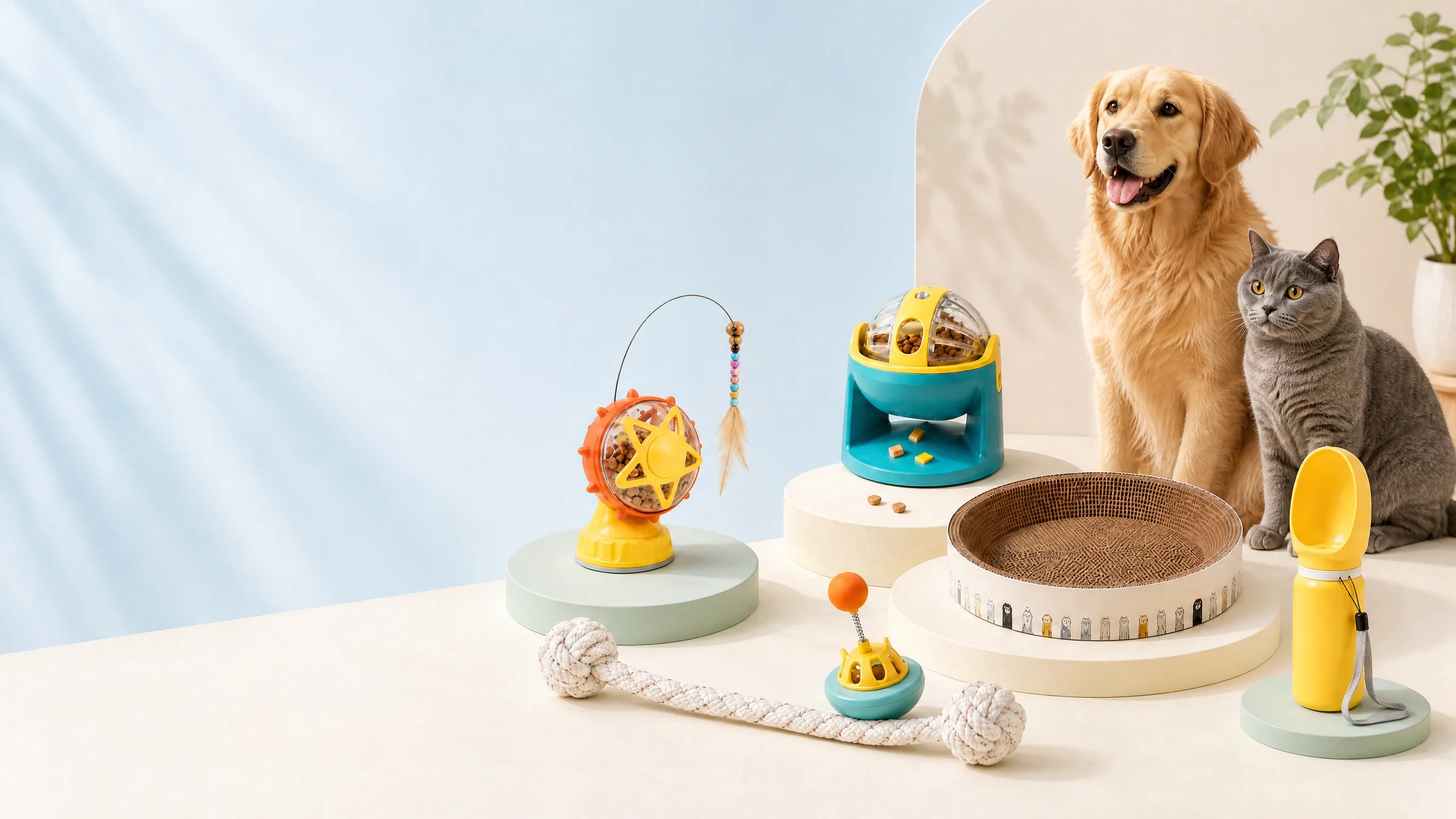
Every category should have a documented job. Interactive puzzle toys may be positioned as enrichment-oriented play accessories. Slow feeders may sit in a mealtime accessory section without making nutritional or health claims. Scratchers and teaser toys can support a cat-play range, while grooming tools, cotton-rope tug toys, and travel water bottles can broaden a catalogue around care, activity, or mobility. These are merchandising descriptions, not performance, treatment, or welfare guarantees.
Write one sentence for each range: “This range helps our channel present ___ to ___ customers through ___.” Identify a retail purpose, such as adding a complementary item, creating a display, or testing a format. If a product has no clear role, it may use budget without improving the shelf, product page, or catalogue.
Market headlines are context, not a forecast. The [American Pet Products Association describes pet-industry spending across products and services][1], which is broader than an individual company’s accessory sales. Start with your own sales history, retailer commitments, channel economics, and test assumptions.
Convert the Monthly Budget Into Buying Buckets
Set the budget in a spreadsheet before discussing individual products. Separate product cost from freight, duties, inspection, packaging development, artwork, samples, platform fees, and an allowance for slow-moving inventory. The exact treatment of these items depends on the importer’s accounting and landed-cost method. Confirm the calculation with the finance team, supplier, and buyer before using it to compare quotations.
Use four planning buckets. Core replenishment covers products with a documented sales role and reorder process. Range development funds formats or adjacent categories requiring testing. Seasonal testing supports a limited campaign or channel launch. Operating and risk allowance covers samples, packaging revisions, quality checks, artwork changes, and forecast uncertainty.
These buckets are decision aids, not guarantees. Set percentages after reviewing sell-through, open orders, cash, storage capacity, and failed-test risk. Include case packs, freight, and unsold stock; confirm assumptions with the supplier and buyer.
Build a Role-Based Assortment Matrix
Use a common matrix to compare categories without inventing specifications. “Illustrative category” means only that the category may be considered; it does not confirm that PawViso stocks, manufactures, customizes, certifies, or can supply it. Product availability, materials, dimensions, packaging, order terms, and compliance status must be confirmed for the specific project.
| Assortment role | Illustrative category | Buyer question | Details to confirm with supplier and buyer |
|---|---|---|---|
| Core replenishment | Interactive puzzle toys or scratchers | Does this item fit an existing customer need and reorder pattern? | Current SKU, unit cost, case pack, dimensions, materials, packaging, MOQ, inspection plan |
| Basket or range builder | Teaser toys or cotton-rope tug toys | Can it sit beside a core item and create a coherent range? | Variants, color approval, carton configuration, display method, labeling |
| Seasonal test | Selected play items or travel water bottles | What event, season, or channel makes the test relevant? | Samples, artwork, packaging, forecast quantity, shipping assumptions, launch window |
| Care-adjacent accessory | Pet grooming tools | Is the use case clear without health or treatment claims? | Construction, instructions, warnings, labeling, intended-market requirements |
| Non-food mealtime accessory | Slow feeder or slow-feeding bowl | Can the item be presented without food, nutrition, or veterinary claims? | Intended use wording, materials, dimensions, cleaning instructions, packaging, compliance review |
| Private-label platform | Any approved accessory family | Can the buyer maintain a consistent visual and packaging system? | Logo placement, artwork ownership, barcode needs, MOQ, sample approval, written terms |
The matrix exposes duplication. Compare intended customer, retail price architecture, package footprint, display method, reorder signal, and packaging complexity. For each SKU, record what is known, what remains unverified, and who must approve it.
Review the Mix With a Monthly Operating Loop
At month-end, compare planned and actual results by category and channel. Record units ordered, units sold where available, launch date, promotion, stock availability, returns or complaints, packaging observations, and customer questions. Treat one month as a data point, not proof of long-term performance; interpret it alongside exposure, stock continuity, seasonality, and channel fit.
Document the test objective before launch, such as learning whether a format earns buyer interest or whether packaging works in a particular display. A product affected by stock or presentation requires a different review from one that received adequate exposure and failed to convert.
Before any reorder, confirm the current product version, materials, dimensions, packaging, case pack, MOQ, production assumptions, inspection arrangement, and shipping plan with the supplier and buyer. Treat PawViso parameters as project-specific until confirmed in writing.
Mid-funnel CTA: [Contact PawViso][3] to request a project-specific category comparison. Share your target market, sales channel, estimated quantity, preferred accessory categories, packaging direction, and required review points so the proposed mix can be checked before purchase.
Control Assortment Risk Without Unsupported Claims
Profitability is not simply the difference between purchase price and retail price. Model landed cost, channel discounts, returns, storage, packaging, marketing support, currency, and freight. Inventory-management guidance emphasizes visibility, records, and replenishment discipline [2]. Use channel-appropriate metrics and record the period and data source.
A smaller assortment may be easier to explain, display, inspect, and replenish, while a distributor may need broader coverage. Neither is automatically superior. Compare customer overlap, capacity, artwork workload, case-pack economics, and reorder logic. For safety, durability, or suitability statements, request supporting documentation and destination-market review.
Frequently Asked Questions
How much of a monthly budget should go to new pet accessories?
There is no responsible universal percentage. Protect confirmed replenishment and operating requirements first, then set a test allowance tied to a written objective. Review the result against exposure, stock availability, customer feedback, and total landed cost before increasing the allocation.
Should an importer buy a broad mix or focus on one category?
Start with the channel’s commercial job. A broad mix may help a distributor serve different accounts, while a focused mix may make a retail presentation easier to understand. Compare customer overlap, storage, packaging complexity, and reorder logic, then confirm the proposed range with the supplier and buyer.
Can PawViso provide exact product specifications and order terms?
Exact specifications, materials, packaging, sample process, MOQ, case pack, production timing, and shipping assumptions must be confirmed with the supplier and buyer for the specific project. Request a current written quotation and approve the final product and packaging version before placing an order.
How should a private-label buyer control assortment risk?
Use a written SKU list, artwork approval record, sample sign-off, packaging checklist, and reorder review. Keep claims factual and suitable for the destination market. Confirm ownership of artwork, barcode responsibilities, labeling requirements, inspection scope, and all commercial terms in writing.
Conclusion: Budget by Role, Then Confirm the Details
A practical pet accessory product mix starts with disciplined allocation, not the largest possible catalogue. Define each category’s role, reserve budget for replenishment and testing, compare products in a common matrix, and review results by channel. Then confirm every product, packaging, compliance, and commercial detail with the supplier and buyer before approval. This gives importers, retailers, distributors, and private-label buyers a repeatable basis for building a range that can be tested, explained, and replenished responsibly.
CTA: Contact PawViso to discuss your target market, sales channel, expected order quantity, preferred accessory categories, and packaging direction. Request a project-specific product and quotation review, with all parameters confirmed before purchase.
References
[1]: American Pet Products Association, “Pet Industry Statistics and Trends” [2]: Oracle NetSuite, “Retail Inventory Management: What It Is, Steps, Practices and Tips” [3]: PawViso, “Contact”