
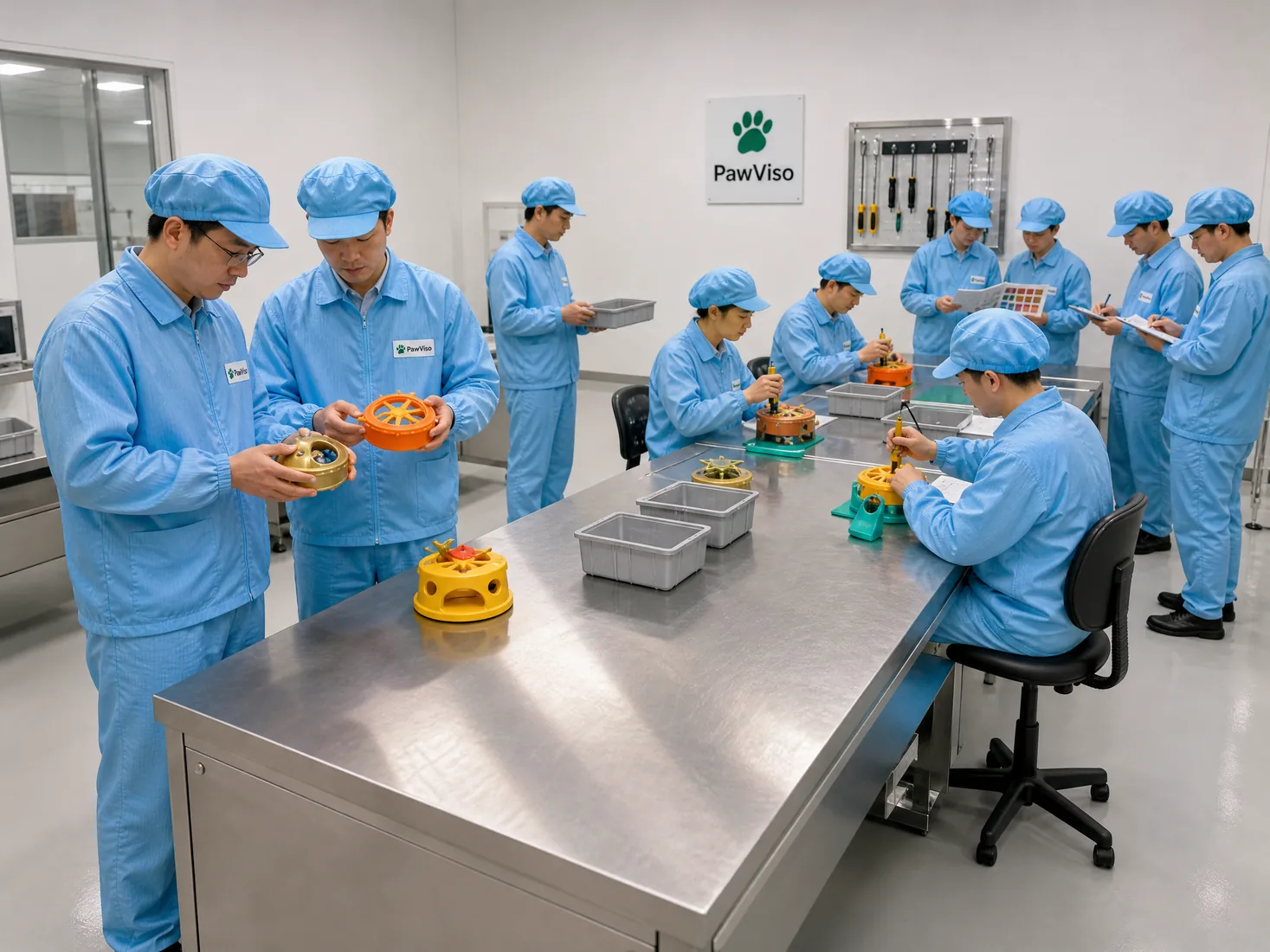
A carefully bounded trial order is the most practical way to evaluate a new supplier without committing inventory, cash flow or distribution resources to a long-term relationship before evidence supports scale. This guide describes how buying teams serving U.S. channels—retailers, importers, distributors and private-label teams—should design a pet product new supplier trial order, document expected evidence, assess outcomes against pre-agreed criteria, and make a defensible decision to revise, pause or scale. It emphasizes that a trial is a sampling exercise, not proof of long-term performance, and that buyer/importer confirmation is required for final product, claim, testing, documentation, contract and destination-market decisions.
The guidance is operational and procurement-focused: scope definition, control points, communication checkpoints, quality gates and contract tradeoffs. It avoids consumer animal-care advice and legal conclusions, and it uses conservative language where regulatory interpretation or retailer policy is required.
Module 1 — Buyer intent and decision boundary
Define the reason you are running a trial and the decision boundary you will use when the trial completes. A clear, short statement of intent prevents scope creep and ensures the supplier understands the buyer’s risk appetite and evidence expectations.
Key elements of intent
- Commercial objective: e.g., test manufacturing consistency for private-label collapsible bowls; trial one SKU for placement in two regional DCs; validate a new material claim before a national roll-out.
- Risk appetite: specify acceptable defect rate, percentage of out-of-spec returns, and tolerable timeline slippage for the trial tranche.
- Time horizon and decision points: state when the trial begins and the dates for interim and final decisions.
- Non-negotiables: safety declarations, test reports, labeling, and customs paperwork needed for acceptance.
Decision boundary definition
- Outcome categories: Accept to scale, Accept with conditions (corrective plan), Pause and re-assess, or Reject and terminate.
- What a trial must not be used for: do not treat the trial as definitive proof of long-term supplier performance or compliance. The trial informs but does not conclude multi-year supplier reliability.
Sample decision boundary checklist (table 1)
| Item | Why it matters | Buyer pass/fail threshold |
|---|---|---|
| Safety-critical compliance (e.g., flammability, chemical) | Prevents product risk at receipt | Buyer confirmation required; supplier must provide supporting documentation |
| Packaging integrity for transit | Minimizes damage in distribution | Acceptable damage rate defined in advance |
| On-time shipment to DC | Measures logistics reliability | % on-time threshold defined |
| First article conformity | Verifies spec adherence | Visual and dimensional conformance required |
Be explicit about who in the buying organization will make the final decision. Assign a named decision owner and 1–2 backups. List the functional roles that contribute evidence: quality, operations, purchasing, legal, and marketing. Specify that the named buyer or importer must confirm all final product, claim, testing, documentation, contract and destination-market decisions.
Module 2 — Scope, roles and evidence
A precise supplier trial order plan identifies which SKUs, lots and product attributes are included and what evidence the buyer will require. Structure the scope so the trial is bounded, measurable and replicable.
Define scope
- SKU selection: choose representative SKUs rather than a full catalog. For multi-component items, select one configuration that exercises critical manufacturing processes.
- Lot structure and quantities: define lot sizes and how many units per lot will be inspected or tested. Avoid blanket language like “small batch”; specify a unit count or percentage.
- Exclusions: explicitly exclude features or packaging options that are outside the trial’s purpose.
Roles and responsibilities
- Buyer: defines acceptance criteria, performs incoming inspection, decides acceptance or escalation.
- Supplier: provides specified documentation, samples, test reports and agreed corrective action if needed.
- 3rd-party labs/inspectors: perform tests or inspections if agreed.
- Logistics partner: executes cross-dock or distribution handling tests if needed.
Evidence expectations — prioritized and timebound
- Documentation: invoice, packing list, commercial invoice, COO, MSDS (if applicable), testing certificates, and any label approvals.
- Physical evidence: first-article samples, AQL sample inspections, photographic evidence of packaging and inner packs.
- Performance evidence: lab test results, drop-test records, field returns within the trial period.
When environmental marketing claims are part of a supplier’s offer (e.g., “recyclable packaging”), require evidence-based substantiation and documentation; document what forms of evidence are acceptable (e.g., third-party certification, technical testing, supplier declarations) and treat such claims carefully in marketing approvals 4.
Evidence acceptance matrix (table 2)
| Evidence type | Acceptable source | Time to deliver | Notes |
|---|---|---|---|
| Material specification | Supplier technical datasheet + supplier signature | Before shipment | Buyer confirmation required |
| Safety test report | Accredited lab report | Pre-shipment or at receipt | Evaluate lab scope and methods |
| Label artwork | Supplier mock-up + buyer approval | Pre-shipment | Print file and sign-off required |
| Packaging photos | Supplier-provided photos + buyer right to spot-check | Before shipment | Buyer to confirm adequacy for transit |
Clarify how evidence will be compared with outcomes. Pre-agree the acceptance standard for each evidence item and whether a supplier’s self-declaration is sufficient or if third-party verification is required.
Note about children's-toy guidance: regulations and testing applicable to children's toys may differ from pet-product classification; use children's-toy guidance only to inform discussion where appropriate, and do not assume toy rules automatically apply to a pet product 2.
Module 3 — Product and data control points
Identify control points where product attributes, documentation and data will be checked. Control points are checkpoints where you can accept, reject or require corrective actions without stopping the entire relationship.
Common control points
- First-article inspection at supplier (FAI): dimensional and visual checks before bulk production.
- Pre-shipment inspection (PSI): AQL-based inspection by buyer or third-party at the supplier’s site.
- Incoming quality inspection (IQI) at buyer's DC: functional checks, labeling, and packaging confirmation on receipt.
- Post-delivery performance window: agreed period in which the buyer will monitor returns, field issues, or retailer rejection rates.
Trade-item identification and data: decide whether the trial SKUs will carry GTINs and how identifiers will be applied. If you require GTINs for inventory or retail integration, specify the type and who registers the trade item. Use GTIN/trade-item identification guidance only where relevant: for incoming data and EDI connections reference GTIN rules; for product identification and barcode application, ensure supplier understands format and registration responsibilities 3.
Record types to collect at each control point
- Photo evidence with timestamps and lot numbers.
- Inspection reports with sample sizes and defect categorization.
- Chain-of-custody for lab samples.
- Serial or lot numbers where traceability is required.
Illustrative product control schedule (hypothetical example)
| Control point | Who performs | Data collected | Decision trigger |
|---|---|---|---|
| FAI | Supplier or buyer rep | Dimensional report, photos | Go/no-go for bulk |
| PSI | Third-party inspector | AQL report | Release or require rework |
| IQI | Buyer QC | Visual, packaging, labeling | Accept, quarantine, reject |
| 30-day field check | Buyer ops/retailer | Return rates, complaint log | Scale decision input |
Always require buyer/importer confirmation for final acceptance of product, documentation and market-facing labels.
Module 4 — Supplier communication and approvals
Document what must be approved before any trial shipment and how approvals are recorded. A single-point communications plan prevents misunderstandings and reduces rework.
Pre-trial approvals to obtain in writing
- Product specifications and BOM.
- Artwork and label approvals.
- Test method descriptions and lab acceptance criteria.
- Packing plan and pallet configuration for chosen logistics flow.
Communication protocol
- Single source of truth: use a purchase order (PO) annex or a supplier trial order plan document to record agreed scope, evidence and decision triggers.
- Change management: require formal written approval for any deviations from the trial plan with a clear timeline for acceptance or rejection.
- Escalation path: name contacts with phone, email and backup contacts for quality, logistics and commercial queries.
Approval log template (illustrative)
| Approval item | Supplier provided on | Buyer/purchaser approved on | Approver (role) |
|---|---|---|---|
| Specification sheet | 2026-01-05 | 2026-01-07 | Product Manager |
| Label artwork | 2026-01-10 | 2026-01-12 | Marketing Lead |
| Test protocol | 2026-01-08 | 2026-01-09 | Quality Lead |
Record approvals in a shared repository (purchase order system, cloud folder, or PLM). Where the buyer requires changes to be made before shipment, the approval log should tie to release-to-ship authorization.
Make explicit that supplier-provided declarations do not replace buyer-required third-party verification where the buyer specifies testing or certification. Buyer/importer confirmation is required for final claim and testing acceptance.
Module 5 — Sample, packaging and operational checks
A trial should stress the supply chain elements that will be used at scale: packaging configuration, carton markings, palletization, and operational instructions for downstream handlers.
Sampling plan
- Sampling method: specify how samples are selected (random lot numbers, sequential) and the sample sizes for physical and functional testing.
- Acceptance Quality Limit (AQL): if using AQL for visual defects, specify the levels (e.g., critical, major, minor) but do not treat AQL alone as the only quality measure for safety-critical features.
Packaging checks
- Transit simulation: define whether you will require a supplier-performed transit test, third-party ISTA drop testing, or simple handling proofs (photos of pallets, inner pack orientation).
- Carton markings: confirm SKU, lot number, GTIN (if required), pallet spec and handling instructions are present and match documentation.
- Retail-ready packaging: if the product will be put on shelf, confirm hang holes, shelf-ready configuration and UPC placement.
Operational readiness
- Instructions for use and warnings: ensure content meets buyer requirements and is approved in writing.
- Assembly or kitting: if any assembly is required at the DC or by the retailer, document tasks and time expectations.
- Label language and regulatory statements: verify claims and legal text for the destination market.
Operational inspection checklist (table)
| Check | Acceptable evidence | Action if nonconforming |
|---|---|---|
| Box strength | Supplier test report or physical check | Require rework or different carton |
| Pallet configuration | Photos and pallet map | Reject at IQI or rework |
| UPC/GTIN placement | Visual check at IQI | Quarantine until corrected |
| Instruction leaflet | Approved artwork + sample | Do not accept until corrected |
Clarify responsibilities for costs of rework, re-labeling, or repackaging in the trial phase. For contract planning that allocates cost, risk and responsibility between buyer and supplier, document the agreed allocation in writing and reference it in the PO or trial agreement 5.
Module 6 — Quality controls and exception decisions
Design quality control gates that allow you to accept a trial shipment while preserving leverage to require corrective action. Use objective measures where possible and document exception pathways.
Quality gate types
- Pre-shipment lab testing: required when product safety or regulatory parameters are at stake.
- Statistical sampling on receipt: AQL-based checks, plus targeted functional tests for critical features.
- Failure analysis: defined process for sample retention, lab submission and root-cause analysis.
Exception handling process
- Quarantine: define how nonconforming goods are isolated.
- Rework vs. Reject: specify acceptable rework procedures, timelines and who pays.
- Corrective action plan (CAPA): require the supplier to produce a CAPA with root cause, corrective actions, preventive actions and verification steps.
Quality documentation and records
- Inspection reports with lot numbers and inspector name.
- Nonconformance reports (NCRs) with photos and disposition instructions.
- Corrective action logs with deadlines and verification evidence.
A practical acceptance matrix for trial decisions
| Outcome | Example trigger | Immediate action | Longer-term response |
|---|---|---|---|
| Accept | All critical tests pass; documentation complete | Release to inventory | Monitor first 90 days |
| Conditional accept | Minor packaging defects only | Accept with supplier CAPA and retest | Re-evaluate at next lot |
| Pause | Repeated functional failures or safety concern | Quarantine new lots, require lab testing | Consider alternative supplier |
| Reject | Safety failure or false documentation | Reject shipment, hold payment per contract | Terminate if severe |
Quality systems context: align your trial sampling, inspection and CAPA processes with recognized quality-system practices for traceability and documentation; these practices support reproducible decisions and supplier development 1.
Make clear that the trial outcome does not substitute for full supplier qualification for long-term purchases. A trial can indicate early readiness but must be followed by a formal onboarding program if scaling is intended.
Module 7 — Commercial and change-control tradeoffs
Trials require commercial flexibility. Decide what concessions you will accept during the trial and what contract terms must be fixed. Transparency about change control and commercial tradeoffs reduces disputes.
Key commercial tradeoffs
- Minimum order quantities (MOQs) vs. unit cost: trials usually accept lower quantities at less favorable unit economics.
- Lead times: agree on expedited timelines for initial orders but document longer-term expectations separately.
- Payment terms: specify whether the trial uses standard terms or unusual arrangements (e.g., partial payment on receipt, escrow).
Allocation of cost, risk and responsibilities
- Who bears costs for testing, inspection, and shipping during the trial? Document these allocations clearly.
- For rework, define whether costs are supplier’s responsibility or shared.
- For destroyed or unsellable goods, state disposition rules and financial consequences.
Contract levers to include in the trial PO or agreement
- Acceptance criteria list with measurable thresholds.
- Time-limited trial terms with automatic expiry unless buyer confirms scale.
- Remedies and dispute resolution mechanisms for trial-specific failures.
Commercial decision matrix (table)
| Commercial element | Buyer position during trial | Post-trial expectation |
|---|---|---|
| Unit pricing | May be higher due to smaller run | Negotiate based on volume commitments |
| Testing costs | Buyer may require supplier to pay for re-tests after failure | Allocate per contract terms 5 |
| Delivery schedule | Agreed accelerated timeline for first shipments | Standard lead times apply after scale |
| Warranty/returns | Trial-specific return handling | Standard commercial terms apply afterward |
Use contractual clauses to enforce change control: require written approval for any supplier-initiated product or process changes during the trial window. Where the buyer assumes certain costs to facilitate trial (e.g., paying for a one-off pre-shipment test to accelerate approval), document durations and repayment or offset terms.
Contract planning context: specify who is responsible for which activities and costs, as these allocations materially affect the trial’s viability and the eventual willingness of both parties to scale 5.
Module 8 — Logistics, handover and record retention
Plan the logistics flow to test the distribution scenarios you will use at scale. Ensure records from the trial are retained for the period necessary to evaluate outcomes and satisfy potential retailer or regulatory inquiries.
Logistics scenarios to test
- Direct-to-retailer: confirm retail DC acceptance and ASN requirements.
- Import into U.S. ports: verify customs documentation and ISF/entry requirements.
- Cross-dock or consolidation: test pallet breakdown and re-palletization procedures.
Handover points and documentation
- Arrival notice and ASN: verify data accuracy and timing.
- Receiving records: confirm how inspection results are recorded at the DC.
- Transfer of title and risk: confirm terms in PO regarding when title and risk pass (e.g., FOB/incoterms), and ensure these align with insurance and claims processes.
Record retention policy for the trial
- Minimum record set: inspection reports, lab reports, photographs, shipping records, approvals and NCRs.
- Retention period: determine a retention period based on internal policy and retailer requirements; ensure copies are stored in a searchable, access-controlled system.
- Access control: limit who can alter trial records; maintain an audit trail of approvals and changes.
Illustrative logistics checklist (hypothetical)
| Logistics step | Evidence required | Who retains record |
|---|---|---|
| Pre-shipment booking | Bill of lading, packing list | Buyer & supplier |
| Arrival at DC | Receipt notice, IQI report | Buyer |
| Shipment exceptions | Damage photos, carrier claim | Buyer & carrier |
Maintain cross-functional involvement—logistics, quality, and purchasing—during handover to capture real-world issues that may not appear in supplier-run tests.
Make clear: buyer/importer confirmation is required for destination-market decisions and for acceptance of customs and regulatory documentation.
Module 9 — Buyer implementation plan
Translate trial results into a practical implementation plan if you decide to scale, pause, or revise. The implementation plan must be actionable and timebound.
Decision outputs and next steps
- Accept to scale: produce a supplier development plan with milestones, forecasted volumes, packaging rollout plan, and a schedule for capability audits.
- Accept with conditions: require documented corrective actions, repeat inspections for a defined number of lots, and possibly hold a contingency stock.
- Pause: freeze scheduled orders pending corrective action or re-audit.
- Reject: document reasons and transition plan to alternative suppliers.
Implementation task list
- Contract update: move from trial PO to formal supply agreement, including agreed commercial terms and SLAs.
- Operational handover: update ERP/IMS with GTINs, par levels, reorder points and lead times.
- Quality integration: set up periodic audit schedule, agreed KPI reporting and escalation thresholds.
- Change-control process: formalize how future changes are approved and communicated.
Example post-trial rollout checklist
| Task | Owner | Deadline |
|---|---|---|
| Execute long-form supply agreement | Purchasing/Legal | 30 days after trial acceptance |
| Establish regular KPI reports | Quality/Operations | 14 days after contract |
| Schedule supplier audit | Quality | Within first 90 days of scale |
| Implement label version control | Marketing/Packaging | Before first scaled shipment |
Make realistic allocations of internal resources to support supplier onboarding. Scaling without internal operational readiness often shifts the burden back onto procurement and increases cost. Remember: a successful trial reduces uncertainty but does not guarantee future outcomes; ongoing evaluation must continue after scaling.
Module 10 — Frequently asked questions
What size should a pet product new supplier trial order be?
Choose a size that balances statistical relevance and commercial prudence. For performance and packaging tests, prefer multiple small lots shipped under typical logistics conditions rather than one large consolidated shipment. The unit count should be sufficient to test variability in production and packaging; specify sample sizes and lot counts in the supplier trial order plan so both parties understand the scope.
How should I treat testing versus field returns in a first order supplier evaluation?
Treat lab testing and field returns as complementary evidence streams. Pre-shipment or first-article testing checks conformance to specifications, while field returns measure in-market performance and distribution durability. Both should be pre-defined in the supplier trial order plan, with agreed thresholds and timelines. Remember that a short trial is unlikely to capture long-term wear or seasonal patterns—use both test results and post-trial monitoring before concluding on supplier reliability.
Can I use a trial order as proof of long-term supplier performance?
No. A trial order provides evidence about specific lots, processes and short-term logistics performance but is not proof of sustained long-term performance. Use the trial to surface risks, validate controls, and shape onboarding requirements. After a trial, require a formal supplier qualification and ongoing monitoring program if you intend to scale.
What documentation is essential to retain from the supplier trial order?
Retain inspection reports, lab test reports, approval logs for artwork and labels, shipping documents, ASN/receiving records, and any NCRs or CAPAs. Maintain an audit trail showing who approved key items and when. Buyer/importer confirmation is required for final documentation acceptance and any market-facing claims or labels.
Module 11 — Conclusion and buyer action plan
A well-scoped supplier trial order is a risk-managed, evidence-driven exercise that helps buyers make an informed pet product scale decision. It should be a bounded experiment: limited SKUs and lots, pre-agreed evidence requirements, defined control points, and documented decision gates. Do not conflate successful trial outcomes with long-term supplier qualification; instead, use trial results to inform structured onboarding, contractual terms and periodic audits.
Action plan checklist (immediate next steps)
- Draft a one-page supplier trial order plan that includes intent, scope, decision owner and timeline.
- List required evidence items and acceptable sources; specify third-party verification where needed.
- Agree control points and inspection sample sizes with the supplier and record approvals in writing.
- Assign internal owners for receiving inspections, logistics handover and post-trial monitoring.
- Document commercial allocations for testing, rework and exceptional disposition before shipment.
- Retain all trial records in a controlled repository and schedule a review meeting at trial completion.
Final reminders
- Require buyer/importer confirmation for all final product, claim, testing, documentation, contract and destination-market decisions.
- Make acceptance criteria objective, measurable and documented.
- Treat the trial as a learning and verification step, not as definitive proof of long-term performance.
This structured approach to a pet product new supplier trial order will help you convert uncertainty into actionable evidence, reduce the likelihood of unexpected supply-chain disruptions, and provide a defensible basis for a first order supplier evaluation and subsequent pet product scale decision.
Final CTA — Prepare a focused supplier evaluation brief with PawViso.
Share the intended product or process scope, target channel, evidence already available, packaging direction and order structure for a practical B2B discussion.
Email: info@PawViso.com
WhatsApp: +86 186 8106 4480
Related PawViso resources
- Continue with How to Plan a Pet Product Pilot Run for a related buyer-controlled sourcing route.
- Browse the PawViso product catalogue to identify relevant product formats for an enquiry.
- Follow the PawViso sourcing process and review the B2B buyer FAQ before sharing project requirements.
External reference
For product identification and supply-chain data context, review GS1 guidance on Global Trade Item Numbers (GTINs). Confirm the product- and channel-specific records required for the selected SKU.