
For importers, retailers, distributors, and private-label buyers, “premium” is not a substitute for evidence. A higher retail position is easier to defend when shoppers can understand the product’s purpose, store teams can explain it quickly, and the buyer can document the specifications behind the offer. The objective is therefore not to label an accessory as premium, but to test whether its design, presentation, documentation, and commercial model create a credible reason for purchase.
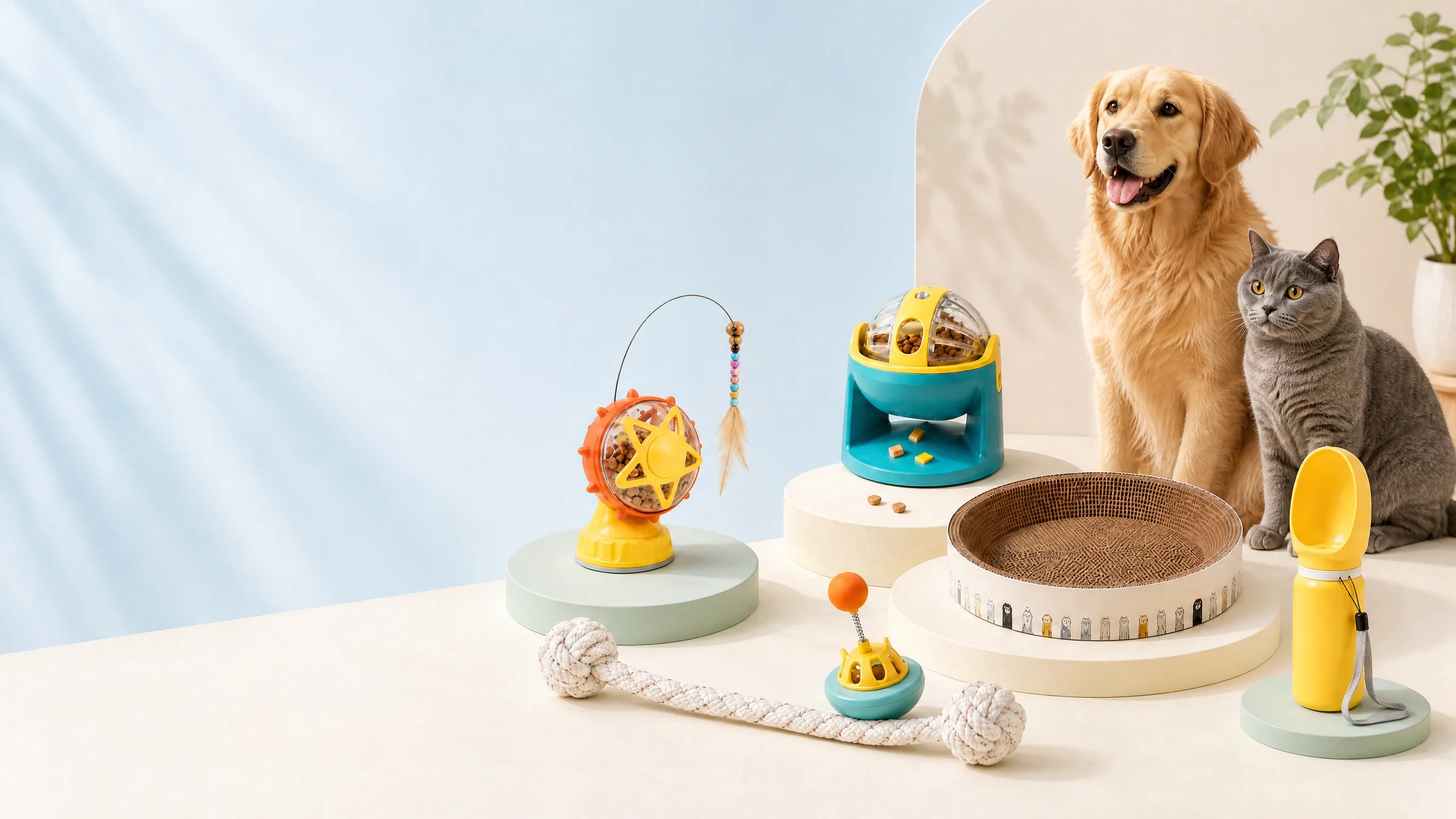
This framework applies to non-food pet accessories such as interactive toys, scratchers, teaser toys, grooming tools, cotton-rope tug toys, travel water bottles, and slow feeders or slow-feeding bowls. A slow feeder is treated here only as a non-food accessory: buyers should review its physical design, cleanability, stability, labeling, and packaging. This article does not provide food, formula, feeding-quantity, nutrition, allergy, medical, or veterinary guidance. Actual specifications, materials, packaging, compliance documents, customization scope, and commercial terms must be confirmed with the supplier and buyer.
What does premium retail value mean?
Premium retail value is the relationship between a product’s observable customer benefit and the buyer’s ability to deliver that benefit consistently. It may come from a clearer use case, more thoughtful interaction design, easier handling, stronger presentation, a coherent assortment, or better-controlled documentation. It does not guarantee a particular price, margin, conversion rate, or sell-through result.
A useful assessment asks whether the difference from a basic alternative is meaningful, demonstrable, easy to communicate, and supported by specifications agreed by the supplier and buyer.
ISO’s quality-management principles include customer focus, process approach, improvement, evidence-based decision-making, and relationship management.1 For sourcing teams, these principles support a process review alongside sample evaluation; a polished sample alone is not evidence of repeatability, compliance, or commercial suitability.
Which product attributes should buyers inspect?
A buyer should begin with the intended use and the observable interaction. For an interactive puzzle toy, inspect the play mechanic, moving parts, assembly, and instructions. For a cat scratcher or teaser toy, review stability, attachment points, surface finishing, storage, and display presentation. These are evaluation criteria, not claims about any particular PawViso product.
For grooming tools, examine grip, cleaning access, edge finishing, packaging, and purpose. For cotton-rope tug toys, inspect knot consistency, attachment construction, fiber shedding controls, and intended-use wording. For travel water bottles, review closure design, portability, leak-resistance test methods, and packaging communication. For slow feeders or slow-feeding bowls, assess the physical interaction, stability, cleanability, surface finish, and labeling boundaries. Do not convert these observations into health or feeding claims.
Product classification matters because requirements can depend on intended use and product category. The U.S. Consumer Product Safety Commission advises businesses to determine which toy-safety provisions apply to a specific product rather than assume that one category’s rules apply to another.2 Buyers should perform the same discipline across accessories: classify the SKU, identify the destination-market obligations, and confirm with the supplier and buyer which evidence is current and relevant.
How can a B2B team compare premium candidates?
A sample meeting should combine customer value, operational evidence, and commercial discipline. The matrix below can be used for a first review. None of the fields should be completed from assumption, an old catalogue, or an unapproved image.
| Evaluation area | Buyer review question | Evidence to request or confirm | Retail implication |
|---|---|---|---|
| Functional difference | What is visibly different from a basic alternative? | Demonstration sample, instructions, confirmed specification | Creates a specific product-page message |
| Construction and finish | Are joints, seams, edges, and surfaces consistent? | Sample review, inspection points, approved reference sample | Reduces the gap between promise and experience |
| Handling and cleaning | Can the user understand routine handling and cleaning needs? | Use information, care instructions, confirmed material details | Supports clearer packaging and customer service |
| Packaging architecture | Are language, warnings, barcode space, and protection suitable? | Artwork proof and destination-market review | Improves shelf and listing readiness |
| Brand ownership | What branding and pack elements are actually available? | Written customization scope and approval workflow | Prevents unsupported private-label promises |
| Documentation | Which records apply to this SKU and market? | Material information, test reports, traceability, declarations where applicable | Supports importer due diligence |
| Commercial model | Which costs and order terms drive the economics? | Written quotation, carton details, MOQ and lead time confirmation | Enables realistic margin planning |
The European Commission describes the EU General Product Safety Regulation as a framework intended to ensure that only safe products are available on the market and identifies obligations for relevant businesses.3 This does not mean that every supplier has completed every obligation for every buyer. The responsible economic operator, destination market, intended use, labeling, traceability, and applicable documentation should be confirmed for each SKU with the supplier, buyer, and qualified local advisers where necessary.
Which assortment logic can support a premium position?
Premium merchandising often works better as a coherent group than as a collection of unrelated upgrades. A play-oriented assortment might connect interactive toys, scratchers, and teaser toys through a consistent visual system. A care-oriented assortment might group grooming tools with clear handling and storage communication. Travel accessories may be organized around portability and pack efficiency. A slow-feeding bowl can sit within a functional home-accessory range, provided all wording remains limited to verified physical features and intended use.
The right assortment depends on the channel. A specialty retailer may have more space for education; a distributor may prioritize carton efficiency and repeatability; a private-label buyer may prioritize artwork control and packaging consistency. These are procurement considerations, not guarantees. Confirm the channel, packaging format, and market requirements before selecting a range.
How should buyers test whether a higher price is credible?
Start with a controlled comparison. Place the proposed item beside a conventional alternative and ask reviewers to identify the difference without a sales script. Then test the product page or package: can a shopper understand the function, intended user, handling information, and reason for the price quickly? If the difference cannot be seen, explained, or documented, the premium story needs revision.
Next, model the commercial picture with confirmed inputs: product and packaging cost, inspection, freight, duties where applicable, channel fees, returns handling, and target margin. Do not invent a retail price, MOQ, delivery time, capacity, sales volume, or market-performance figure. Obtain written terms and confirm with the supplier and buyer before forecasting.
Finally, establish a pre-production approval process. Record the approved sample, dimensions, materials, artwork, packaging language, inspection checkpoints, labeling responsibility, and change-control method. Keep assumptions and document requirements in writing so both parties use the same reference.
Frequently asked questions
Does premium always require more expensive materials?
No. Value may come from clearer interaction design, improved handling, stronger packaging communication, assortment coherence, or better-controlled quality processes. Any material or performance statement should be supported by current product evidence and confirmed with the supplier and buyer.
Can a buyer request private-label packaging?
Possibly, but feasibility depends on the specific SKU, artwork, branding scope, packaging format, order requirements, and destination-market documentation. Request a written scope from the supplier and confirm every parameter before presenting private-label availability to a customer.
What should an importer request before placing an order?
Request the product-specific specification, material information, applicable reports or declarations, labeling details, traceability, packaging proof, inspection arrangement, and written terms where relevant. The buyer must confirm which requirements apply to its market, channel, and intended use.
How can a retailer avoid unsupported premium claims?
Use language tied to observable design features, intended use, confirmed materials, packaging, and documented processes. Avoid claims about certification, safety, durability, customer outcomes, production capability, pricing, MOQ, lead time, or market performance unless current evidence has been supplied and the buyer has approved the exact wording.
Build a premium pet-supply shortlist with PawViso
If you are sourcing non-food pet accessories for retail, distribution, or private label, contact PawViso with your target market, channel, category, branding needs, packaging direction, and evaluation criteria. Ask for a product-specific review covering samples, confirmed parameters, documentation, and commercial terms. Confirm all actual specifications and capabilities with the supplier and buyer before making a purchasing or retail commitment.
Related PawViso resources
- Continue with How to Build a Private Label Pet Product Line. Use this guide to connect customization, packaging and MOQ decisions.
- Browse the PawViso product catalogue to identify product formats for a sourcing brief.
- Follow the PawViso sourcing process and review the B2B buyer FAQ before sharing project requirements.
External reference
For independent product identification and barcode context, review GS1 guidance on Global Trade Item Numbers (GTINs). Confirm the requirements that apply to the selected product, target market and order.
References
- 1ISO — Quality management principles: The foundation for success
- 2U.S. Consumer Product Safety Commission — Toy Safety Business Guidance
- 3European Commission — Product safety
Editorial note: This article is an educational sourcing framework for B2B buyers. It is not a product-specific compliance opinion, price guarantee, or substitute for market-specific legal review.