
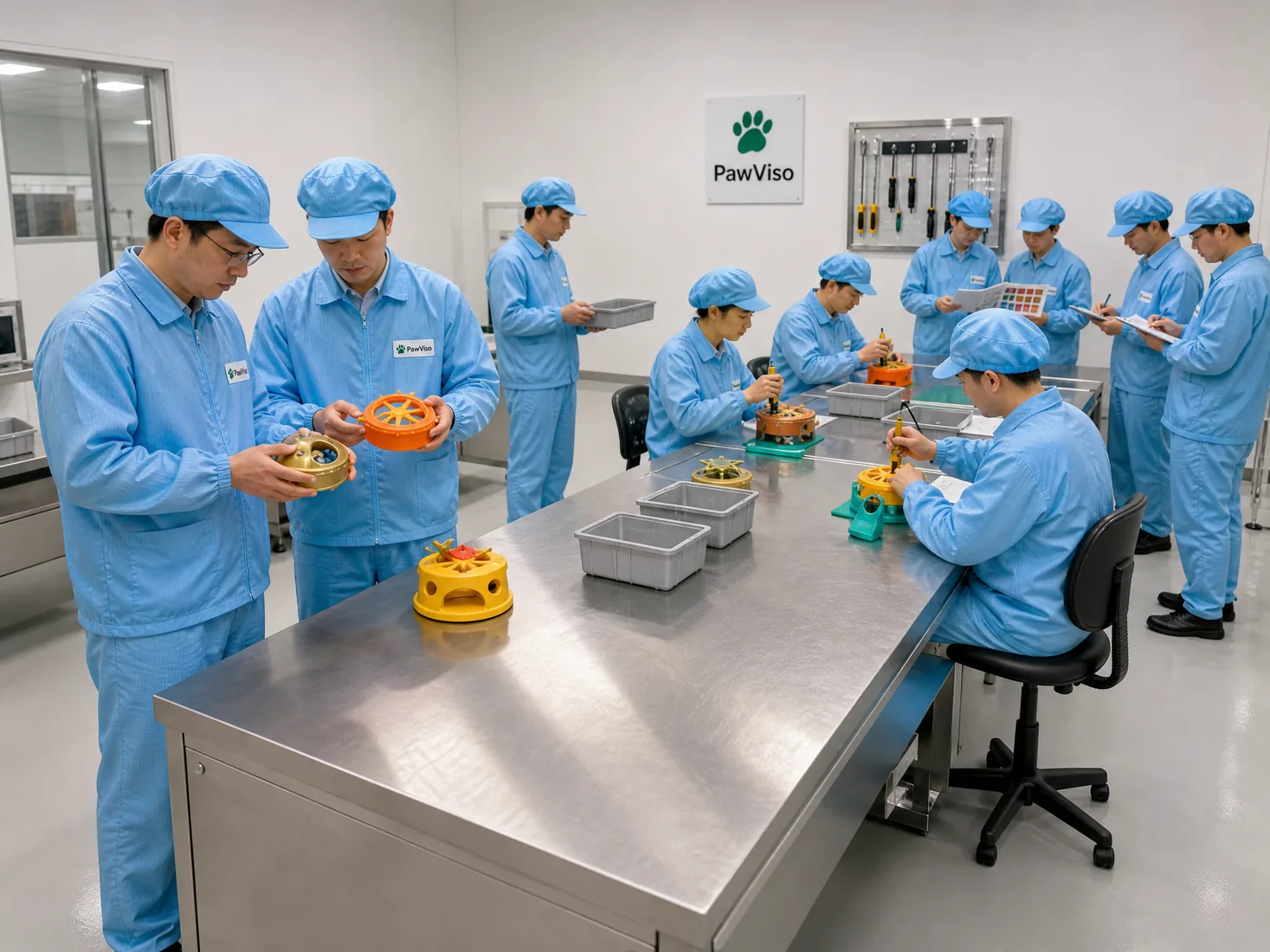
This guide helps U.S.-market pet-product retailers, importers, distributors, and private-label buying teams evaluate and buy dog bag custom programs from pet products manufacturers and distributors. It focuses on the procurement decisions you’ll face—supplier screening, specification writing, evidence for materials and components, sampling and pilot runs, packaging and retail readiness, quality-control systems, and commercial tradeoffs—so your sourcing team can manage risk and cost while preparing for U.S. distribution. Buyer/importer confirmation is required for final claims and target-market obligations; this guide does not provide regulatory, legal, veterinary, or safety guarantees.
Decision framework
A compact decision framework keeps procurement focused. Use these stages repeatedly as you evaluate suppliers and SKUs:
- Define market entry goals: unit price target, gross margin, target retail price, intended channels (ecommerce, big-box, specialty), and private-label vs branded assortments.
- Narrow functional spec: primary function (waste collection, dispenser with refill rolls, biodegradable compostable, scented or unscented), size profile, dispenser type (clip, loop, pocket), dispenser material, and desired customization (logo printing, color matching, hang tags).
- Screen a short list of suppliers that meet logistical and compliance prerequisites.
- Use a documented sampling and pilot-run protocol to verify materials, fit-for-purpose performance, and packaging.
- Require quality-control evidence (AQL, inspection reports, CI, certificates) and align acceptance criteria to contract terms.
- Negotiate commercial terms last: order minimums (MOQs), price breaks, lead times, freight terms, and payment milestones tied to inspection results.
Buyers frequently trade time-to-market for lower unit cost. Use the framework above to quantify those tradeoffs and make decisions that match company capabilities (in-house QC, logistics, marketing) and channel needs.
Supplier screening and commercial tradeoffs
What to screen first
- Legal and logistics: confirm supplier entity, export capability to U.S. ports, typical lead times, minimum order quantities, and whether they have experience with U.S. retailers.
- Production profile: factory vs trading company, number of production lines for film/extrusion (if manufacturing bags), capability for heat-sealing and printing, in-house vs subcontracted finishing.
- Evidence of previous pet-products work: product photos, client references (redacted allowed), and examples of pet products or similar consumer packaged goods.
- Capacity and scaling: maximum monthly output, ability to run multiple SKUs, and flexibility for urgent reorders.
Commercial tradeoffs to evaluate
- MOQs vs unit cost: lower MOQs usually come with higher unit cost. Table 1 illustrates typical tradeoffs to model when deciding initial order size.
| MOQ band | Typical unit cost impact | Best use case |
|---|---|---|
| 1–5k units | +20–40% vs volume price | Market testing, new private label |
| 5–25k units | +5–20% | Seasonal assortments, regional launches |
| 25k+ units | Baseline unit cost | National rollouts, replenishment SKUs |
- Lead time vs inventory carrying cost: longer lead times lower unit price sometimes but increase working capital. Use landed cost models (unit price + freight + duties + inspection + returns buffer) to compare.
- Single-source vs multi-source: single-supplier gives consistency and often lower price, multi-source reduces supply chain disruption risk.
- Domestic finishing vs full import: having finishing (printing, labeling, bundling) done in the U.S. can reduce inventory risk and speed distribution but increases per-unit landed cost.
When evaluating pet products wholesale suppliers or pet products wholesale distributors, make sure you can verify production ownership (factory), not just receipts from a trading firm, when product control is critical.
Product specifications and material/component evidence
A tight, testable specification is the single most important document for a repeatable sourcing program.
Core spec elements for dog bag custom products
- Functional specification: bag dimensions (length × width × thickness), roll core diameter, number of bags per roll, perforation spacing, dispenser compatibility, tensile strength, puncture resistance target (in Newtons), and target degradability claim if any.
- Materials: polymer type (LDPE, HDPE, LLDPE, oxo-degradable, compostable polymers such as PBAT/PLA blends), additive lists (plasticizers, slip agents, anti-block), and percentage target for recyclate if used.
- Manufacturing tolerances: dimensional tolerances (± mm), printing registration tolerances (± mm), and acceptable visual defects per million.
- Environmental or marketing claims: exact wording for on-pack claims (e.g., “compostable in industrial facilities”) and required evidence (certificates, test reports). Buyers must confirm claims with legal/compliance teams for U.S. market obligations.
- Packaging and labeling: master carton count, inner retail pack configuration, UPC/Barcode placement, and country-of-origin marking.
Material/component evidence to request
- Material Safety Data Sheets (MSDS)/Safety Data Sheets (SDS) for all polymers and additives.
- Third-party test reports for compostability, biodegradability, or recyclability claims if used.
- Independent lab tests for tensile strength and puncture resistance.
- Certificates of analysis (COA) for any recaptured/resin content.
- Photographic evidence and line-level production photos showing mold/roll quality and printing.
Table 2: Minimum evidence matrix — customize to risk appetite
| Risk area | Minimum evidence requested | When to escalate |
|---|---|---|
| Polymer identity | SDS + supplier declaration | If mixed or recycled content claimed |
| Compostability/biodegradability claims | Third-party test report to ASTM/ISO standard | Required for any marketing claim |
| Strength/performance | Lab tensile/puncture report | If product complaints would lead to recalls |
| Print/color match | Pantone reference + production swatch | For private-label color-critical SKUs |
Avoid vague material statements. For example, "eco-friendly polymer" is insufficient; require exact polymer type and supporting tests. When suppliers use recycled content, request chain-of-custody documents and COAs that reconcile quantities.
Sampling, pilot-run checks, and acceptance testing
Sample hierarchy
- Pre-production (laboratory) sample: small-run sample made with the proposed materials and tooling for lab testing.
- Production sample (first-run): sample taken from the first production run using final tooling and production parameters.
- Pilot-run lot: a small commercial production lot (e.g., 1–10% of intended order) to validate packaging, assembly, and logistics.
Sampling checklist
- Documented sample request: include spec sheet, required tests, print files or artwork with Pantone callouts, and target packing configuration.
- Traceability: each sample must be labeled with supplier lot, production date, and operator if possible.
- Tests to run on samples: visual inspection for printing/defects, dimensional checks, tensile strength and puncture tests, dispensability checks (ease of tearing perforation), and retail-model merchandising (hang/drop tests if applicable).
- User simulation tests: unboxing, retail shelf placement, clip/holder attachment, and dispenser refill compatibility.
Acceptance criteria and AQL
- Define Acceptable Quality Limits (AQL) for critical, major, and minor defects. Commonly used AQLs: critical 0.01, major 1.5–2.5, minor 4.0.
- Include failure modes and required corrective action timelines in the contract (e.g., rework, replacement, or credit).
- Tie payment milestones or release of goods to passing pre-shipment inspection (PSI) results.
Pilot-run governance
- Insist on a pilot-run inspection by an independent third-party inspector or your QC team.
- Use pilot-run data to update spec tolerances and packaging instructions.
- If the pilot run fails, require a root-cause analysis and corrective action plan (CAP) before authorizing a full production run.
Do not accept samples that differ materially from mass-produced versions; require production-line photos and inspection reports with serial numbers to prove representativeness.
Packaging, retail readiness, and logistics
Retail readiness checklist
- On-pack labeling: UPC/GTIN, country of origin, net content, recycled content claims, and any state-specific labeling requirements if you plan distribution across multiple U.S. states. Buyer/importer confirmation is required for final compliance.
- Barcode quality and placement: test barcode readability at retail POS and in your warehouse scanning systems.
- Retail unit and master carton configuration: determine shelf-ready packaging needs (blister, bag-through-card, header cards), master carton dimensions, weight, and palletization plan (units per carton, cartons per pallet).
- Merchandising compatibility: fixture fit tests, peg/hang tests, and planogram compatibility for target retailers.
Sustainable packaging considerations (commercial tradeoffs)
- Using sustainable materials or recyclable packaging can add cost and sometimes affect packaging durability. Quantify tradeoffs:
- Cost delta for recycled or FSC-certified materials.
- Impact on shelf life and moisture protection for barrier films.
- Rework rates if new materials affect automated packing lines.
Freight and customs planning
- Use the landed cost model: FOB/EXW price + freight + insurance + duties + customs clearance + inspection fees + inland transport.
- Harmonized System (HS) codes: confirm HS code with supplier and customs broker to estimate duties; misclassification can delay shipments and change duties.
- Incoterms: decide whether to use FOB, CIF, DDP, etc., depending on internal logistics capabilities and risk tolerance.
Returns and warranty handling
- Create a clear return policy for defective batches that aligns with inspection criteria and contract terms.
- Plan for disposition of defective goods (rework, recycling, destruction) and associated costs.
Quality-control systems and supplier governance
Define QA vs QC roles
- QA (Quality Assurance): system-level expectations, audit schedules, supplier process capability requirements (e.g., SPC, preventive maintenance, operator training).
- QC (Quality Control): incoming inspections, in-line checks, final random sampling, and AQL inspections.
Required supplier processes and documentation
- Documented manufacturing procedures for heat-sealing and extrusion parameters.
- Batch records showing resin lot numbers, extrusion temperatures, and operator sign-off.
- Preventive maintenance logs for critical machinery.
- Training logs for workers performing printing and finishing.
Inspection and testing protocol
- Incoming material inspection: verify resin lot COA, color, melt-flow characteristics if applicable.
- In-line checks: width, thickness, print registration, and seal integrity at set frequencies (e.g., every 30 minutes).
- Final random sampling: pre-shipment inspection by a third-party inspector using agreed AQL levels.
- Periodic lab testing: independent tensile and puncture tests on production samples at agreed intervals (quarterly, per container, or per SKU launch).
Supplier audit cadence
- Initial factory audit: factory capacity, management systems, and process flow.
- Follow-up audits: frequency depends on volume and risk; high-volume suppliers warrant semi-annual audits, lower-volume annual audits.
- Special audits: after critical failures or before scaling up production.
Contractual enforcement
- Include quality gates linked to payment and shipment release.
- Define penalties for repeated defects and a remediation timeline.
- Make warranty and recall responsibilities explicit.
For pet supplies wholesale distributor relationships, require clearly defined inspection and return flows when distributors handle repacking or racking for multiple retail partners.
Frequently asked questions
Q1: What’s the minimum paperwork I should require from a new supplier? A1: At minimum: supplier business registration, factory vs trading declaration, SDS for polymers, sample production photos, basic production capacity data, and a proof-of-insurance or export capability statement. Escalate to full audits for higher volumes.
Q2: Can I rely on supplier certificates for compostability or biodegradability claims? A2: Supplier certificates are a starting point; require third-party test reports to recognized standards (ASTM/ISO) for any public marketing claims. Buyer/importer confirmation is required for final claims and obligations.
Q3: How many samples should I order before a production run? A3: Order at least: 1 lab sample for testing, 3–5 production samples from the first-run for QC tests, and a pilot-run (1–10% of the order) before full production. Adjust based on past supplier performance.
Q4: What commercial levers are best for lowering unit cost with acceptable risk? A4: Typical levers: increase MOQ, lengthen lead time, standardize colors and packaging across SKUs, and negotiate multi-SKU bundles. Always quantify landed cost and service-level risk before committing.
Conclusion
Sourcing a dog bag custom program for U.S. channels requires a structured procurement approach: define your market goals, write precise specifications, obtain verifiable material and performance evidence, validate through samples and pilot runs, prepare retail-ready packaging, and institute strict quality-control systems tied to contract terms. Use supplier screening to align capacity and risk appetite, and quantify commercial tradeoffs like MOQ vs unit price and lead time vs inventory cost.
Maintain traceability and require documentation for materials and tests. Any environmental or safety claim must be supported by third-party test reports and reviewed by your compliance team; buyer/importer confirmation is required before making marketing or regulatory statements. Applying the decision framework and checklists in this guide will reduce surprises and help your organization scale pet supplies private label or wholesale assortments with predictable quality and costs.
Actionable next steps
- Finalize a product spec sheet with tolerances and test methods.
- Shortlist 3–5 suppliers and request uniform sample packages with required evidence.
- Define AQL and pre-shipment inspection terms to include in purchase orders.
- Run a pilot order, inspect per protocol, and update spec and packaging instructions based on pilot data.
Buyer search scope
This guide addresses the following U.S. B2B procurement search phrases. Each phrase is considered in the context of supplier selection, product specifications, samples, packaging and quality evidence rather than as a consumer recommendation.
| Search phrase | Buyer use |
|---|---|
| dog bag custom | Primary procurement focus for this guide |
| pet products wholesale suppliers | Related specification, supplier or range-planning query |
| pet products wholesale distributors | Related specification, supplier or range-planning query |
| pet supplies wholesale distributor | Related specification, supplier or range-planning query |
| pet supplies bulk wholesale | Related specification, supplier or range-planning query |
| pet toys wholesale suppliers | Related specification, supplier or range-planning query |
| pet supplies private label | Related specification, supplier or range-planning query |
Final CTA — Prepare a focused private label & supplier sourcing sourcing brief with PawViso.
Share your target U.S. channel, product format, estimated order structure, packaging direction and customization requirements for a practical B2B discussion.
Email: info@PawViso.com
WhatsApp: +86 186 8106 4480
Related PawViso resources
- Continue with How to Build a Private Label Pet Product Line to compare a related supplier, sample and quality-control route.
- Browse the PawViso product catalogue to identify product formats for your purchasing brief.
- Follow the PawViso sourcing process and review the B2B buyer FAQ before sharing requirements.
External reference
Use ISO 9001 quality-management systems guidance as general quality-system context, and confirm the product-specific evidence that applies to the selected SKU, channel and target market.