
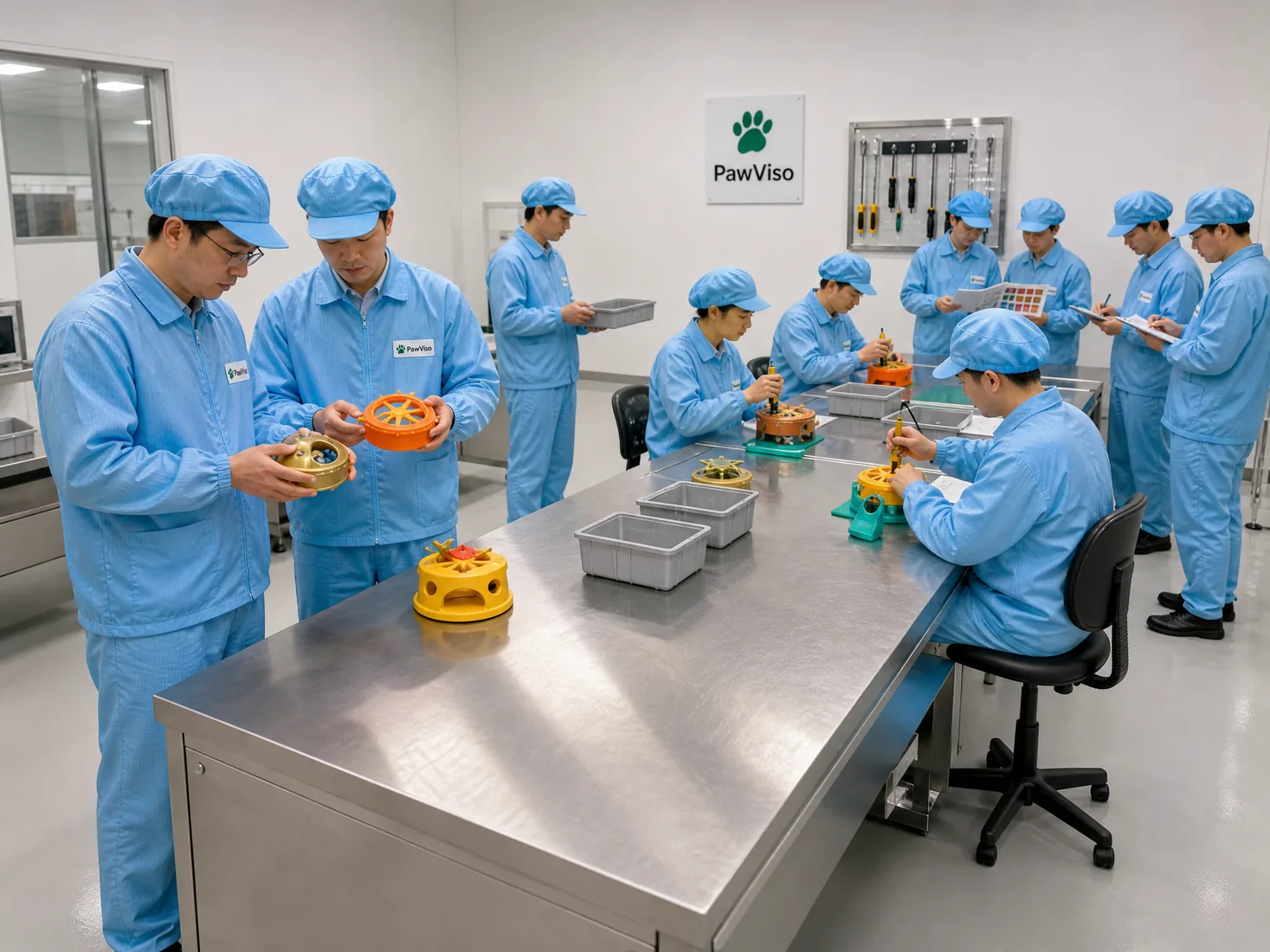
This guide gives U.S.-market buyers a pragmatic procurement framework for pet product programs — retail stores, importers, distributors and private-label teams. It focuses on how to evaluate and compare suppliers for pet products supplier wholesale needs, including custom dog products wholesale and broader pet supplies in bulk buys. It clarifies what evidence to demand, how to structure sampling and pilots, packaging/retail readiness, quality-control measures, commercial tradeoffs, and a short buyer action plan. No product performance, safety or regulatory guarantees are made here; buyers and importers must confirm final claims and obligations for their target markets.
Decision framework: eight procurement checkpoints for pet product programs
Use these checkpoints in supplier selection and ongoing sourcing reviews. Each step reduces risk and makes tradeoffs explicit.
- Commercial fit: MOQ, lead time, pricing bands, payment terms, freight and Incoterm flexibility.
- Technical fit: product specifications, materials and component traceability, manufacturing process notes.
- Evidence fit: test reports, factory audits, certifications, and sample history.
- Quality management: incoming inspection, AQLs, in-line and final inspections, corrective action timelines.
- Packaging & retail readiness: sellable packaging, UPC/GTIN readiness, palletization and drop-shipping capability.
- Regulatory & compliance: labeling, chemical limits, import documentation and claims substantiation.
- Pilot verification: structured sampling, small pilot production runs, first-article inspections.
- Commercial scaling: inventory buffers, change control, warranty and returns handling.
Use a short scoring matrix (example below) to compare 3–6 shortlisted suppliers across the checkpoints. Score each checkpoint 1–5 and weight by importance to your business (e.g., private-label margin, speed-to-market).
| Checkpoint | Weight | Supplier A | Supplier B | Supplier C |
|---|---|---|---|---|
| Commercial fit | 20% | 4 | 3 | 5 |
| Technical fit | 15% | 3 | 5 | 4 |
| Evidence fit | 15% | 5 | 2 | 4 |
| Quality management | 15% | 4 | 4 | 3 |
| Packaging & retail readiness | 10% | 5 | 3 | 4 |
| Regulatory & compliance | 10% | 4 | 3 | 4 |
| Pilot verification | 10% | 5 | 4 | 3 |
Use the weighted totals to prioritize negotiations and pilot orders.
Supplier screening and onboarding checklist
Before requesting samples or committing capital, screen suppliers against the following items. For private-label or branded programs, prioritize suppliers that will provide component traceability and allow code-controlled changes.
- Company profile: years in business, ownership, number of production lines, export experience to the U.S., primary clients (B2B channels only).
- Legal standing: business license, tax ID, export license if applicable, and principal contact data.
- Factory specifics: factory addresses, sub-contractor disclosure policy, percent of work subcontracted.
- Capacity & flexibility: maximum monthly units, seasonal capacity, ability to scale for promotions or replenishment.
- Financial terms: lead times at different MOQs, price ladders (FOB/CIF), sample cost policy, payment terms (L/C, T/T, net 30).
- Insurance & liability: product liability insurance limits, recall indemnity policy (ask for certificate).
- Export & documentation capability: HS codes, typical packing lists, commercial invoice templates and experience with U.S. customs.
Quick red flags: inability to provide a factory address, refusal to disclose subcontracting, inconsistent answers about capacity or lead time, or reluctance to accept basic payment security measures (escrow, documentary L/C, third-party inspection).
Product specifications and material/component evidence
A clear specification package is the single best control lever for product consistency and avoiding disputes.
What to include in every spec sheet:
- Product name and SKU.
- Complete bill of materials (BOM): materials, part numbers, supplier IDs, component dimensions and tolerances.
- Critical dimensions and performance criteria (force, weight limits, abrasion count, UV stability if applicable).
- Assembly and finishing methods (bonding, welding, sewing types, adhesives with supplier & batch details).
- Marking and labeling content: language, placement, font size, mandatory statements (FCC, ASTM references if applicable).
- Packaging specification: retail-ready layout, inner pack, master carton dimensions, pallet pattern.
- Acceptable aesthetic variations (color tolerances, texture allowances) and unacceptable defects (loose threads, misprints).
Material/component evidence to request:
- Raw material certificates (e.g., polymer grade certificate, textile fiber content).
- Mill or upstream supplier declarations showing traceability to specific lots or batches.
- Third-party test reports relevant to your product category (e.g., mechanical strength, flammability classification, chemical migration where applicable).
- For pet products crossing into children's toy-like categories (interactive toys), confirm applicable limits or tests; buyers should verify relevance for their product and market 1.
Document version control: require suppliers to include a drawing/version number and revision history on all spec sheets. For private-label products insist on a signed change control agreement: no changes without written buyer approval.
Sampling, pilot runs and first-article control
Samples and small pilot runs are where theory meets reality. Structure this stage to answer three questions: does the product meet specs, can the supplier repeat it at scale, and are packaging and logistics workable?
Sampling protocol:
- Pre-production sample (PPS): built using actual production methods, components and packaging; buyer approval required before tooling or bulk production.
- Engineering sample: for fit/form checks where tooling is not used.
- Photo and video evidence: time-stamped images of the sample with a scale reference and key measurement callouts.
- Sample report: checklist that maps each spec item to Pass/Fail and includes measured values.
Pilot run guidance:
- Specify pilot run size as an agreed fraction of commercial master carton quantities; typical range 200–1,000 units depending on product.
- Perform first-article inspection (FAI) on a statistically relevant number of units from the pilot.
- Include a simple run-rate test (if relevant) to verify assembly consistency, e.g., cycle time and defect rate over several shifts.
Acceptance criteria and escalation:
- Predefine Acceptable Quality Level (AQL) for cosmetic and critical defects. Typical AQLs: critical = 0, major = 0.65–1.5, minor = 2.5–4.0 depending on risk appetite.
- If pilot fails, require a root-cause action plan with timelines and a re-pilot clause before full production release.
Sample approval matrix (compact view):
| Sample type | Purpose | Buyer action |
|---|---|---|
| Engineering sample | Fit/form verification | Minor changes allowed; not final approval |
| Pre-production sample (PPS) | Confirm production methods and packaging | Must be approved before bulk production |
| Pilot run | Validate repeatability and QC | FAI inspection, AQL pass required |
Insist on written approval for each sample stage; avoid “verbal okay” approvals.
Packaging, retail readiness, labeling and logistics
Packaging is where product meets the shelf or the end customer. For retail readiness and drop-ship programs, packaging drives sell-through and returns rates.
Retail and logistics checklist:
- Retail-ready packaging: dielines, graphics, material specs, retail UPC/GTIN placement and scannability. Confirm barcode print quality (ISO/IEC barcode grades).
- Shipping packaging: master carton dimensions, weight, units per carton, pallet pattern and pallet height limits.
- Protection and shelf life: inner protective materials, desiccants, sealed bags for problem-prone components.
- E-commerce vs. brick-and-mortar: provide separate SKUs or pack formats if necessary (e.g., polybag for e-commerce bundles vs. clamshell for shelf).
- Label content: country of origin, fiber content for textiles, handling instructions, and any required warning labels. Buyer must confirm final label text for regulatory requirements in the U.S.
- Drop-shipping capabilities: multi-SKU single-carton pick, packing slip format and returns flow.
Packaging tradeoffs table:
| Tradeoff | High protection packaging | Low-cost packaging |
|---|---|---|
| Unit cost | Higher | Lower |
| Damage rate | Lower | Higher |
| Shelf appeal | Can be higher | Often lower |
| Freight cost | Higher per unit | Lower per unit |
| Sustainability profile | Depends on materials | Can be less sustainable |
Ask suppliers for a costed bill-of-materials for packaging so you can model total landed cost by pack format and duty calculations.
Quality control, inspections and corrective action
A pragmatic QC regime combines supplier responsibility with independent verification. Define the roles, frequency and actions before production starts.
Core elements:
- Supplier QC plan: daily checklists, in-line hold points, trained QC staff, and sample retention policies.
- Inspection strategy: pre-shipment inspection (PSI), in-line inspection (ILI), and container loading check. Use AQLs aligned to your quality risk tolerance.
- Test and inspection reporting: standardized forms with photos, lot numbers, sample IDs and measured values.
- Nonconformance process: immediate stop-production triggers for critical failures, written NCR (nonconformance report), containment actions, root cause analysis and corrective action plan (CAP) with deadlines.
- Rework and scrap policies: agree in writing what level of rework is acceptable, who pays, and how reworked units are inspected.
- Performance KPIs: defect per million (DPM), on-time delivery, acceptance rate, and corrective action closure time.
Inspection cadence example:
| Stage | Sample size basis | Who conducts | Typical focus |
|---|---|---|---|
| In-line inspection (mid-run) | Based on process risk | Supplier QC or third-party | Assembly consistency, critical features |
| Final random inspection (pre-shipment) | AQL tables | Third-party or buyer inspector | Cosmetic, packaging, labeling |
| Loading check | 1 per container | Independent inspector | Carton integrity, pallet stability, seal check |
Third-party inspectors provide an independent view, but they only sample. Use inspection results as inputs to supplier performance reviews rather than final determinants of product acceptability.
Commercial tradeoffs and negotiation points
In pet-product programs the commercial levers interact: price vs. lead time vs. quality vs. tooling. Make tradeoffs explicit through negotiated clauses.
Key negotiation levers:
- MOQs and Price Ladders: get pricing at clear MOQ bands and for reorder bands. For private-label programs you may accept higher MOQs in exchange for exclusivity or tooling amortization.
- Lead time tiers: tier pricing by lead time (e.g., standard 90 days vs. expedited 45 days). Charge premium for rush production.
- Tooling & die costs: clarify ownership (buyer-paid, supplier-held), amortization schedule, and who pays for tooling changes requested by buyer.
- Warranty and returns: define warranty period, RMA process, who pays return freight for defective units, and how credits are issued.
- Payment and risk allocation: use staged payments tied to milestones (e.g., deposit, tooling sign-off, PPS approval, cargo readiness). Consider letters of credit or escrow for new suppliers.
- Exclusivity & IP: for custom dog products wholesale and private-label designs, include IP ownership, enforcement responsibilities and confidentiality terms. Clarify what constitutes a competing product.
Scenario tradeoff example:
- Option A: Lower unit price, higher MOQ, longer lead time — suitable for stocked, high-turn SKUs.
- Option B: Higher unit price, lower MOQ, shorter lead time — better for test assortments or high-premium SKUs.
Document commercial tradeoffs in a commercial terms matrix and include change-order pricing in the contract.
Frequently asked questions
Q: What minimum evidence should I accept before placing a pilot order? A: At minimum, request a complete spec sheet, a pre-production sample (PPS) built with production materials, and supplier-provided material certificates. For U.S. market obligations and any regulatory claims, buyer confirmation is required.
Q: How large should a pilot run be for pet supplies in bulk? A: Pilot size depends on complexity and unit value. A typical pilot is 200–1,000 units; for larger items reduce by cost considerations. The goal is to produce enough units to test repeatability, packaging, and logistics.
Q: When should I require third-party testing? A: Require third-party testing when product risks include chemical migration, mechanical hazards, or when the product category commonly faces regulatory scrutiny. Buyers must confirm which specific tests are required for their target market and product claims 1.
Q: Can I source custom dog products wholesale from suppliers that subcontract parts? A: Yes, if the supplier discloses subcontracting and provides upstream supplier traceability and quality controls. Make subcontractor disclosure and right-to-audit part of the contract.
Conclusion
Sourcing pet products supplier wholesale for the U.S. market is a structured process of making tradeoffs visible and enforcing repeatability through specs, evidence and staged verification. Use a clear decision framework that scores suppliers on commercial fit, technical fit, evidence, quality management, packaging readiness, regulatory compliance, pilot verification and scalability. Insist on BOM-level traceability, signed pre-production approval, and a written corrective-action process before scaling.
Two quick takeaways:
- Control the specification and approval gates: without precise BOMs and PPS approval you trade money for uncertainty.
- Quantify and contract tradeoffs: convert lead times, MOQs, tooling terms, and warranty obligations into enforceable contract clauses so scaling decisions are predictable.
Buyers and importers are responsible for final market claims and regulatory obligations; verify required tests and labels for your products and confirm documentation before placing commercial orders 24.
Buyer search scope
This guide addresses the following U.S. B2B procurement search phrases. Each phrase is considered in the context of supplier selection, product specifications, samples, packaging and quality evidence rather than as a consumer recommendation.
| Search phrase | Buyer use |
|---|---|
| pet products supplier wholesale | Primary procurement focus for this guide |
| custom dog products wholesale | Related specification, supplier or range-planning query |
| pet supplies in bulk | Related specification, supplier or range-planning query |
| pet supplies bulk buy | Related specification, supplier or range-planning query |
| pet products private label | Related specification, supplier or range-planning query |
| pet products in bulk | Related specification, supplier or range-planning query |
| dog supplies in bulk | Related specification, supplier or range-planning query |
Final CTA — Prepare a focused private label & supplier sourcing sourcing brief with PawViso.
Share your target U.S. channel, product format, estimated order structure, packaging direction and customization requirements for a practical B2B discussion.
Email: info@PawViso.com
WhatsApp: +86 186 8106 4480
Related PawViso resources
- Continue with How to Build a Private Label Pet Product Line to compare a related supplier, sample and quality-control route.
- Browse the PawViso product catalogue to identify product formats for your purchasing brief.
- Follow the PawViso sourcing process and review the B2B buyer FAQ before sharing requirements.
External reference
Use ISO 9001 quality-management systems guidance as general quality-system context, and confirm the product-specific evidence that applies to the selected SKU, channel and target market.