
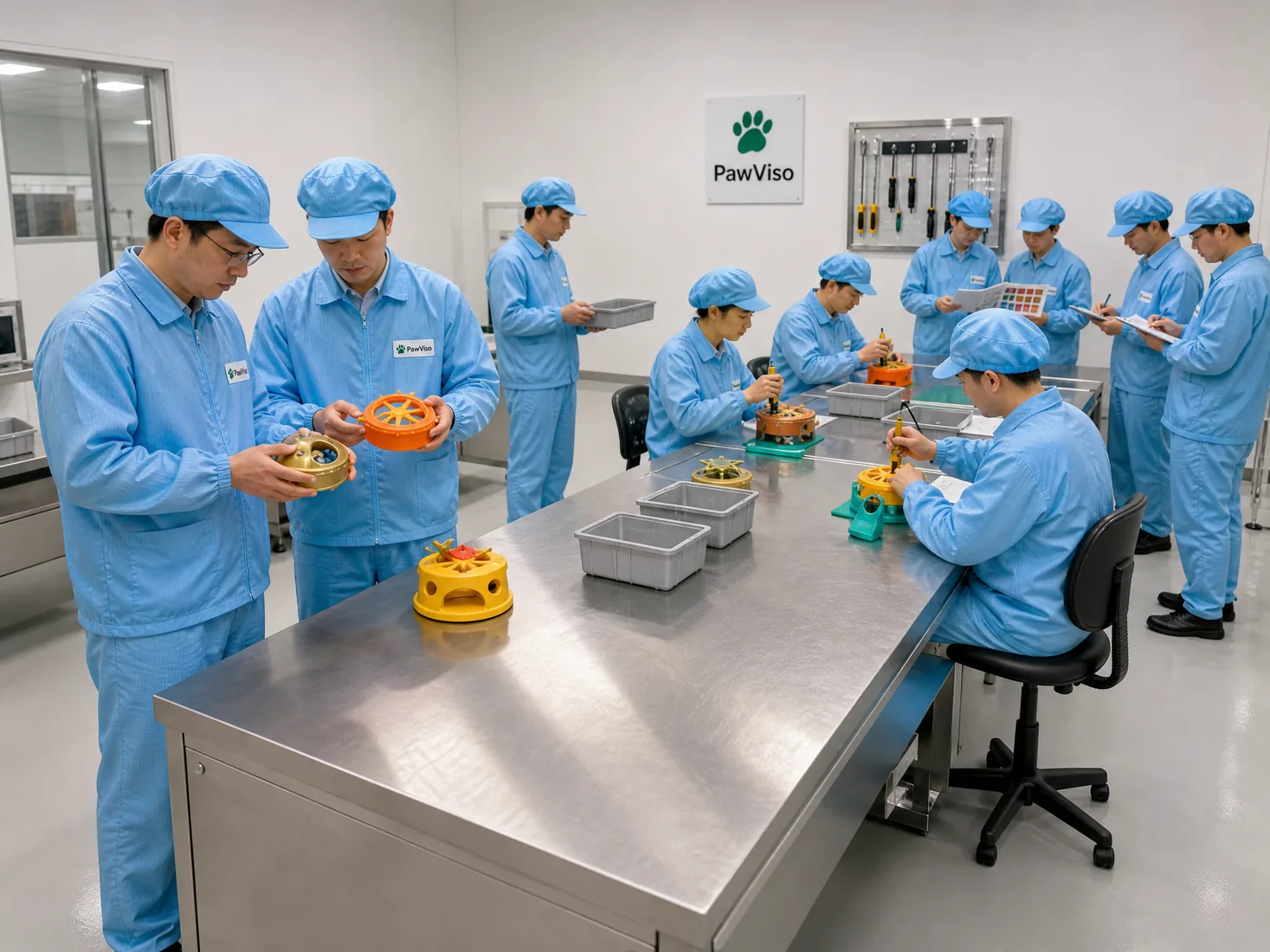
This guide is written for U.S. pet-product retailers, importers, distributors, and private-label buying teams evaluating eco-focused pet product programs. It maps a practical decision framework and five procurement modules you can apply to compare suppliers, check materials evidence, validate samples or pilot runs, assess packaging and retail readiness, and design quality-control controls while weighing commercial tradeoffs. It does not make product-performance, safety, or regulatory guarantees—buyers and importers must confirm final claims and meet target-market obligations.
Decision framework: quick checklist for eco-focused sourcing
Start every sourcing project with a compact checklist that prioritizes risk reduction and clarity. Use it as a gate at each stage.
- Market stance: Define the eco claim(s) you will sell (e.g., recycled content, compostable, FSC-certified packaging). Limit claims to verifiable attributes.
- Supplier fitness: Can supplier demonstrate traceability for primary materials and a manufacturing quality system?
- Specification depth: Do product specifications include tolerances, materials with chemical or biological requirements, and durability criteria?
- Evidence: Are third‑party certificates, laboratory test reports, and factory inspection photographs available?
- Sampling & pilot: Are sample protocols defined (use, wear, wash cycles, abuse tests)? Is a small pilot run feasible?
- Packaging & retail readiness: Are barcodes, sellable presentation, and labeling compliant with U.S. requirements?
- QC & remediation: Is there a pre-shipment inspection plan, incoming materials control, and defined nonconformance remediation?
- Commercial fit: Do landed cost, MOQ, lead time, and inventory risk match your margin and speed-to-market goals?
Use this checklist to accept, reject, or escalate supplier prospects before moving to detailed modules below.
Supplier screening (how to evaluate and compare vendors)
Goal: Narrow a long list of potential partners to 2–4 suppliers that meet commercial capacity and minimum sustainability evidence.
Key screening criteria
- Business credentials: Local legal entity or export license, DUNS/other identifier, and banking references.
- Production capacity: Monthly output at the SKU level, secondary capacity for growth and peak seasons.
- Supply chain map: Sources of raw materials and tiers of sub-suppliers; presence of third-party audits or factory certifications.
- Minimum order quantity (MOQ) and lead time: Clear articulation of standard MOQ, sample MOQ, and scalable MOQs for pilots.
- Cost transparency: EXW price breakdown, freight terms, packaging charges, tooling or mold amortization.
- Communication and language capability: Response times and whether technical queries are answered by product engineers.
Red flags that warrant disqualification
- No traceability for recycled/biobased inputs.
- Inability to provide recent laboratory test reports for material claims.
- Factory with limited export experience when you require U.S. import documentation.
Compact comparison table: supplier scorecard
| Screening factor | Weight (0–10) | Supplier A | Supplier B |
|---|---|---|---|
| Traceability for materials | 8 | 6 | 9 |
| Production capacity | 7 | 8 | 5 |
| Certifications/testing evidence | 8 | 4 | 8 |
| MOQ & pricing transparency | 6 | 7 | 6 |
Note: tailor weights to your buying priorities (e.g., certification vs. price).
Sourcing channels and keywords to use in outreach
- When searching, include targeted phrases relevant to your program: eco friendly pet products wholesale, eco friendly dog products wholesale, white label pet products wholesale, private label pet product manufacturers, pet toys manufacturers in usa, pet supplies wholesale in usa, pet toys manufacturers in china. Use these phrases in RFIs for clarity on capabilities.
Product specifications and material/component evidence
Goal: Build a specification package that reduces ambiguity on eco claims, safety attributes, and performance expectations.
Essential components of an SKU spec
- Bill of materials (BOM): Each component listed with supplier name, material type, and percent recycled or biobased content if claimed.
- Material standards and definitions: Cite standards where possible (e.g., ASTM or ISO for plastics, textile fiber definitions).
- Physical performance targets: Load, tensile, tear resistance, abrasion cycles, floatation, chew resistance tests as applicable.
- Chemical limits: Presence/absence of restricted substances and required test methods (e.g., heavy metals, phthalates).
- Dimensional tolerances, color standards (with Pantone), and finish requirements.
- End-of-life claim language: Exactly what you will claim on pack (e.g., "made with 50% post-consumer recycled PET") and the evidence required to substantiate it.
Material evidence to request from suppliers
- Material declarations: Supplier attestations of recycled content or biobased content with mass-balance or chain-of-custody documentation.
- Third-party certificates: Certification bodies or recognized standards where applicable (chain-of-custody, FSC for paper, global certification acronyms).
- Lab test reports: Recent (within 12 months) test reports from accredited labs for chemical safety and performance. Specify test method, sample ID, and acceptance criteria.
- Factory photos and incoming material inspection records.
Table: minimum documentary evidence by claim type
| Eco claim | Minimum evidence required |
|---|---|
| Recycled content (%) | Mill/co-processor certificate + material delivery records + lab verification (if needed) |
| Compostable | Accredited compostability certificate + applicable standard reference |
| FSC / sustainable wood | Chain-of-custody certificate from FSC or equivalent |
| Biobased content | Third-party biobased certification or supplier mass-balance documents |
Buyer/importer confirmation required: any labeling or sustainability claim must be verified by the importer against applicable U.S. regulations and substantiation guidance before consumer-facing use 1.
Sampling and pilot-run checks
Goal: Convert documentary assurance into real-world performance and manufacturability before placing large orders.
Design a sampling plan
- Sample scope: Pre-production prototype, production sample (made on intended tooling), and a pilot production run (small batch produced on the line).
- Acceptance criteria: Define pass/fail thresholds tied to specifications (e.g., percent recycled content tolerance, abrasion cycles, stitching per inch).
- Test matrix: Assign tests to each sample type: functional tests, durability tests, wash/wear cycles, chemical screening, and packaging fit checks.
- Use-case trials: Controlled in-house or third-party testing that simulates retail handling, shelf placement, and end-user interaction.
What to inspect on pilot runs
- Production variability: Check 20–50 units across different production batches to understand variance.
- Labeling & artwork: Verify that hangtags, instructions, and claims reproduce correctly and remain legible.
- Assembly and rework rates: Record percentage of units requiring rework and common failure modes.
- Packaging and kitting consistency: Confirm correct inner/outer pack quantities and damage rates during transit simulation.
Sampling logistics and cost controls
- Agree on sample costs and timeframes in the contract; cap the number of free engineering samples.
- Use photo/video documentation and sign-off forms to record sample approvals.
- Consider third-party pre-shipment inspections for higher-volume pilots.
Do not assume a production sample equals mass-production quality. Pilot runs are the most reliable way to reveal supply chain and process issues.
Packaging and retail readiness
Goal: Ensure packaging supports your eco claims, retail presentation, compliance, and supply chain efficiency.
Packaging considerations for eco-focused SKUs
- Recyclability vs. recycled content: Determine whether packaging should be recyclable, made from recycled materials, or both. Each requires different supplier evidence.
- Minimalism and retail display: Balance reduced packaging with shelf appeal and protection; ensure the chosen packaging provides sufficient protection for transit.
- Labeling and claims: Exact on-pack wording should be verified against FTC substantiation and other applicable labeling rules for the U.S. market 2.
- Barcodes and traceability: GS1 barcodes, lot codes, and manufacturing dates for returns and recalls.
Compact table: Packaging decision matrix
| Priority | Packaging approach | Evidence to collect |
|---|---|---|
| Max recyclability | Single-material packaging, clear recycling instructions | Material spec sheets, recycling stream guidance |
| Max recycled content | Post-consumer or post-industrial recycled materials | Mill certificates, percent recycled evidence |
| Retail shelf impact | Printed retail boxes or hangcards | Pre-press proofs, color approval, mockups |
Retail readiness checklist
- Packaging passes transit/droptest and compression tests.
- UPC/GTINs are registered and match your inventory system.
- All on-pack claims have supporting documents ready for auditors.
- Shelf-ready packaging integrates into retailer receiving and merchandising plans.
Buyers must confirm final labeling and claim language before shipment to ensure compliance with U.S. regulatory and advertising requirements 2.
Quality-control controls and commercial tradeoffs
Goal: Define QC measures that protect product integrity while managing cost and lead time.
Core QC elements
- Incoming materials control: Documented inspection plans for critical materials (e.g., recycled pellets, bio-based polymers, textile fibers). Include sampling frequency and acceptance thresholds.
- In-line and end-of-line inspections: Define inspection checkpoints and sample sizes; include critical-to-quality (CTQ) dimensions and allowable defects.
- Pre-shipment inspection (PSI): ACI/ANSI/ISO-based inspections or third-party providers; set AQLs for cosmetic and functional defects.
- Nonconformance process: Clear remediation steps: rework, reject, price credit, or scrap. Assign responsibilities and time limits.
Setting AQLs and testing frequency
- Use stricter AQLs for private-label or branded SKUs and slightly relaxed AQLs for low-cost commodity lines. For example, AQL 0.65 for critical defects on premium private-label lines; AQL 2.5 for cosmetic defects on low-margin items.
- Increase testing frequency for new suppliers and decrease after consistent passing records.
Commercial tradeoffs to evaluate
- Cost vs. Certification: Certified materials or third-party audits raise unit costs and lead times but reduce brand risk.
- MOQ vs. Unit Cost: Lower MOQs can accelerate time-to-market but increase per-unit cost due to amortized tooling and freight.
- Lead time vs. Inventory: Longer lead times require higher safety stock; shorter lead times can reduce inventory but increase per-shipment costs.
- Local vs. offshore manufacturing: Sourcing from pet toys manufacturers in usa can cut lead time and simplify compliance but may increase unit costs compared with pet toys manufacturers in china. Balance these factors against required speed, cost, and supply resilience.
Sample commercial tradeoffs table
| Tradeoff | Offshore (e.g., China) | Domestic (USA) |
|---|---|---|
| Unit cost | Lower | Higher |
| Lead time | Longer | Shorter |
| Supply resilience | Depends on diversification | Generally higher |
| Ease of regulatory documentation | More complex import process | Easier domestic compliance |
Risk management: include clauses for inspection failures, lead-time penalties, and material substitution approvals in purchase agreements. Buyers and importers must perform final confirmation on regulatory and labeling obligations for their target market 3.
Frequently asked questions
Q: How do I verify recycled content claims from a supplier? A: Require mill or supplier certification, delivery records, and ideally an independent lab verification or mass-balance documentation. Ask for chain-of-custody evidence and recent material test reports.
Q: Are there U.S. rules about environmental claims on packaging? A: Yes—advertising and labeling claims must be truthful and substantiated under FTC guidelines and other applicable regulations. Buyers should validate claim language and evidence before use 2.
Q: What's a practical sample size for a pilot run? A: For manufacturing validation, a pilot of 200–1,000 units is common depending on complexity. Ensure samples span shifts, molds, and operators to reveal variability.
Q: How should I balance MOQ and inventory risk? A: Model landed cost scenarios with different MOQs, factoring in holding costs, forecast variability, and potential obsolescence. Lower MOQs reduce inventory risk but raise unit cost—choose based on margin tolerance and market test plan.
Conclusion
Sourcing eco friendly pet products wholesale in the U.S. market requires structured decision-making across supplier screening, specification design, documentary and laboratory evidence, rigorous sampling and pilot runs, packaging that supports claims and retail needs, and practical quality-control controls aligned with commercial tradeoffs. Use the decision framework at the project start to gate suppliers early and avoid downstream surprises. Collect material certificates, accredited lab reports, and factory-level inspection data, and require pilot production checks that reflect real-world use and retail handling. Expect tradeoffs between cost, lead time, certification, and inventory risk—model these explicitly and include contractual remedies for nonconformance.
This guide gives a procurement roadmap but does not replace buyer/importer confirmation. Buyers and importers must verify all labeling, claims, and regulatory obligations for the U.S. market before launching a product, and seek legal, regulatory, or technical advice as needed 135.
Buyer search scope
This guide addresses the following U.S. B2B procurement search phrases. Each phrase is considered in the context of supplier selection, product specifications, samples, packaging and quality evidence rather than as a consumer recommendation.
| Search phrase | Buyer use |
|---|---|
| eco friendly pet products wholesale | Primary procurement focus for this guide |
| eco friendly dog products wholesale | Related specification, supplier or range-planning query |
| white label pet products wholesale | Related specification, supplier or range-planning query |
| private label pet product manufacturers | Related specification, supplier or range-planning query |
| pet toys manufacturers in usa | Related specification, supplier or range-planning query |
| pet supplies wholesale in usa | Related specification, supplier or range-planning query |
| pet toys manufacturers in china | Related specification, supplier or range-planning query |
Final CTA — Prepare a focused private label & supplier sourcing sourcing brief with PawViso.
Share your target U.S. channel, product format, estimated order structure, packaging direction and customization requirements for a practical B2B discussion.
Email: info@PawViso.com
WhatsApp: +86 186 8106 4480
Related PawViso resources
- Continue with How to Build a Private Label Pet Product Line to compare a related supplier, sample and quality-control route.
- Browse the PawViso product catalogue to identify product formats for your purchasing brief.
- Follow the PawViso sourcing process and review the B2B buyer FAQ before sharing requirements.
External reference
Use ISO 9001 quality-management systems guidance as general quality-system context, and confirm the product-specific evidence that applies to the selected SKU, channel and target market.