
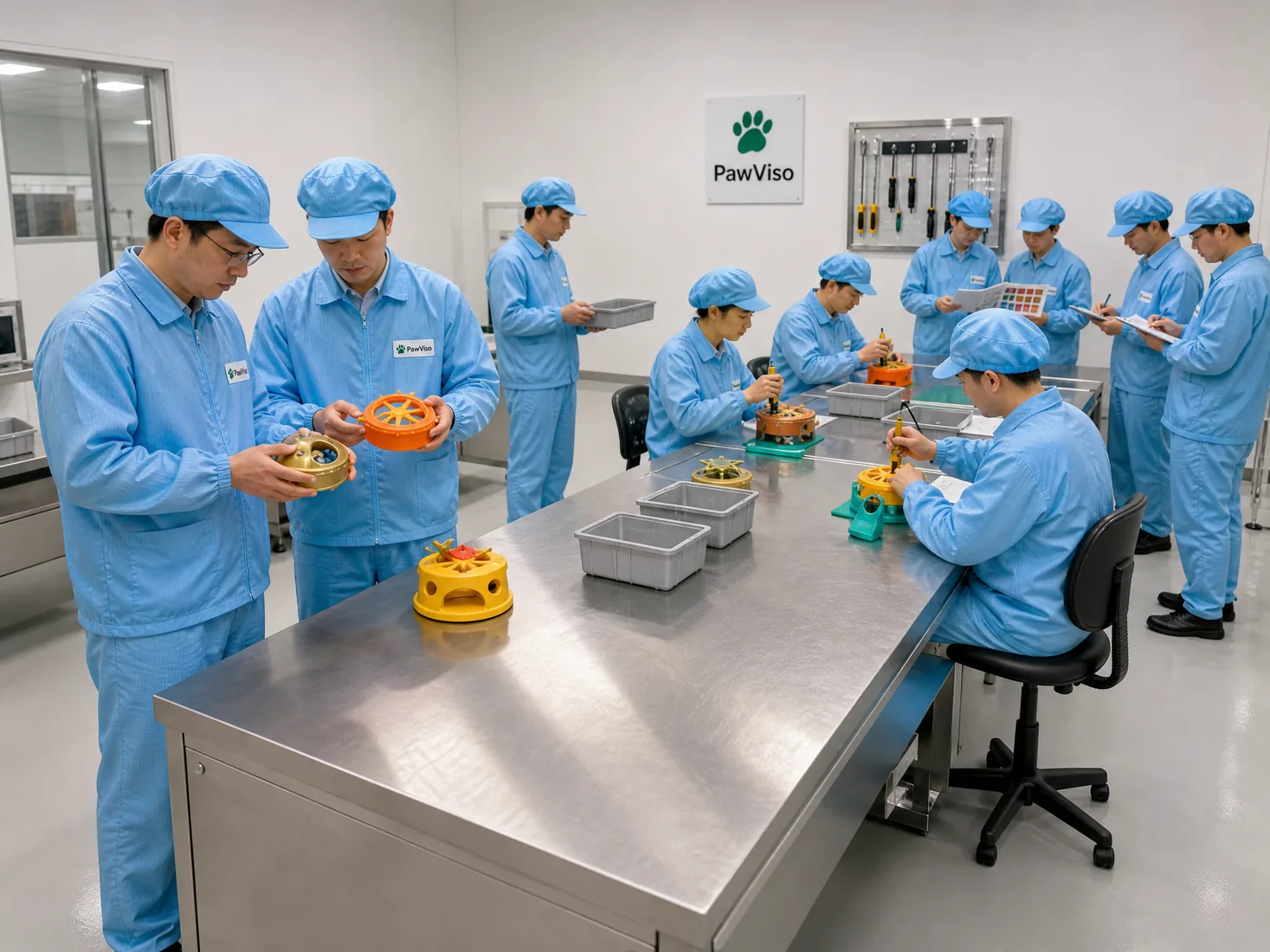
Start with the commercial objective: bring pet toys and related accessories into U.S. retail or private-label channels with predictable cost, compliant paperwork, and reliable quality. This guide gives U.S. buyers — retailers, importers, distributors, and private-label teams — a practical, step-by-step framework to evaluate, test, and select suppliers in China. It covers supplier screening, product specifications, material and component evidence, sampling and pilot-run checks, packaging and retail readiness, quality-control controls, commercial tradeoffs, and a clear buyer action plan you can apply to diverse product lines (including accessories such as bag holders). Buyer/importer confirmation is required for final claims and to meet target-market obligations.
Decision framework: how to evaluate suppliers and downstream risks
Use a decision framework that maps supplier capability to the product complexity and regulatory risk of the SKU. The framework below allocates time and budget and identifies minimum acceptance criteria.
- Complexity axis (low to high): single-material plush or rope toys → multi-material interactive toys with electronics or small parts.
- Regulatory axis (low to high): adult-only toys with no small parts → toys that could be used by children or require chemical limits.
Minimum acceptance criteria for initial outreach:
- Legal: company business license, export license if applicable, registered factory address.
- Quality: recent inspection and testing capability, documented QC procedures, references.
- Capabilities: MOQ, lead time, tooling capacity, customization options, packaging options.
- Evidence: material certificates, test reports, photos of assembly line, packing lines.
Quick decision table to prioritize suppliers:
| Priority | Product type example | Supplier capabilities required |
|---|---|---|
| High | Multi-material interactive chew toy | In-house molding, bonded sewing, electrical subassembly, testing lab access |
| Medium | Standard plush or rope | Contract sewing, dye stability testing, packing line, third-party QC acceptance |
| Low | Simple rubber ball | Compression molding, basic QC, high-volume capacity |
Budget and time allocation guideline:
| Stage | Typical % of landed cost | Typical lead time impact |
|---|---|---|
| Tooling & molds / custom tooling | 5–15% | +4–12 weeks |
| Sampling and revisions | 0.5–3% | +1–4 weeks |
| Production QC and inspections | 1–3% | may delay shipment if failures |
| Certification & testing | 0.5–2% | +1–6 weeks depending on lab availability |
Use this framework to reject early any supplier that cannot demonstrate basic evidence for critical items (materials, tests, QC).
Supplier screening and documentation
Primary goals: confirm the supplier is a manufacturer or verified contract manufacturer, understand legal status, evaluate export experience, and detect potential IP or audit risks.
Checklist for initial screening:
- Verify business license and scope of business. Confirm factory address and factory photos.
- Confirm export experience: export declaration number, HS codes they typically ship, recent shipment references.
- Ask whether they are an OEM factory, trading company, or mixed. Insist on factory-level evidence (workshop photos, production capacity statements).
- Request a signed NDA and (when relevant) an assignment or licensing agreement for private-label IP.
- Ask for third-party audit reports (BSCI, SMETA, ISO 9001) if social or process compliance is a selection factor.
Document package to request:
- Business license, tax registration.
- Export license (if applicable).
- Proof of ownership or lease for factory.
- Recent quality control / factory audit report (within 12 months).
- Sample production photos and packing photos.
- Standard terms (lead time, MOQs, payment terms, warranty).
Screening red flags:
- Only provides a warehouse address and refuses factory visits or live video tours.
- Refuses to provide sample production photos or previous client references.
- No clear capacity or fluctuating lead-time answers.
- Requests full payment before sample tooling without milestones.
Include the exact product fit in your screening. For example, if you need a dog poo bag holder, specify it: some suppliers identify as a "dog poo bag holder manufacturer" and may specialize in injection-molded plastic clips and branded printing. That specificity narrows the search and reveals relevant tooling and printing expertise.
Product specifications and material/component evidence
Write specifications that are unambiguous, testable, and prioritized. A specification should be a single-source document that the supplier signs off on before samples are made.
What to include in a product spec:
- Functional description: use-case, target animal size, expected stress or chew level.
- Bill of materials (BOM): materials for each component, supplier, color codes, and supplier-provided material certificates.
- Dimensional tolerances: critical dimensions with acceptable variance (+/- values).
- Performance tests: tensile, compression, seam strength, chemical limits where applicable.
- Packaging specs: unit pack, master carton, UPC/label placement, hangtags, polybag size and thickness.
Material and component evidence you must collect:
- Raw material certificates or third-party material test results (e.g., polymer grade, phthalate content, heavy metals).
- Supplier material traceability sheets linking lot numbers to finished batches.
- Component drawing files and revision logs for any OEM parts.
- For products with electronics: supplier RoHS declarations and component part numbers.
When making claims about non-toxic or environmentally preferable materials avoid definitive guarantees. Instead require suppliers to provide material safety data sheets, third-party lab test reports, and traceability. Always state that buyer/importer confirmation is required for final claims and target-market obligations.
Include the exact keyword "pet toy manufacturers in china" when describing how to search: for example, in supplier directories, filter results by keywords like pet toy manufacturers in china and then apply the screening checklist above.
Sampling, pilot-run checks, and acceptance criteria
Sampling is where specifications are validated and supplier competency is proven. Structure the sampling process into discrete stages.
Sampling stages:
- Design verification sample (DVS): single unit from handcrafted or small-batch build demonstrating design intent.
- Production sample (PS): sample made on production tooling or line, using production materials and packaging.
- Pilot-run batch: small production run (e.g., 100–1,000 units) to validate processes, yields, and shipping readiness.
For each stage define acceptance criteria:
- Visual inspection: color, finish, stitching, molding flash thresholds.
- Functional testing: pull tests, chew resistance (as specified), electronic function if present.
- Chemical testing: lab test report confirming limits for restricted substances.
- Packaging check: scannability of UPC/labels, pack insertion consistency, package protection.
Pilot-run checklist:
- Yield and defect rates. Acceptable defect threshold should be contractually defined (e.g., AQL 1.5 for critical defects).
- Packing speed and manual steps — assess labor intensity and risk for scaling.
- Logistic packaging validation (carton weight, palletization, labeling).
Sampling table: expected deliverables and verification method
| Sampling stage | Supplier deliverable | Buyer verification |
|---|---|---|
| DVS | 1–3 hand-made or proto units | Visual + functionality checklist |
| PS | 1–5 units made with production materials | Lab tests + full spec check |
| Pilot run | 100–1,000 units | AQL inspection, packing tests, shipping trial |
Note on timelines: expect 1–4 weeks for DVS and PS each, and 2–6 weeks for pilot runs depending on complexity and lab testing lead times.
Include the exact phrase "pet toy suppliers wholesale" when discussing scale: after pilot validation, move only to suppliers who can demonstrate consistent pilot-run yields and references as pet toy suppliers wholesale to ensure they understand volume logistics.
Packaging, retail readiness, and logistics
Retail-ready packaging matters for shelf presentation, freight economics, and compliance.
Packaging considerations:
- Retail format: hanging card, polybag with header, boxed set. Validate in-store presentation with a mock-up.
- Barcodes and labels: buyer provides UPC/EAN and any regulatory labels. Confirm label adhesion and scannability through a test scan in the supplier’s packaging line.
- Protective packaging: protection levels for transit (bubble wrap, fill) and carton strength for pallet loads.
Sustainability and packaging claims:
- Request supplier documentation on recycled content and recyclability but treat these as marketing inputs requiring buyer verification.
- If you plan to use print-on-demand or customized packaging, note that "custom pet products print on demand" production models can reduce inventory risk but usually increase per-unit costs and lead time variability.
Logistics and shipping:
- Confirm FOB, EXW, or CIF terms and include responsibilities for export customs clearance.
- Ask suppliers for typical lead times for LCL vs FCL and for their preferred Chinese port(s).
- Verify carton packing configuration and net/gross weights to calculate freight quotes and landed cost.
Retail readiness checklist:
- Mock retail display tested for 1–2 weeks to check shelf appeal and UPC scanning.
- Packaging labeling verified for regulatory and marketing requirements.
- Assembly instructions or insert cards included as required.
If your business model includes domestic distribution networks or wholesalers, cross-check the supplier’s MOQ and lead time against expected reorder cadence to match "pet supplies wholesale distributors in usa" channel needs.
Quality control plans and inspection strategy
Quality control is continuous: pre-production, during production, pre-shipment, and post-shipment corrective actions.
QC plan components:
- Pre-production: supplier signs final spec and tooling approval. Approve PP samples and set AQL levels.
- In-process: supplier self-inspection logs for key operations with photos and batch traceability.
- Pre-shipment: third-party inspection (AQL or 100% for high-risk items), lab testing of retained samples.
- Post-shipment: holding samples for warranty claims, root-cause analysis process for defects.
Inspection frequency and scope:
- New supplier: 100% final inspection for first two shipments or AQL with a lower pass threshold.
- Established supplier: third-party random inspections on a sample basis (e.g., AQL 2.5 for major defects).
- High-risk SKUs (small parts, electronics, potential choking hazards): escalate to 100% inspection until stable metrics are achieved.
Define defect categories and contractual remedies:
- Critical: safety failures or regulatory non-compliance — reject and recall if already shipped; supplier liability terms must be defined.
- Major: functional failures or critical cosmetic issues — partial rejection or rework.
- Minor: cosmetic issues that do not affect function — negotiated discounts.
Inspection matrix example:
| Inspection type | When | Typical AQL | Action on fail |
|---|---|---|---|
| Pre-production sample | Before run | N/A | Iterate sample |
| In-line checks | Daily | N/A | Corrective action log |
| Pre-shipment | After production | AQL 1.5–2.5 | Reject, rework, or discount |
| Lab chemical test | Per batch or per lot | meet spec | Reject batch if fail |
Require suppliers to allow independent third-party inspections and to provide corrective-action timelines. Include contractual penalties or holdbacks tied to quality failures where appropriate.
Commercial tradeoffs: price, lead time, MOQ, and IP
Selecting a supplier is a commercial decision that balances price with operational risk and lead-time flexibility.
Tradeoff matrix:
| Decision driver | Lower cost supplier | Higher cost supplier |
|---|---|---|
| MOQ | Higher MOQs, lower unit price | Lower MOQ, higher unit price |
| Lead time | Longer due to capacity constraints | Shorter, priority runs |
| IP protection | Risk of product copying | More secure with stricter controls and tooling ownership |
| Quality consistency | Variable; higher post-shipment QC costs | More stable; lower return/rework costs |
Price vs risk:
- Lowest price is rarely the least total-cost option. Include hidden costs: rework, higher inspection rates, freight delays, and potential regulatory failures.
- For private-label programs, consider buying tooling ownership or paying for dedicated molds to control quality and IP — discuss rights and storage of molds explicitly.
MOQ and inventory:
- Calculate break-even MOQ relative to landed cost and forecast demand. For private-label launches, pilot smaller batches with a supplier offering lower MOQs even at higher unit cost.
IP considerations:
- For novel designs, sign NDAs and consider registered design protections where applicable.
- Store production tool ownership clauses and prohibit transfer without buyer consent if IP protection is required.
Some product categories overlap with other supplier types. If you plan to expand your sourcing to domestic alternatives, include "pet toy manufacturers usa" in your market scans to benchmark lead times, costs, and compliance risk relative to China sourcing.
Other product niches: if your assortment includes items that are produced and fulfilled on-demand, mention "custom pet products print on demand" options with suppliers that can handle small runs and printed branding. For simple accessory items such as nylon clips or bags, you may contact suppliers that also present themselves as a "dog poo bag holder manufacturer" to find the right tooling and printing capability.
If your distribution moves through domestic wholesalers, include the keyword "pet supplies wholesale distributors in usa" when aligning production cadence, packaging formats, and pallet configurations to meet downstream warehouse expectations.
Finally, if you need fully private-label end-to-end manufacturing services, search for "pet care products private label manufacturer" to find suppliers that offer formulation (where relevant), contract packaging, and branding support.
Frequently asked questions
Q: How do I confirm chemical safety for pet toys? A: Require supplier-provided material certificates and third-party lab tests for relevant substance limits. For materials with common restrictions (e.g., phthalates, lead), specify allowed thresholds in the contract and require testing frequency (per batch or per lot). Buyer/importer confirmation is required for final claims and target-market obligations.
Q: Do I need a factory audit before placing an order? A: A factory audit is strongly recommended for new suppliers. At minimum, obtain a recent third-party audit report and request a live video tour. For higher-risk or large orders, conduct an on-site audit or use a qualified third-party audit provider.
Q: What inspection level should I use for first shipments? A: Use stricter inspection for first shipments: consider AQL 1.5 for major defects or 100% inspection for critical parts. Adjust the level as defect rates stabilize and documented corrective actions are implemented.
Q: Can I use a trading company instead of a factory? A: Trading companies can simplify logistics but may not have direct control over production or implement QC processes. If using a trading company, require clear disclosure of the actual factory, access for audits, and traceability for materials and tests.
Conclusion
Sourcing pet toys and related accessories from China requires a structured, evidence-based approach: screen suppliers for legal and operational credibility, write precise specifications with measurable tests, validate materials through certificates and lab reports, follow a staged sampling and pilot-run plan, verify packaging and retail readiness, implement a robust QC program, and explicitly weigh commercial tradeoffs. Use the decision framework and templates provided here to align supplier capabilities with your business needs, and insist on documented evidence at each step. Buyer/importer confirmation is required for final claims and to satisfy target-market obligations. Build a phased sourcing plan (DVS → PS → pilot → scale) with contractual protections for quality, IP, and lead-time performance to protect margins and brand reputation.
Buyer search scope
This guide addresses the following U.S. B2B procurement search phrases. Each phrase is considered in the context of supplier selection, product specifications, samples, packaging and quality evidence rather than as a consumer recommendation.
| Search phrase | Buyer use |
|---|---|
| pet toy manufacturers in china | Primary procurement focus for this guide |
| dog poo bag holder manufacturer | Related specification, supplier or range-planning query |
| pet supplies wholesale distributors in usa | Related specification, supplier or range-planning query |
| pet care products private label manufacturer | Related specification, supplier or range-planning query |
| pet toy suppliers wholesale | Related specification, supplier or range-planning query |
| custom pet products print on demand | Related specification, supplier or range-planning query |
| pet toy manufacturers usa | Related specification, supplier or range-planning query |
Final CTA — Prepare a focused private label & supplier sourcing sourcing brief with PawViso.
Share your target U.S. channel, product format, estimated order structure, packaging direction and customization requirements for a practical B2B discussion.
Email: info@PawViso.com
WhatsApp: +86 186 8106 4480
Related PawViso resources
- Continue with How to Build a Private Label Pet Product Line to compare a related supplier, sample and quality-control route.
- Browse the PawViso product catalogue to identify product formats for your purchasing brief.
- Follow the PawViso sourcing process and review the B2B buyer FAQ before sharing requirements.
External reference
Use ISO 9001 quality-management systems guidance as general quality-system context, and confirm the product-specific evidence that applies to the selected SKU, channel and target market.