
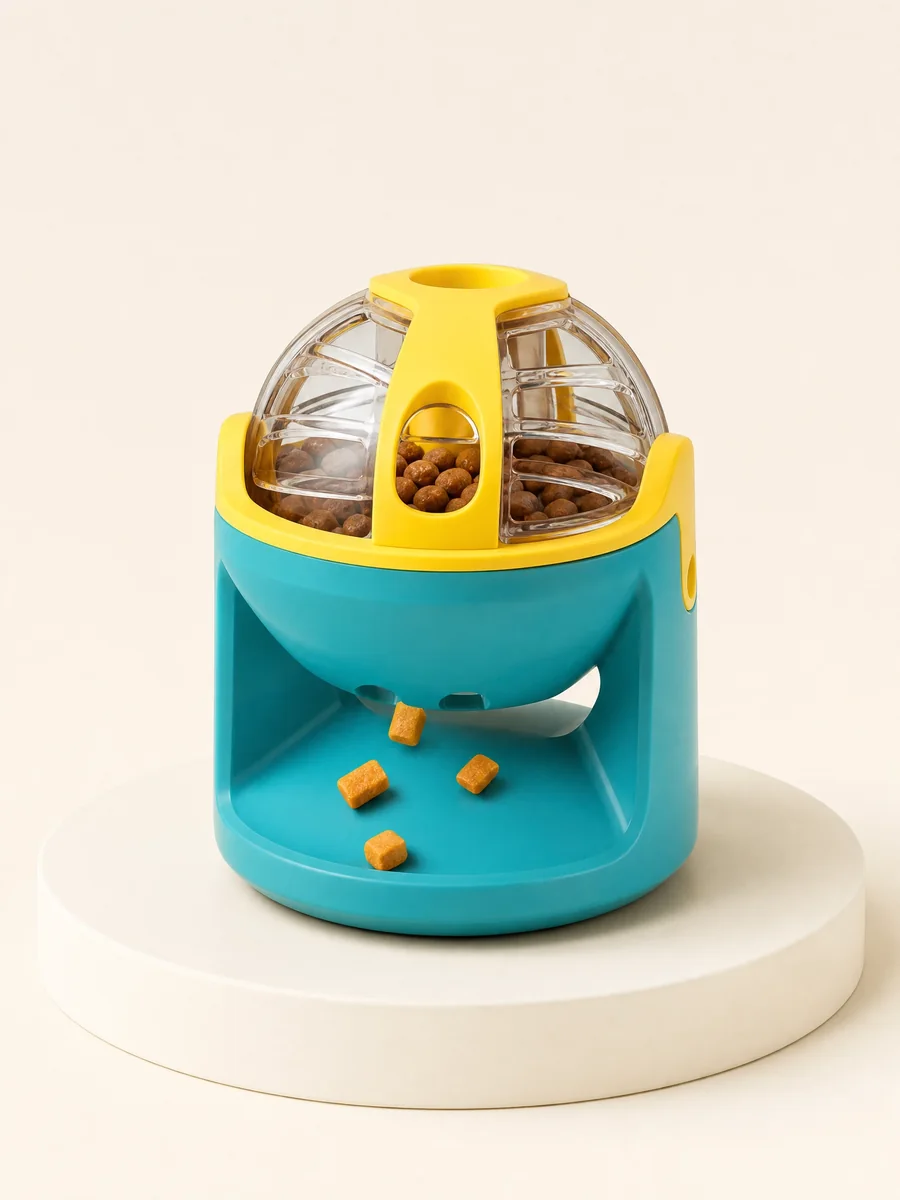
This guide walks U.S.-market retailers, importers, distributors, and private‑label teams through a practical sourcing and procurement workflow for pet feeding accessories. It focuses on supplier screening, defining product specifications, verifying materials and components, running samples and pilot runs, preparing packaging and retail readiness, setting up quality controls, and weighing commercial tradeoffs. It uses procurement-first language and avoids definitive regulatory or performance guarantees—final buyer/importer confirmation is required for any compliance or market claims.
Decision framework: how to use this guide
Start with your commercial objectives and move logically through the modules below.
- Define business goals: target retail channels, price tiers, private‑label vs. branded SKUs, lead times, and target margins.
- Use the supplier screening steps to assemble a shortlist that matches capacity, compliance, and service needs.
- Translate business goals into measurable product specifications and acceptance criteria.
- Require evidence for materials and components early—samples should match that evidence.
- Use sampling and pilot runs to validate production, packaging, logistics, and in-market presentation.
- Put quality-control gates at incoming inspection, in-process checkpoints, and final shipment.
- Accept known tradeoffs (unit cost vs. MOQ vs. lead time vs. custom features) in writing and price them into landed cost models.
This guide supplies checklists and a practical buyer action plan at the end. All product-market and regulatory obligations must be confirmed by the buyer or importer for the intended U.S. distribution.
Supplier screening and commercial fit
Goal: reduce sourcing risk by shortlisting suppliers with the right capabilities and evidence.
Key screening criteria
- Legal and commercial: verified business registration, export capability, DUNS/registration (if relevant), bank and trade references, and a clear export contact.
- Capacity and lead time: minimum order quantity (MOQ) ranges, peak capacity, typical lead times, ability to scale pilot to production.
- Technical ability: tooling, molds, in-house finishing, color-matching, ability to produce pet bowls custom features like slow-feeding ribs, anti-slip bases, or dual-material assemblies.
- Compliance and evidence: test reports for food-contact materials, factory photos, quality management certificates, and traceability for components and coatings.
- Logistics and after‑sales: freight-forwarder relationships, consolidated shipping, labeling, returns handling, and warranty terms.
Verification checklist to request
- Corporate documents (business license, tax ID).
- Recent factory audit (BSCI/SMETA-type reports are useful but not mandatory).
- Photos or video of production lines and packing.
- Copies of third-party laboratory reports for material safety and food-contact testing.
- Sample lead time and cost schedule, plus MOQ tiers and per‑unit pricing.
Red flags
- Vendors unwilling to share basic documentation or third‑party test reports.
- Unrealistic lead times or unexplained large MOQs without price breaks.
- Factory addresses that do not match corporate registration.
- Inconsistent communication or unwillingness to allow factory visits or independent audits.
Include “pet bowls wholesale” and “pet bowls bulk” inquiries in initial RFQs to compare standard product lines versus custom programs. If pursuing private‑label, emphasize the supplier’s experience with pet bowls custom projects and request prior examples.
Product specifications: measurable, testable requirements
Clear, measurable specifications prevent disputes. Define requirements at SKU level and translate into inspection methods.
Core specification elements
- SKU purpose and category: e.g., stainless-steel elevated dog bowls, silicone slow feeder, ceramic cat bowl.
- Dimensions and tolerances: outer diameter, inner diameter, depth, wall thickness, rim profile, and acceptable +/- tolerance.
- Weight and density targets (important for perceived value and freight).
- Materials and grades: exact polymer or metal grade (e.g., 304 stainless steel), glaze specifications for ceramic, or food‑grade silicone type.
- Surface finish and colors: matte/polished/pearlized; Pantone or color chips for matching.
- Functional features: non‑skid base, anti‑tip geometry, divided sections, height specifications for different dog sizes.
- Labeling and marking: CE/other voluntary marks only if applicable, U.S.-market UPC placement, country-of-origin declaration, and care instructions.
- Packaging unit count, inner pack, master case dimensions, and retail-ready tray or display requirements.
Example inspection acceptance criteria (IQC)
- Visual defects: maximum visible glaze chips per 100 units = 2.
- Dimensional tolerance: diameter ±2 mm; depth ±1 mm.
- Finish: no scratches deeper than 0.2 mm.
- Labeling: 100% correct UPC and care label placement.
Table: Typical specification targets for common materials
| Material type | Common grade/requirement | Typical inspection focus |
|---|---|---|
| Stainless steel | 304/18-8 for corrosion resistance | Thickness, weld quality, finish, passivation evidence |
| Ceramic | Lead- and cadmium-controlled glaze | Glaze defects, dimensional consistency, chipping |
| Silicone/TPR | Food‑grade, platinum-cured preferred | Shore hardness, odor test, tear strength |
| Plastic (PP/ABS) | Food‑contact grade resin | Melt index, color match, residual monomers |
Use the phrase "dog bowls wholesale" or "dog bowls bulk" when sourcing metal or elevated bowls targeted at dog segments; use "cat bowls bulk" for smaller, shallower designs.
Be explicit about inspection methods (calipers, weight scales, AQL tables) and the supplier’s responsibility to deliver to those metrics.
Material and component evidence: what to request and how to judge it
Materials determine durability, consumer perception, and regulatory obligations. Request traceable evidence, but remember buyer/importer confirmation is required for final claims.
Documents and evidence to request
- Material safety data sheets (MSDS) and technical data sheets (TDS) for each material and coating.
- Third-party laboratory test reports for food-contact safety (e.g., migration testing, heavy metals, BPA/DEHP if plastics are relevant) for samples that match production batches.
- Certificates of analysis (COA) from resin or metal suppliers where available.
- Surface treatment documentation: passivation certificates for stainless products, kiln records for ceramics, and curing profiles for silicone.
- Proof of components (e.g., rubber foot pads, plastic inserts) and their own test reports if they contact food.
Evaluating test reports
- Ensure the report applies to the specific SKU, material batch, or production lot—not a generic company statement.
- Check the lab is accredited (ISO/IEC 17025). If the lab isn’t accredited, insist on an accredited lab retest, or use an independent laboratory.
- Confirm test methods and limits align with U.S. expectations for food contact materials; cite FDA guidance where relevant 1.
- Validate report dates—outdated reports (older than 12–24 months) may not reflect current production.
Table: Typical material checks and buyer evidence
| Component | Required evidence examples | Buyer verification tip |
|---|---|---|
| Metal bowls | Mill certificates, passivation records, migration test | Cross-check metal grade and request independent corrosion test |
| Ceramic glazes | Lead/cadmium migration, kiln log | Require lot-matching report and chipping tolerance |
| Silicone/plastic | Migration, extractables, odor | Ask for curing profile and shore hardness report |
| Non‑slip pads | Bond strength test, polymer grade | Verify adhesive compatibility and aging test |
Avoid relying solely on supplier-provided documents; require copies of third-party lab reports for the specific SKU or an agreed sampling plan and independent testing at your expense if needed.
Sampling, pilot runs, and pre-shipment checks
Samples and pilot production are where specification meets reality. Design sampling to catch fit, finish, function, and packaging issues.
Sample types and purposes
- Proto sample: early design validation for dimensions and feel; often hand-finished.
- Production sample: made on the intended line, using intended materials and tooling; should match batch production.
- Pilot run: small production batch (e.g., 1–5% of intended initial order) to validate line stability, packaging, and logistics.
- Pre-shipment sample: random sample pulled from finished goods intended for shipment to verify compliance with acceptance criteria.
Sampling checklist
- Include full packaging and labels with samples—retailers evaluate shelf presence as part of acceptance.
- Perform independent lab tests on production samples, when applicable.
- Run lifecycle tests: drop tests for ceramic, salt-spray or wet-box for metal, dishwasher cycles for dishwasher‑safe claims.
- Validate any custom features (e.g., non‑skid base adhesion, slow-feed rib spacing).
Pre-shipment inspection (PSI)
- Use AQL-based inspection procedures and define acceptance levels for critical, major, and minor defects.
- Inspect at a mutually agreed point: finished goods before packing or after packing, depending on risk profile.
- For private label: verify correct labeling, UPCs, and retailer-specific pack counts.
Pilot‑run acceptance gates
- Gate 1: Visual + dimension check—sample passes defined tolerances.
- Gate 2: Functional testing—wash cycles, drop tests, chemical exposure.
- Gate 3: Packaging and labeling check—retail presentation approved.
- Gate 4: Logistics simulation—master carton stacking, pallet stability, ECT/CT test for corrugate.
Use "pet bowls custom" and "dog bowls custom" sample runs when developing private‑label SKUs to ensure tooling and color matches translate to mass production.
Packaging, retail readiness, and logistics
Packaging affects retail acceptance, freight cost, and damage rates. Plan packaging for your sales channel (e-commerce, mass retail, boutique stores).
Packaging decisions
- Unit packaging: retail box, blister, window box, or poly bag with header card—choose based on SKU fragility and brand presentation.
- Inner pack and master case: define inner-count, master-case size, and pallet configuration for efficient freight.
- Protective materials: foam inserts for ceramic, cardboard partitions for stacked bowls, plastic film for stainless sets.
- Labeling requirements: care instructions, country of origin, fiber content (if applicable), and supplier contact for after-sales. For private label, include your brand information.
Retail readiness checklist
- Retail facing artwork files submitted and approved before production.
- UPC/EAN codes assigned and checked for barcode quality.
- Retail packaging pass-through tests: shelf presentation mockup, peg/hang test (if applicable).
- E‑commerce readiness: polybags for single items, suffocation warnings, and fit-for-fulfillment dimensions.
Logistics and landed cost
- Calculate landed cost per unit including unit price, sampling, tooling amortization, inland freight, export costs, tariffs, customs broker fees, duties, and insurance.
- Consider packaging density: heavier but denser SKUs (stainless steel) can be cheaper per unit shipped than bulky but light SKUs (ceramic) because freight by volume penalizes low pack density.
- Evaluate whether to consolidate multiple SKUs into a single container to optimize ocean freight.
Table: Packaging risk vs. cost tradeoffs
| Packaging approach | Damage risk | Unit cost impact | Best for |
|---|---|---|---|
| Minimal polybag | High | Low | Low-cost, durable SKUs with low breakage |
| Box with inserts | Low | Medium | Fragile ceramics and premium displays |
| Retail-ready master carton | Medium | Medium | Big-box retailers and shelf-ready needs |
When quoting suppliers, ask for pack‑up diagrams and master carton specs early. Ensure supplier agrees to pack protection that meets your PSI acceptance criteria.
Quality-control controls and defect management
Implement QC systems that align risk with verification intensity. Define responsibilities across supplier, third‑party inspector, and buyer.
QC layers
- Supplier’s in-line QC: supplier performs standard checks during production; request SOPs and non-conformance logs.
- Independent inspection: third-party pre-shipment inspection (AQL-based) with photographic evidence and sample retention.
- Incoming quality control (IQC): your or your U.S. warehouse inspection upon arrival to verify counts, labeling, and obvious damage.
- Random post-market sampling: periodic checks from store returns or warehouse samples to detect latent issues.
Non-conformance handling
- Define a remediation framework: repair, replace, or credit; set timelines and root‑cause analysis requirements.
- Require supplier corrective action plans (CAPAs) for critical failures and agree on financial responsibility for rework or scrapping.
- Keep production lot traceability to isolate affected batches and manage recalls if necessary.
Inspection sampling plan basics
- Use appropriate AQL levels: critical defects = 0% acceptance; major defects = AQL 1.5–2.5; minor defects = AQL 4.0–6.5 depending on risk appetite.
- Vary inspection intensity by SKU type: ceramic and glass require tighter controls than robust metal bowls.
Record-keeping
- Maintain inspection reports, test reports, batch codes, and photographic logs for at least the period required by your internal audit and any contractual obligations.
- Use these records for supplier scorecards and to negotiate future price or lead time improvements.
All compliance or safety claims require buyer/importer confirmation and independent verification where appropriate.
Frequently asked questions
Q: What minimum documentation should I insist on before placing a first bulk order? A: Request business registration, factory photos, recent third‑party test reports specific to the SKU, MOQ/lead time schedule, and at least one production sample or pilot-run sample. Confirm bank and trade references.
Q: How do MOQs affect pricing and lead times for custom pet bowls? A: Higher MOQs typically reduce per‑unit tooling and setup costs but increase inventory risk and lead time to sell. Negotiate stepped price breaks and pilot-run quantities to balance risk.
Q: Are dishwasher‑safe or microwave claims risky for pet bowls? A: Such claims should be based on validated testing. Do not accept manufacturer claims without lab or process evidence. Buyer/importer confirmation and documented testing are required for claims.
Q: When should I order third‑party testing versus relying on supplier reports? A: Order independent testing when entering a new supplier relationship, when launching private-label SKUs, or when test reports are older than 12 months. For lower-risk replenishment of established SKUs, sample-based periodic testing may suffice.
Conclusion
Sourcing pet bowls wholesale for the U.S. market requires precise, measurable specifications and a layered verification plan that covers supplier screening, material evidence, sampling, packaging, and quality-control gates. Build clear acceptance criteria, insist on SKU-specific test reports from accredited labs, and validate production with pilot runs and independent inspections. Balance commercial tradeoffs—MOQ, unit cost, lead time, and custom features—in your landed cost model, and lock remediation terms into contracts. All regulatory, safety, and performance claims require buyer/importer confirmation and, where appropriate, independent testing before U.S. distribution.
Buyer action plan (short checklist)
- Define target SKUs and acceptable retail price points.
- Create a one-page spec sheet for each SKU with critical tolerances and materials.
- Shortlist 3–5 suppliers using the screening checklist and request proto and production samples.
- Commission independent lab testing for at least one production sample per SKU.
- Run a pilot production batch and perform PSI with agreed AQLs.
- Finalize packaging specs, palletization, and landed cost model.
- Put written QC and CAPA agreements in the purchase order and arrange for ongoing supplier scorecards.
Use this framework to compare "pet bowls wholesale", "pet bowls bulk", and "pet bowls custom" offers, including specific lines described as "dog bowls wholesale", "dog bowls bulk", "dog bowls custom", and "cat bowls bulk". Confirm all compliance and market-specific obligations for the intended U.S. channels before final purchase or distribution. 1 2
Buyer search scope
This guide addresses the following U.S. B2B procurement search phrases. Each phrase is considered in the context of supplier selection, product specifications, samples, packaging and quality evidence rather than as a consumer recommendation.
| Search phrase | Buyer use |
|---|---|
| pet bowls wholesale | Primary procurement focus for this guide |
| pet bowls bulk | Related specification, supplier or range-planning query |
| pet bowls custom | Related specification, supplier or range-planning query |
| dog bowls wholesale | Related specification, supplier or range-planning query |
| dog bowls bulk | Related specification, supplier or range-planning query |
| cat bowls bulk | Related specification, supplier or range-planning query |
| dog bowls custom | Related specification, supplier or range-planning query |
Final CTA — Prepare a focused pet feeding accessories sourcing brief with PawViso.
Share your target U.S. channel, product format, estimated order structure, packaging direction and customization requirements for a practical B2B discussion.
Email: info@PawViso.com
WhatsApp: +86 186 8106 4480
Related PawViso resources
- Continue with How to Source Slow Feeders for Dogs and Cats to compare a related supplier, sample and quality-control route.
- Browse the PawViso product catalogue to identify product formats for your purchasing brief.
- Follow the PawViso sourcing process and review the B2B buyer FAQ before sharing requirements.
External reference
Use ISO 9001 quality-management systems guidance as general quality-system context, and confirm the product-specific evidence that applies to the selected SKU, channel and target market.