
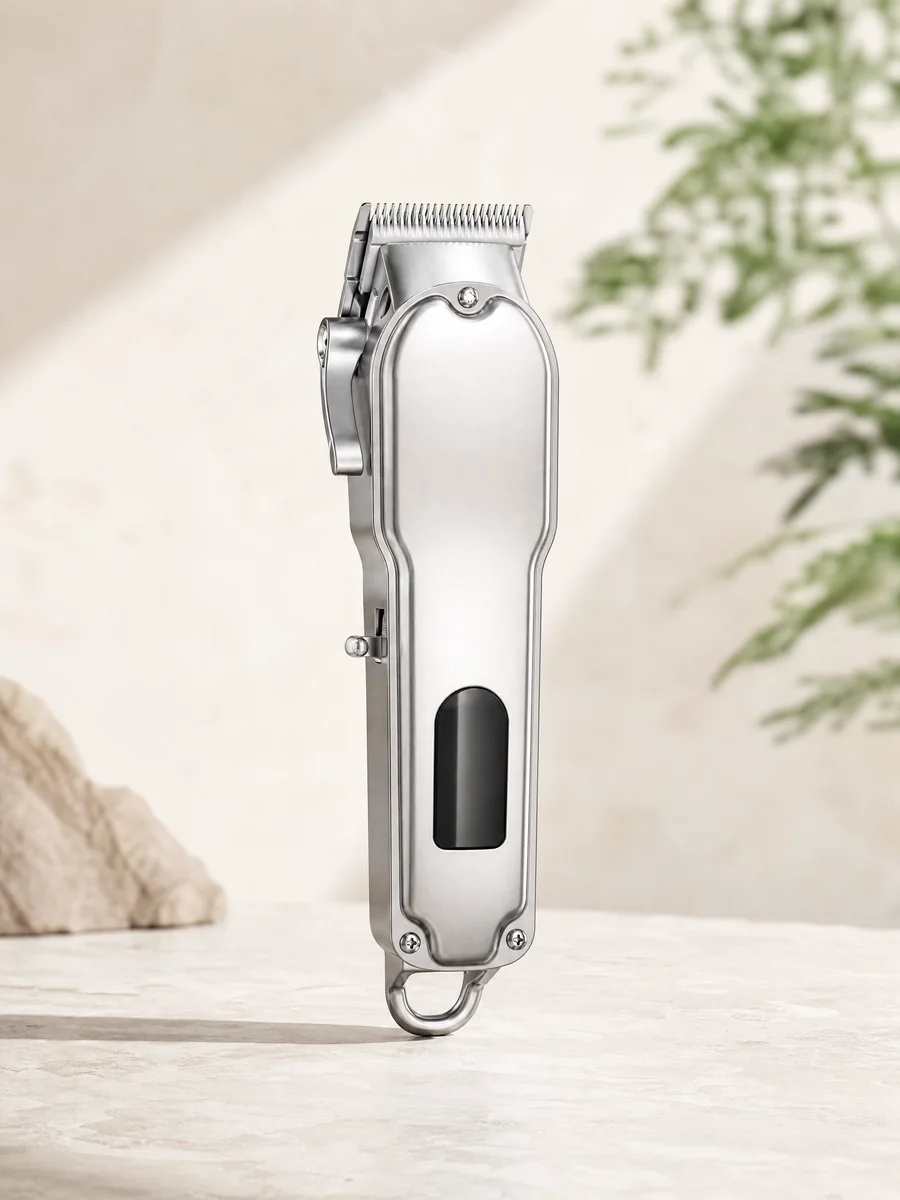
A pet grooming clipper should be sourced as a controlled cutting-tool system, not as a generic catalogue name. This guide deliberately does not assume an electrical, battery, charging, or motorised configuration. A project may involve a hand-operated clipper, a replaceable-head tool, a powered tool, or a kit; each needs a brief that identifies the actual configuration. From the perspective of a Chinese B2B pet-product factory and procurement partner, the practical objective is simple: make the buyer’s intended SKU, approved evidence, production release, and shipment decision describe the same product.
Module 1 — Decide the intended use and assortment role
Start by answering the buyer’s first question: what grooming task is this SKU meant to support, for whom, and in which channel? Write one use statement before asking for a quote. For example, a buyer might define a compact trimming tool for a home pet-care range, intended for controlled coat-maintenance tasks and sold through specialist retail. That statement is not a performance promise or a veterinary claim. It tells the sourcing team which handling, pack, accessory, instruction, visual, and range decisions must be made. Avoid approving a product only because it resembles a market sample; two similar-looking tools can serve different tasks, have different replacement-part logic, and need different customer communication.
Next, position the item inside an assortment. Is it an entry accessory, a core grooming tool, a replacement component, a gift-set item, or a professional-channel product? This decision controls the level of presentation and the number of variations that should be quoted. A factory or procurement partner can compare configurations efficiently only after the buyer has separated a single-SKU launch from a family of related SKUs. Do not make unverified coat-type, animal-size, injury-prevention, medical, or professional-performance claims part of the brief. Instead, describe the intended task and let the responsible buyer decide which substantiation and market wording are appropriate for the actual SKU.
| Assortment tier | Typical buyer decision | Configuration discipline | Packaging implication |
|---|---|---|---|
| Entry accessory | Is a focused, straightforward tool enough for the range? | Keep included items and colour variants tightly defined. | Prioritise clear identity and count verification. |
| Core grooming SKU | Does it need a differentiated handling or attachment proposition? | Freeze the visible tool, cutting interface, and accessories together. | Coordinate instructions, claims, and retail presentation. |
| Replacement or add-on | Which base SKU or interface must it fit? | State compatible reference, orientation, and retention check. | Make the relationship to the main tool unambiguous. |
| Gift or multi-item set | Which items must be present in every set? | Define each component, storage position, and count. | Require a set-packing diagram and completeness check. |
Module 2 — Freeze the physical configuration before requesting quotes
A quote request should name parts, not merely say “pet clipper with accessories.” Ask for a dated configuration list that distinguishes the cutting interface, handle or housing, moving or joining parts, protective cover, attachments, cleaning item if any, instructions, retail unit, and transport pack. For each visible component, record its reference photograph or drawing, colour, finish, logo position, and count. Where a material or treatment matters to the buyer, ask for it to be declared and confirmed for the specific item rather than repeating a generic catalogue description. The buyer should also identify which features are non-negotiable and which may be proposed as alternatives.
The central control is the approved configuration code: a buyer-facing reference that joins the purchase order, sample, artwork, inspection sheet, and carton marking. It can be a structured internal code rather than a public model number. A change in an attachment shape, cover geometry, fastener, blade or cutting element, colour, included brush, or pack insert may affect form, fit, function, retail representation, or evidence. Therefore, include the change rule in the request for quotation: no substitute is acceptable without written buyer review against the approved configuration. This is especially important when a kit contains components that look interchangeable but are not intended to connect in the same way.
| Configuration area | What to lock in the buyer brief | Evidence to request |
|---|---|---|
| Cutting interface | Profile, tip condition, alignment, exposed-edge condition, cover arrangement | Dated close-up images and the approved physical sample or record |
| Handle or body | Overall form, finish, colour, branding location, visible joints | Reference views and a cosmetic acceptance description |
| Interfaces | Attachment orientation, latch or retention feature, fasteners, allowable movement | Fit demonstration against the named mating part |
| Accessories | Exact item names, quantity, colour, storage location, compatible version | Component list and packed-unit photographs |
| Pack contents | Instructions, insert, barcode area, warnings if required, retail unit | Approved artwork file and packing diagram |
Module 3 — Define blades, edges, covers, and attachment interfaces
For a cutting tool, ask direct questions about the parts that meet, move, or protect the cutting area. The buyer should specify the relevant edge profile, tip form, closure or contact path, visual finish, and protective-cover relationship without assuming a technology that the SKU does not have. A replaceable cutting head needs a named interface and a clear orientation. A hand-operated tool needs an agreed closing and pivot observation. A powered configuration may introduce additional project-specific questions, but it should not be treated as the default. The sourcing file should distinguish a visible cosmetic mark from a condition that affects the agreed edge, fit, or assembly criteria.
A practical acceptance method begins with controlled visual comparison in adequate lighting. Check for chips, nicks, rolled or uneven areas, burrs, unwanted residue, corrosion-like marks, scratches at functional contact areas, and inconsistent finishing. Then perform the agreed handling observation: close the tool as designed, seat the attachment, verify retention under the agreed non-destructive action, and verify intended removal. Record what was done, which sample was checked, and the result; do not replace a method with a vague statement such as “sharpness approved.” A buyer can require an observation method without claiming a particular safety outcome or making veterinary advice.
Module 4 — Choose the quote scope and compare suppliers on like-for-like terms
The fastest way to lose control of a sourcing comparison is to compare totals while the scope changes. Send each candidate the same request package: use statement, configuration list, reference images, required sample stages, artwork status, packaging concept, destination, requested documentation, inspection approach, and change-control expectation. Ask each response to state exclusions and assumptions. A Chinese factory or procurement partner can then identify whether a difference comes from the tool configuration, presentation level, accessory set, development work, or logistics preparation rather than presenting it as an unexplained price gap.
Do not infer that a lower quotation covers the same product. Reconcile every response line by line before negotiating. If the buyer invites alternatives, label them as alternatives and request a comparison against the baseline. This lets the commercial team decide whether a new cover, simpler retail pack, adjusted accessory set, or altered finishing route is acceptable before a sample is made. The same discipline prevents a supplier from silently using a catalogue version as a stand-in for a custom configuration. Quote review is therefore a specification exercise first and a commercial exercise second.
| Quote-scope category | Buyer should state | Supplier response should clarify |
|---|---|---|
| Tool and components | Baseline configuration and permitted alternatives | Included components, excluded parts, and any assumed version |
| Branding and artwork | Available files, locations, revision status | Application method, artwork limits, and pre-production proof needed |
| Accessories and instructions | Exact count, language version, storage or packing position | Included item list and any content supplied by buyer |
| Retail and transport packs | Consumer-unit concept, inner pack, carton data, destination handling | Pack level proposed, case arrangement, and marking assumptions |
| Quality and evidence | Sample gates, inspection record, requested documents | What can be supplied for the actual SKU and at which stage |
Module 5 — Build a sample sequence that resolves decisions before production
Samples are decision gates, not souvenirs. Begin with a concept or development sample when the buyer needs to evaluate configuration direction, visual appearance, or component relationship. Move to a pre-production sample only when the buyer is ready to assess the proposed production configuration, artwork, instructions, and pack. The final approved record may be a retained physical unit, a fully identified visual record, or both. What matters is that the parties can identify the exact version later. Label each sample with the configuration code, date, component list, and current status so that an earlier prototype cannot be mistaken for release approval.
The approval form should show observations and open issues separately. “Approved” should mean approved for a stated purpose, such as appearance only, artwork proof only, or production release; it should not conceal unresolved items. Review the tool, interface fit, accessory count, pack contents, dimensions where specified, instructions, artwork revision, and required documents. When an issue is found, write the correction, responsible party, evidence required, and re-review condition. A golden sample is useful only when it reflects the agreed production version and is traceable to the controlled file. It cannot substitute for an explicit specification or a buyer’s market review.
| Sample gate | Decision to make | Minimum retained record | Release status |
|---|---|---|---|
| Concept sample | Is the proposed assortment and configuration direction viable? | Images, configuration list, open-issue log | Directional only |
| Pre-production sample | Does the proposed product and pack match the controlled brief? | Measurements if specified, fit/edge observations, artwork and pack review | Conditional or release candidate |
| Golden sample | What is the approved comparison reference? | Identified unit or complete dated visual record | Approved reference only |
| First-off review | Does initial production match the approved reference? | Comparison record and disposition of discrepancies | Continue, correct, or hold |
Mid-article CTA — Convert a product idea into a controlled sourcing brief Share your target market, reference product, intended user, accessory concept, and packaging direction with PawViso. Email info@PawViso.com to begin a project-specific sourcing discussion.
Module 6 — Control instructions, artwork, and product identity as one file
Instructions and retail artwork should be reviewed against the approved physical configuration, not developed in isolation. Confirm that diagrams show the current tool and attachment orientation, that the included-item list matches the pack, and that care or use language does not exceed the buyer’s substantiated claims. Use document names, revision identifiers, approval dates, and an owner for each controlled file. This approach is consistent with ISO guidance that documented information can communicate information, provide evidence of work performed, and include specifications, work instructions, inspection plans, and records; the amount and form should suit the organisation and process.1
Product identity must remain stable across the retail unit, instruction, purchase order, carton, inspection report, and internal sourcing file. Use a configuration code plus an artwork revision rather than relying only on a consumer-facing product name. For barcoded products, confirm which packaging level the identifier represents. GS1 describes an “each” as the lowest level intended or labelled for individual resale, while an inner pack, case, and pallet serve distinct supply-chain roles.2 That distinction supports better ordering, scanning, and inventory conversations, but the buyer must confirm retailer-specific barcode and data requirements rather than assuming one retail identifier solves every pack level.
Module 7 — Select packaging around the actual distribution path
Packaging should be chosen after the buyer defines how the item will move: direct retail delivery, distribution centre handling, marketplace fulfilment, export consolidation, or an e-commerce parcel route. Separate consumer-unit presentation from the protective system around it. Specify the retail pack, protective insert or cover position, inner pack if used, export carton, case count, divider or void-management concept where relevant, carton artwork, shipping marks, and pallet instructions if applicable. A clean retail carton does not prove that the cutting interface or accessories will remain protected during the intended route.
Use a packaging validation plan that matches the distribution risk and the buyer’s acceptance needs. ISTA categorises some procedures as screening tests, some as partial or general simulations, and some as development comparisons; the appropriate procedure depends on the desired outcome and shipment type.3 Naming an ISTA method in a brief does not prove a package has passed it, and a past result for another configuration is not evidence for a new SKU. Ask for the actual test scope, sample identity, method, report, and conclusion whenever packaged-product testing is required. Until that evidence is reviewed, describe the design as proposed rather than tested.
| Packaging level | Primary decision | Inspection focus | Change-control trigger |
|---|---|---|---|
| Consumer unit | How is the product presented and retained? | Artwork revision, component count, product protection, barcode area | New insert, cover position, wording, or artwork |
| Inner pack | How are retail units grouped for handling? | Quantity, orientation, separators, identifier if used | Quantity or grouping change |
| Export carton | How are grouped units protected and identified? | Case count, carton marking, closure, visible damage | Board, dimensions, packing pattern, or marking change |
| Pallet or dispatch unit | How is the agreed freight unit assembled? | Labels, stability instructions, route-specific requirements | Load plan or destination-handling change |
Module 8 — Set an inspection plan for workmanship, fit, completeness, and records
Inspection should answer the shipment-release question: does the observed lot conform to the controlled purchase file and agreed acceptance criteria? Before production, define the lot identity, inspection timing, sample selection plan, defect descriptions, acceptance and rejection action, rework path, and who can authorise a concession. Separate identity and completeness checks from workmanship checks. Identity verifies that the product, accessory count, artwork, and pack match the approved version. Workmanship evaluates the agreed visual and assembly criteria. Functional or fit observations should use a written method so different inspectors do not apply different handling actions.
A recognised sampling framework can support the plan but does not write it for the buyer. ISO 2859-1:2026 defines acceptance-sampling schemes for lot-by-lot inspection by attributes and explains AQL-indexed single, double, and multiple schemes.4 The buyer still needs to establish the appropriate lot, inspection level, classifications, defect definitions, and release action with qualified project owners. Sample inspection does not demonstrate that every unit is identical, and it does not replace any product-specific verification that the importer, buyer, or destination rules require. The inspection report should identify the sampled configuration, carton references, observed nonconformities, photos where helpful, and final disposition.
| Quality control | What is checked | Evidence in the record | Decision if not matched |
|---|---|---|---|
| Identity control | SKU, configuration code, included items, approved artwork | Product and pack photographs; count sheet | Hold and compare to approved file |
| Cutting-area appearance | Agreed edge, tip, finish, cover condition | Dated close-up observations | Segregate and obtain disposition |
| Fit and retention | Named attachment or moving-part observation | Method used, sample reference, result | Stop use of affected configuration pending review |
| Pack completeness | Accessories, instructions, insert, barcode placement | Pack checklist and sampled records | Rework or correct packing process |
| Carton and shipment marks | Case data, destination markings, visible carton condition | Carton photos and lot linkage | Correct before release or record concession |
Module 9 — Confirm market responsibilities for the actual SKU and destination
Market-access questions cannot be answered by the product category alone. The responsible buyer or importer must confirm the actual SKU’s classification, claims, labelling, documentation, origin, packaging, and other destination requirements before production. In the EU, the General Product Safety Regulation is presented by the European Commission as ensuring that only safe products are available on the market and provides business-obligation information.5 That broad context is not a conclusion that every pet grooming tool needs the same marking, report, or approval. Do not automatically apply children’s-product rules to pet products; the buyer must determine the relevant product rules, target user, sales channel, and claims for the item actually placed on the market.
For U.S.-bound goods, origin marking is a specific example of why SKU-level confirmation matters. U.S. Customs and Border Protection states that foreign-origin articles entering the United States generally must be legibly marked with the English country name unless an exception applies, and explains that certain clippers, shears, scissors, and blades have special marking provisions.6 Origin determination, marking method, exceptions, pack treatment, and any additional labelling must be assessed for the transaction rather than copied from a prior order. Keep a written buyer decision on destination and applicable requirements in the project file. A supplier’s statement, catalogue image, or sample observation is not legal, regulatory, veterinary, medical, or product-safety advice.
Module 10 — Build traceability and a controlled change process
Create one source-of-truth file before the purchase order becomes final. It should connect the buyer brief, approved configuration, controlled artwork, component list, sample decision, pack specification, requested evidence, inspection plan, approved deviations, and release decision. Assign a document owner and revision for each item. A simple change log should record what changed, why, the affected SKU or pack level, requested evidence, reviewer, approval date, and implementation point. This makes a later carton, replacement accessory, or artwork question traceable to an agreed decision rather than to an unlabelled messaging thread.
Treat changes by their effect, not by their apparent size. A new logo location may be cosmetic but can still change retail artwork. A revised cutting element, cover, attachment, fastener, included insert, pack count, or country-of-origin statement can affect more than appearance. Require written notification before implementation and decide whether the change needs a new sample, artwork proof, packaging review, document update, or inspection hold point. Carry the approved change into the purchase order and inspection checklist. If a factory or procurement partner proposes a substitute to solve availability or production issues, it should be evaluated as a proposal, not silently merged into the approved SKU.
Module 11 — Make the shipment-release decision against evidence, not assumptions
Before authorising shipment, run a final reconciliation. Confirm that the order reference, configuration code, approved sample or visual record, artwork revision, instructions, pack level, requested documents, inspection report, carton marks, and open-issue status point to the same released version. Review any nonconformity and its disposition. The buyer should decide whether an issue is corrected, accepted by a named authorised person, reworked and rechecked, or grounds to hold the shipment. Release should not depend only on a general assurance that “production is finished.”
A concise release record protects both commercial clarity and continuity on repeat orders. It should state the lot or shipment reference, date, evidence reviewed, approved deviations if any, remaining actions, responsible decision-maker, and release outcome. Archive it with the final product and packaging files. On the next order, begin by checking whether the same configuration, claims, destination, and pack are still intended; do not assume that prior acceptance automatically carries forward. This disciplined close-out is how a procurement partner turns a grooming-tool project from a one-time sample discussion into a repeatable sourcing programme without asserting unverified performance or compliance.
Frequently asked questions
Should manual and powered grooming configurations use the same sourcing checklist?
They can share the core controls for intended use, configuration identity, cutting interface, accessories, instructions, packaging, samples, and change control. A powered, charging, or battery-containing version can add project-specific technical, transport, and market questions. The buyer or importer must confirm those requirements for the actual configuration and destination rather than treating this guide as an electrical-product specification.
What belongs on a sample approval form?
Identify the product and configuration version, date, sample purpose, component and accessory list, photographs, observations of edge condition and fit, artwork revision, instructions, packaging arrangement, open issues, change history, and named decision. The form should distinguish “approved for concept review” from “approved for production comparison” so that a preliminary sample cannot be mistaken for a production release.
Is a cutting demonstration sufficient to approve a grooming tool?
No. It is one observation within a broader approval. The buyer should also compare configuration identity, visible edge condition, attachment or moving-part fit, accessory completeness, product protection, instructions, packaging, and the evidence requested for the target market. The method and result should be documented rather than described only in a message.
Can a supplier substitute a similar blade, cover, or accessory after approval?
Not without written buyer review when the substitute could change form, fit, function, retail presentation, documentation, claims, or inspection criteria. Request the proposed substitute’s identification, reason, comparison evidence, and any new sample or artwork proof needed. Update the controlled file only after the buyer’s authorised decision.
Does a retail barcode automatically identify the export carton and pallet?
No. Packaging levels should be deliberately identified. A retail “each,” an inner pack, a case, and a pallet may play different ordering, handling, and scanning roles. Confirm the buyer’s internal data rules and the receiving retailer’s requirements before finalising identifiers, labels, and carton data.2
Conclusion
A reliable pet grooming clipper programme starts with an intended-use decision and ends with an evidence-based shipment release. Define the complete configuration; inspect the cutting interface and fit using a repeatable method; compare quotations on matched scope; approve samples for named purposes; and keep artwork, packaging, documentation, inspection, and changes under version control. A Chinese B2B factory and procurement partner can support that discipline, but the responsible buyer or importer must make final market and product decisions for the actual SKU.
Final CTA — Start a controlled pet grooming-tool sourcing brief Email: info@PawViso.com WhatsApp: +86 186 8106 4480
This article provides general B2B sourcing information only. It is not legal, regulatory, veterinary, medical, or product-safety advice; the responsible buyer, importer, and qualified advisers should confirm requirements for the actual product, destination market, and sales channel.
Related PawViso resources
- Continue with What Tools Should a Complete Dog Grooming Kit Include?. Use this guide to compare grooming formats and build a clearer buying brief.
- Browse the PawViso product catalogue to identify product formats for a sourcing brief.
- Follow the PawViso sourcing process and review the B2B buyer FAQ before sharing project requirements.
External reference
For independent product identification and barcode context, review GS1 guidance on Global Trade Item Numbers (GTINs). Confirm the requirements that apply to the selected product, target market and order.
References
- 1Guidance on the Requirements for Documented Information of ISO 9001:2015 — ISO
- 2Packaging Level Definitions — GS1 US
- 3Test Procedures — International Safe Transit Association
- 4ISO 2859-1:2026 Sampling Procedures for Inspection by Attributes — ISO
- 5Product Safety — European Commission
- 6Marking of Country of Origin on U.S. Imports — U.S. Customs and Border Protection