
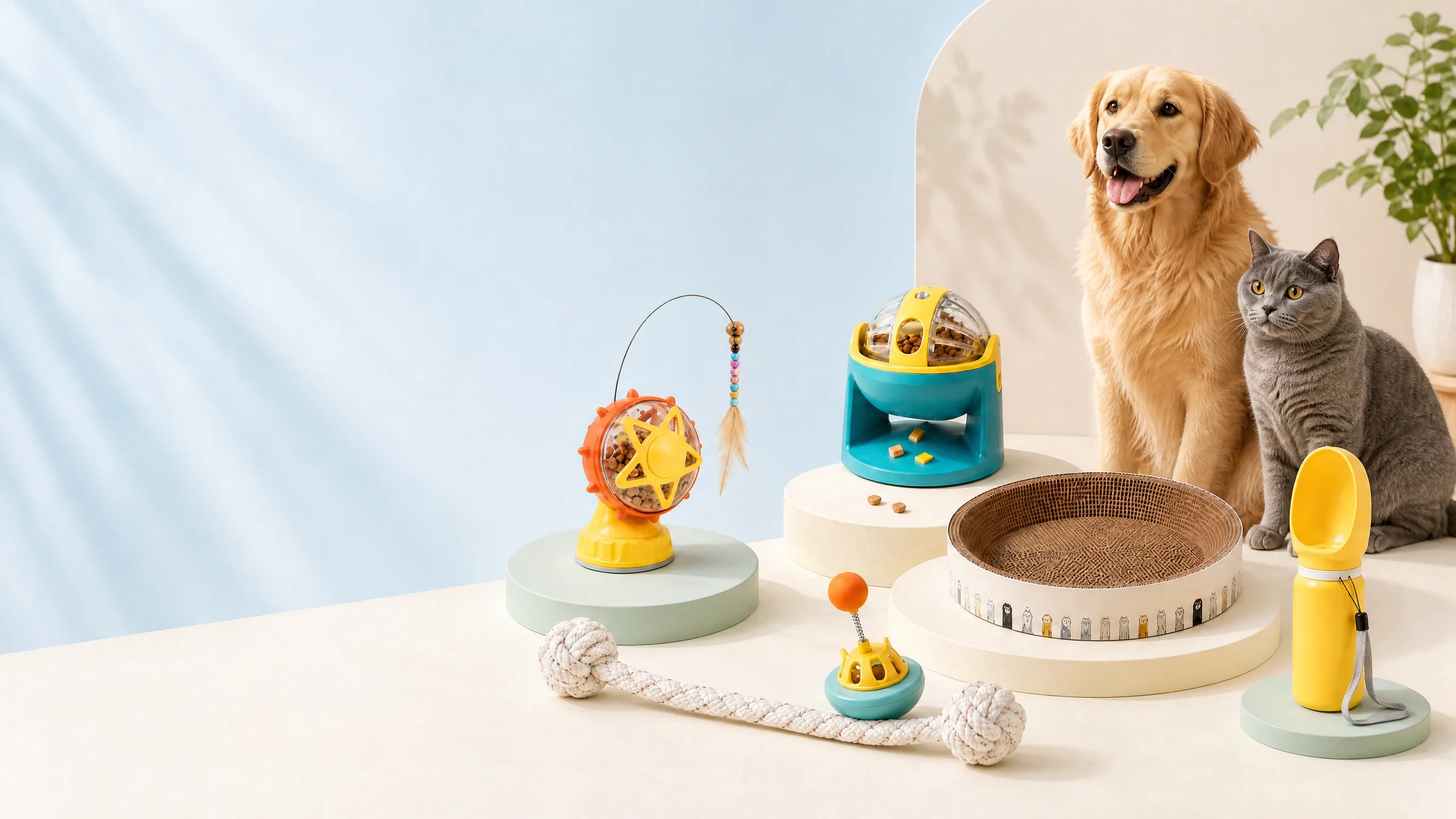
Seasonal pet toy collection wholesale is a repeatable marketing and retail strategy for many pet brands and importers. For B2B buyers, the goal is to convert seasonal interest into measurable SKU-level sell-through while controlling cost, lead time and regulatory risk. This guide breaks the process into practical decision modules you can use with factories and design partners to define campaign role, SKU tiers, themes, reuse vs new development, sampling and artwork, packaging, MOQ drivers, delivery coordination and post-season review.
A clear project plan reduces scope creep and the common disconnects between buyer expectations and supplier execution. Each module below outlines buyer actions, typical supplier inputs, evidence to request, tradeoffs you will face, and logical next steps so you can keep procurement cycles predictable and aligned with sales and marketing calendars.
Module 1 — Define campaign role and objectives (buyer: set measurable goals; supplier: propose feasible scope)
Start by specifying the campaign role: is this collection meant to be a limited-edition hero range, a loss-leader to draw traffic, a plug-and-play seasonal accent to existing SKUs, or a co-branded promotion with a retail partner? Your choice drives SKU count, acceptable cost-per-unit, acceptable lead time, and allowable finish complexity. Buyer actions in this phase include documenting desired launch date, target channels (ecommerce, specialty, mass), revenue or margin targets per SKU, and any promotional mechanics (bundles, BOGO, gift-with-purchase). Suppliers respond with feasibility feedback: which SKUs can be delivered by the date, what tooling or setup is required, and preliminary cost ranges for different volume tiers.
Evidence you should request from suppliers at this stage includes production calendar outlines, sample lead times, and any constraints such as seasonal factory shutdowns. Ask for a scenario-based quote that shows cost and lead time for three volume scenarios (low, expected, stretch). Tradeoffs commonly encountered are: faster speed often means higher per-unit cost or larger MOQ commitments; smaller SKU assortments reduce tooling complexity but limit merchandising breadth. Next steps: finalize the campaign objective document and have supplier sign off on a delivery feasibility memo so expectations align before design begins.
Module 2 — Determine SKU tiers and assortment structure (buyer: choose tier mix; supplier: map SKUs to cost drivers)
Organize the collection into SKU tiers—core carryover, seasonal variants of core toys, and fully new designs. Core carryover SKUs are low-risk, often use existing molds or components, and help stabilize average cost-per-unit. Seasonal variants (colorways, prints, sound modules) provide perceived newness with limited new development. New designs create headline impact but introduce tooling, proto and testing timelines. Buyer actions: decide the proportion of SKUs in each tier and define success criteria per tier (e.g., sell-through thresholds, margin targets). Supplier inputs should include which carryover SKUs are suitable for seasonal adaptation, which variants are low-cost (material or print only), and which designs require new tooling or materials.
Use a compact table to compare tier implications for decision clarity:
| SKU Tier | Development required | Typical cost impact | Lead-time impact |
|---|---|---|---|
| Carryover | Minimal | Low | Short |
| Variant (color/print) | Minor | Medium-low | Short–medium |
| New design | Full development | High | Long |
Evidence to collect: supplier lists of reuse-compatible SKUs, sample photos of proposed variants, and a clear statement of tooling needs (mold count, estimated lead time). Tradeoffs include the balance between assortment breadth and complexity—more SKUs increase merchandising options but raise MOQ aggregation and inventory risk. Next steps: lock in tier mix and ask supplier to produce a prioritized SKU list with BOM-level cost drivers for each item.
Module 3 — Theme development and artwork strategy (buyer: approve concepts; supplier: deliver artwork-ready files)
Themes should align with your brand positioning and seasonal narrative while remaining manufacturable. Buyer actions here include providing brand guidelines, color palettes, allowed motifs, and any mandatory legal marks or label language. Ask for 3–5 theme concepts with mood boards and how each theme maps to SKU tiers. Supplier responsibilities include confirming print and material limitations, providing mockups of how artwork will appear on each SKU, and flagging elements that increase cost (metallic inks, special dyes, multi-layer embroidery).
Artwork deliverables and evidence: request scaled dielines, printable vector files, and photos of art applied to physical prototypes where possible. For product data needs related to GTINs and product identifiers, align with your internal requirements and confirm supplier capability to supply GTIN/product-data exports 2. Tradeoffs: complex artwork can raise unit cost and extend lead time, while simple motifs lower cost but may reduce perceived novelty. Next steps: approve a single theme for production, sign off final artwork files, and confirm supplier timelines for print trials and color approval.
Module 4 — Reuse vs new development: sampling and proto plan (buyer: decide reuse ratio; supplier: provide sample schedule and costs)
Deciding how much to reuse existing parts versus commissioning new development is a pivotal procurement choice. Buyer actions: set a target reuse ratio (e.g., percentage of SKUs using existing tooling/components) that aligns with inventory risk appetite and campaign objectives. Ask suppliers to map every proposed SKU to one of three statuses: 1) full reuse, 2) variant via existing tooling, 3) new tooling/proto required. Supplier evidence should include photographs of reused parts in current production, records of existing mold condition if available, and a sample schedule with costs broken down by prototype, pre-production and color approval runs.
Sampling tradeoffs are practical: more reuse reduces sampling cost and shortens lead time, but new designs can generate stronger seasonal demand. Ask suppliers for a clear sample cadence and expected turnarounds for each status. A compact table helps set expectations:
| Sample type | Typical lead time (supplier estimate) | Buyer action |
|---|---|---|
| Reuse sample | Short | Approve visually |
| Variant mockup | Short–medium | Approve color/print |
| New proto | Medium–long | Approve fit/function, iterate |
Next steps: finalize sample plan, confirm who pays for which sample types, and set sample sign-off criteria so production only starts after formal approvals.
Mid-article CTA — If you want a project-ready starter checklist for seasonal SKU planning, contact PawViso for a templated buyer-supplier workbook you can use to collect timelines, BOMs and sample sign-offs.
Module 5 — Packaging, labeling and MOQ drivers (buyer: set packaging spec; supplier: explain MOQ impacts)
Packaging is often a larger driver of MOQ and cost than the toy itself. Buyer actions: determine whether packaging will be bespoke (printed boxes, window bags, hang tags) or standardized (neutral inner pack with branded outer carton). Provide suppliers with packaging specs, dielines, and any minimum branding requirements. Supplier inputs should include carton size optimization, palletization patterns, and whether your chosen packaging requires additional tooling (box folding dies, custom hang-tag punches). Suppliers must explain how packaging choices affect MOQ: custom printed cartons or hang-tags often have their own minimum run quantities that effectively raise the SKU-level MOQ.
Request evidence such as packaging mockups, material samples, and carton strength test reports if relevant to the channel. In addition, coordinate product labeling requirements with buyer/importer confirmation of target-market requirements 3—this affects artwork and packaging text. Tradeoffs include balancing on-shelf impact against inventory risk: premium, fully printed packaging increases perceived value but creates higher per-SKU MOQ and inventory commitment. Next steps: decide on packaging tier (premium, standard, economy), secure supplier quotes for packaging tooling and runs, and document combined MOQ impacts (toy + packaging).
Module 6 — Delivery coordination and post-season review (buyer: set delivery windows and KPIs; supplier: commit to a delivery plan and returns policy)
Delivery coordination requires mapping production milestones to retail calendar dates and contingency plans for delays. Buyer actions: set hard delivery windows, booking notes for container or air freight, and inventory staging requirements (warehouse cross-dock dates, drop-ship windows). Suppliers should provide a production-to-shipment timeline, confirm incoterms, and outline late-shipment mitigation steps (partial shipments, air freight options). Evidence to collect includes a milestone schedule with named dates, packing lists from pre-shipment inspections, and any third-party inspection reports.
Post-season review is essential for continuous improvement. Define KPIs up front—sell-through percentage, on-time delivery rate, PO accuracy, and sample-to-production variance—and ask your supplier to provide data for these KPIs after the season. Include a formal debrief within a set timeframe (e.g., 30–60 days after campaign close) to assess which SKUs should be carried forward, which need redesign, and where MOQ or packaging changes are justified. Tradeoffs include the administrative effort of rigorous post-season analytics versus the potential inventory waste of untracked seasonal SKUs. Next steps: schedule the post-season review meeting, agree on what data the supplier will deliver, and set decision gates for carryover or rework for the next cycle.
1 For clarity, request that suppliers distinguish between quality-management system evidence (certificates, factory QMS processes) and SKU conformity evidence (product inspection reports, sample photographs). 2 Confirm supplier capability to provide GTIN/product-data exports for each SKU and to deliver necessary product-data fields to feed your sales channels. 3 Buyer/importer confirmation is required for target-market labeling, claims and mandatory marks; suppliers can implement but cannot substitute for importer legal decisions.
Module 7 — SKU tiering and assortment mixes: how will you balance hero SKUs, seasonal exclusives, and evergreen staples?
Deciding on SKU tiers is a primary commercial choice that affects pricing architecture, promotional cadence, and inventory risk. A common buyer approach is to define three tiers: hero (high-visibility, higher margin, limited seasonal run), seasonal exclusive (themed, promotional drivers with constrained quantities) and evergreen staples (baseline toys retained year-round). For a seasonal pet toy collection wholesale program, map each SKU to a tier at project outset and align expected sell-through windows. This helps the factory and your logistics partner plan capacity, packaging runs and labelling, and it informs marketing teams which items need hero imagery, which require limited-run labeling, and which can be reinserted into future assortments.
Make these tier decisions with explicit trade-offs in mind: hero SKUs usually justify higher tooling or custom-mould spend and carry marketing burden; seasonal exclusives should be economically designed to keep unit cost controllable while looking premium; evergreen staples should be optimized for unit cost and manufacturing repeatability. Translate tiering into concrete commitments such as projected order splits by tier, acceptable lead-time windows per tier, and contingency plans (e.g., rework or secondary channel). Use the table below to standardize internal decision-making and vendor briefings.
| Tier | Role in collection | Typical order strategy |
|---|---|---|
| Hero | Campaign centerpiece, high visibility | Limited seasonal run; prioritize finish/branding; larger price buffer |
| Seasonal exclusive | Themed drivers, promotional uplift | Moderate quantities; flexible finishes; planned markdowns |
| Evergreen | Core catalogue, replenishment | Ongoing MOQ-focused runs; cost-optimized production |
Cite the packaging/distribution-test context when you need to confirm how tiered packaging affects cartonization and shelf presentation; these considerations will influence pack sizes and inner-carton choices that impact shipping costs and damage rates 5. Ensure your buyer-side SKU plan explicitly flags which SKUs require specific packaging tests or retail-ready features.
Module 8 — Reuse vs new development: what should be redesigned and what should be repurposed?
When building a seasonal pet toy collection wholesale plan, the decision to reuse existing tooling and components versus developing new items should be a disciplined one. Reusing proven designs reduces time-to-market, minimizes unexpected quality variation and typically lowers MOQ pressure; it is suitable for evergreen SKUs that simply receive a seasonal skin or label. New development is appropriate when the concept requires unique shapes, materials, or an IP-protected theme that differentiates in-market. Create a decision rubric that weighs lead time, tooling cost, SKU lifetime, and projected uplift sales to determine which path each SKU follows.
Operationalize the reuse vs new-development choice by documenting clear technical and commercial triggers. For example: if expected seasonal uplift is below a predefined threshold, prefer a recolour/surface-decor approach to existing tooling; if the SKU is intended as a hero item with exclusive licensing, plan for new tooling and extended lead time. Communicate these triggers to your factory partner and include cost-estimate rounds and sample iterations in the timeline. Where reuse is chosen, identify components that can be swapped (e.g., squeakers, fabrics, internal fillers) to create perceptible novelty without a full redesign, then confirm assembly and testing needs with the supplier 4.
Module 9 — Sample programs and approval gates: what samples do you need and when?
A robust sample program prevents late surprises. For seasonal collections, implement staged sample approvals: concept mock-ups, functional prototypes, colour/finish samples, pre-production samples (PPS), and final shipment approval samples. Each stage must have a clear acceptance criterion: visual match to artwork, functional performance within agreed tolerances, packaging fit, and labelling correctness. Define who on the buyer side signs off at each gate, and build time buffers into your project plan for corrective iterations.
Track sample status in a simple control table and require accompanying documentation with each sample: material spec sheets, component sources, and photos of the production line set-up if relevant. Insist on dimensional drawings and bill-of-materials updates as changes occur. Where packaging or labelling is customized for seasonality, add a small pre-production run (for example, an inner-carton run of 50–200 units) to validate print, dielines and retail fit prior to full carton print. This package/distribution-test context can reduce carton reprints and shipping hold-ups later 5.
| Sample stage | Purpose | Buyer sign-off focus |
|---|---|---|
| Concept mock-up | Visual/scale approval | Theme accuracy, shape |
| Functional prototype | Play/performance check | Durability, materials |
| Colour/finish sample | Aesthetic approval | Pantone match, print |
| Pre-production sample (PPS) | Final validation before mass run | Packaging, labelling, assembly |
| Shipment-sample | Post-production spot-check | Cartonization, damage rates |
Clarify who pays for which sample stages upfront. Typically, tooling or bespoke prototype costs are negotiated into project terms; expect to allocate budget for at least one PPS per unique SKU when new tooling is involved.
Module 10 — Artwork, branding and packaging: what flex is needed for seasonal themes?
Packaging and artwork often carry the seasonal story to consumers and retail buyers. For wholesale seasonal pet toy collection projects, adopt an artwork strategy that balances bespoke seasonal messaging with reusable brand elements. Use a modular artwork system: fixed brand assets (logos, legal copy, basic product info) and interchangeable seasonal panels (artwork, promotional callouts, limited-run stickers). This reduces print plate and dieline changes, shortens turnaround for seasonal runs, and maintains compliance with brand guidelines and retailer requirements.
When specifying artwork, provide the factory with layered files, clear dielines, spot-colour calls and exact text strings. For multi-language markets or different regulatory copy, prepare master templates and local-language variants in advance; last-minute text changes are a frequent cause of delays. Coordinate print proofs and require a test print on the actual board stock used for the final carton—paperboard thickness and varnish/laminate choices affect how colours and folds appear during distribution and on-shelf handling 5. Also align on package protection needs: inner trays, polybags, or blister options influence both retail presentation and shipping density.
| Packaging element | Buy-side decision | Consideration |
|---|---|---|
| Artwork panels | Seasonal vs evergreen | Reuse base elements; swap panels for seasons |
| Carton strength | Shipping vs shelf use | Trade-off: heavier board increases cost and protection |
| Retail-ready features | Hangers, shelf-ready cartons | Confirm retailer spec early |
| Multi-language | Regional variants | Prepare templates to avoid last-minute edits |
Where artwork uses licensed characters or trademarks, confirm licensing usage windows and any approval cycles required by the licensor before committing to print runs. Failure to lock licensing approvals can halt production and incur reprint costs.
Module 11 — MOQs, lead times and delivery coordination: how will quantities and timing drive choices?
Minimum order quantities and lead times are key levers in seasonal programs. MOQs often reflect tooling amortization, material batch sizing and packing-line efficiency. For buyers, align SKU launch dates with supplier lead times and raw-material sourcing constraints; a late concept freeze typically forces either higher expedited costs or a downgrade from custom to off-the-shelf items. Create a master schedule that ties design freeze, sample sign-offs, production windows and shipment dates together, then review that schedule weekly during peak seasonal planning to spot slippage early.
Delivery coordination needs to account for production variability, inland transport, customs clearance and retailer inbound windows. Define acceptable delivery tolerances (e.g., +/- X days) and outline contingency routing in case of missed production dates—options include partial shipments, air freight for critical hero units, or rerouting to regional distribution centres. Use trade-term clarity to avoid handover confusion: specify who handles export packing, documentation, and port handover in your purchase order, and codify these in the supplier agreement 6. Communicate expected carton build-ups and pallet patterns early; this helps the factory optimize packing, reduce dim-weight penalties and avoid repacking at origin.
| Topic | Buyer action | Notes |
|---|---|---|
| MOQ | Consolidate SKUs where possible | Joint SKU planning reduces per-item MOQ hit |
| Lead time | Build margin into calendar | Include time for labelling, testing, customs |
| Delivery terms | Define responsibility in PO | Use explicit Incoterm or handover point 6 |
| Contingency | Pre-agree options | Partial shipments, air uplift, alternate SKUs |
If your program spans multiple export batches (staggered shipments to support a long promotional window), ensure you have a clear plan for inventory carry and replenishment lead times; this will influence whether to split orders across several production runs or accept a single larger run with warehousing.
Frequently asked questions
Q: How many SKUs should a typical seasonal pet toy range include? A: That depends on channel, target price points and promotional intensity. Start by defining hero and exclusive SKUs, then add a smaller number of evergreen SKUs refreshed with seasonal finishes. Use internal sales forecast buckets to decide SKU count and avoid overfragmentation.
Q: Can we recolour an existing toy for a seasonal theme instead of creating a new mould? A: Yes—recolouring or surface decoration is a common cost-saving approach. Ensure the factory confirms material availability and that recolour options meet your visual and functional requirements. Document changes and update the BOM to reflect substituted components.
Q: What packaging tests should we run before full production? A: Run a print proof on final board stock, an inner pack fit test, and a short pre-production run to validate dielines and print alignment. Include a distribution test for palletization and carton strength if items ship in bulk 5.
Q: How do MOQs affect assortment planning? A: MOQs can force SKU consolidation. Plan SKUs in logical assortments and negotiate consolidated packaging runs to reduce MOQ pressure per SKU. Early aggregation of quantities across buyers or seasons can also help.
Q: Who signs off on samples and pre-production items? A: Define internal approval roles before sample creation. Typically, product, sourcing and quality teams have defined sign-off rights at different sample stages; ensure these are documented in your project plan.
Q: What happens if we miss the seasonal window due to production delays? A: Options include shifting launch to alternate channels, converting some units to evergreen finishes, or conducting a smaller, expedited run for hero SKUs. Pre-agreeing contingency options with the factory reduces reaction time.
Conclusion
A successful seasonal pet toy collection wholesale program depends on disciplined SKU tiering, pragmatic reuse vs new development decisions, staged sample approvals, modular artwork and packaging, and tight coordination on MOQs and delivery. Document decision rules early, maintain frequent communication with your factory partner, and embed buffer time for sample iterations and distribution testing. These steps will make seasonal launches more predictable and easier to scale across markets.
Project requirements, regulatory needs, and market claims must be confirmed by the buyer/importer for each program.
Final CTA — Start a controlled pet-toy sourcing conversation with PawViso. Share the product concept, target market, customization route, package direction and estimated order structure for a focused B2B discussion. Email: info@PawViso.com WhatsApp: +86 186 8106 4480 — https://wa.me/8618681064480
Related PawViso resources
- Continue with How to Create a Custom Pet Toy Sampling Plan. Use this pet-toy guide to structure approvals, samples and evidence.
- Browse the PawViso product catalogue to identify product formats for a sourcing brief.
- Follow the PawViso sourcing process and review the B2B buyer FAQ before sharing project requirements.
External reference
For independent general product-safety context, review European Union General Product Safety Regulation. Confirm the requirements that apply to the selected product, target market and order.