
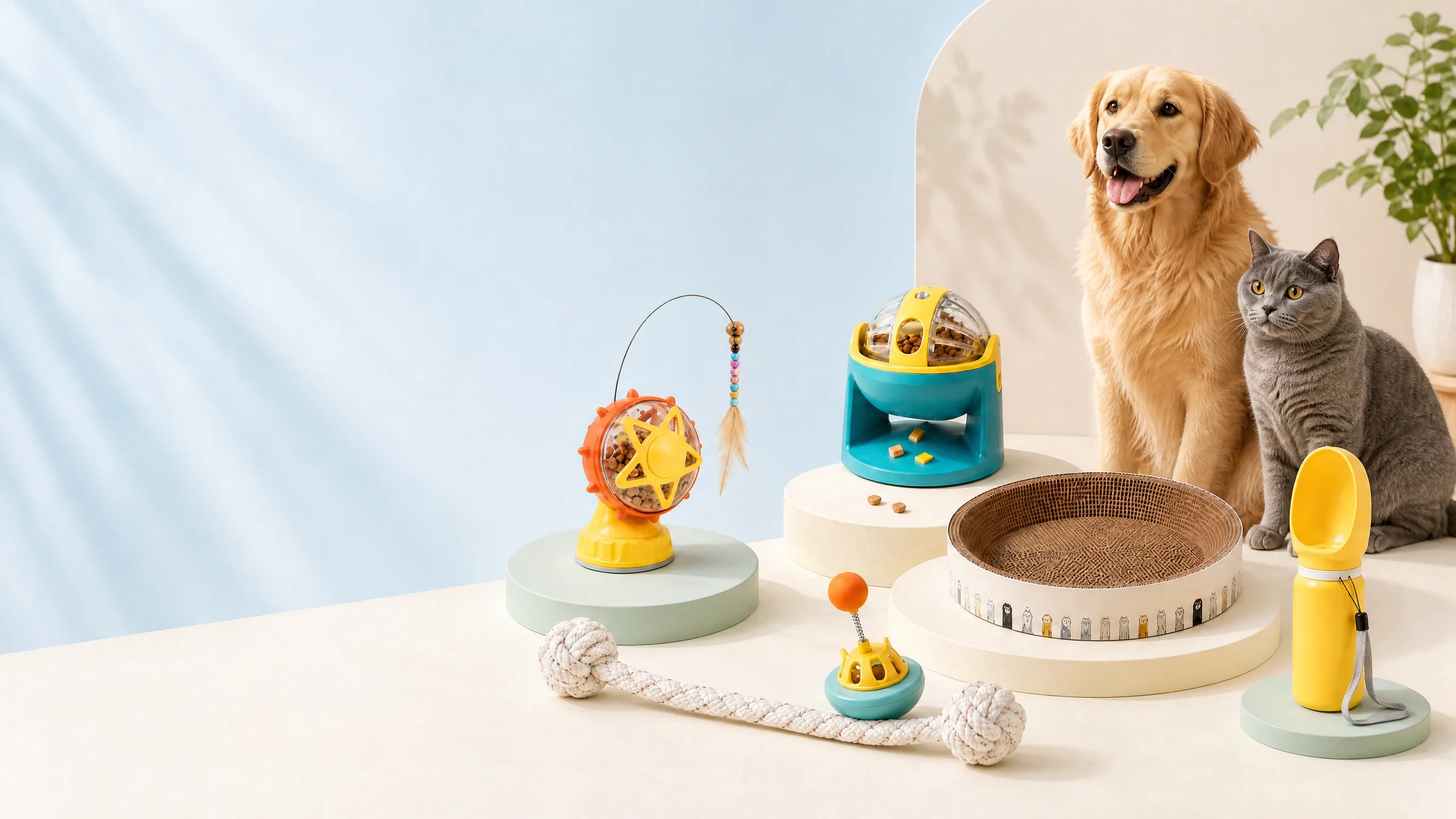
Pet toy customization trends are not just about putting a logo on a plush or choosing a seasonal colorway. For buyers, the key questions are operational: which personalization routes add value for target customers, how will assortment architecture influence inventory and lead times, what packaging and data are required for listing and compliance, and how can suppliers demonstrate feasibility through samples and controlled launches? Evaluating these topics systematically lets procurement teams balance marketing objectives with sourcing realities and supplier capabilities.
This guide focuses on evaluation criteria and buyer actions rather than market forecasts. It walks through six decision modules—product personalization routes, assortment architecture, visual concepts (color/characters), packaging and product data, supplier feasibility, and sample-to-launch controls. Each module explains what buyers should require from suppliers, what evidence to accept, likely tradeoffs, and recommended next steps to move from concept to a controlled rollout.
Module 1 — Product personalization routes: decide which personalization types to use and why
Start by mapping the personalization options you are considering: full custom mold or pattern, limited-run character licensing, name/monogram embroidery, customizable interchangeable parts (e.g., squeaker inserts, attachable toys), or mass-personalization like on-demand printing. For each route, list the buyer-level objectives (brand recognition, higher basket value, repeat purchases, premium pricing) and operational constraints (lead time, minimum order quantity, tooling costs, rework risk). This mapping helps you avoid conflating marketing appeal with practical feasibility.
Ask suppliers for concrete inputs: typical lead times for tooling and first production, mold life expectancy, sample production process, and whether the factory supports on-demand printing or batch customization. Require evidence such as photos of previous custom projects, process flowcharts, and a clear statement on tooling ownership and revision costs. Tradeoffs often surface: fully custom molds increase unit margin only at higher volumes, while embroidery or heat-transfer personalization is flexible but may affect wash/chew performance — these are operational tradeoffs to quantify with supplier data and buyer risk tolerance.
| Personalization route | Typical supplier inputs to request | Buyer decision factors |
|---|---|---|
| Custom mold/pattern | Tooling time & cost; sample iterations; CAD/3D files | Volume thresholds, SKU lifespan, exclusivity needs |
| On-demand printing | Ink/tech specs; MOQ per run; lead time | SKU proliferation, inventory control, color fidelity |
| Embroidery/patch | Digitizing time, stitching durability evidence | Surface suitability, washability, unit cost impact |
| Evidence to accept from supplier | Why it matters |
|---|---|
| Photo documentation of past projects | Shows capability and finish level |
| Process flowchart and lead-time table | Supports planning and risk assessment |
| Clear tooling ownership terms | Prevents future cost disputes |
Next steps: prioritize 1–2 personalization routes for deeper feasibility checks and include those routes in an RFP. Attach a simple volume scenario (e.g., 5k, 20k, 50k units) and ask suppliers to present break-even points, tooling amortization timelines, and sample timelines for each scenario.
Module 2 — Assortment architecture: decide SKU mix, variants and inventory strategy
Assortment architecture translates the personalization strategy into SKUs and replenishment rules. Determine whether you will use a core SKU with add-on personalization (single base SKU + accessory variants), a color-first matrix (same design in multiple colorways), or a fully modular system (interchangeable parts creating combinatorial SKUs). Each approach affects warehousing, forecastability, and channel complexity: many low-volume SKUs increase stock-keeping costs and forecasting error, while fewer versatile SKUs simplify logistics but may reduce perceived choice.
Ask suppliers for data on batch sizing flexibility, lead time variability by SKU complexity, and their experience managing kit builds or assembly-on-demand. Evidence can include sample packing lists showing kit assembly, photos of SME lines producing multiple SKUs per run, and examples of how the supplier labels components for traceability. Tradeoffs include the cost of holding pre-personalized stock versus the lead time and per-unit premium of personalization-on-demand. Consider inventory strategy options: pre-produce base SKUs and personalize at a secondary location, or hold raw parts and assemble after order.
| Assortment model | Supplier inputs to request | Buyer pros/cons |
|---|---|---|
| Core SKU + add-ons | Kit assembly times; component lead times | Lower core SKU count; more assembly steps |
| Color-first matrix | Color batch minimums; dye consistency evidence | Clear customer choice; potential dead stock |
| Modular parts | Assembly tolerances; part interchange fit | High combinatorial options; complexity in QC |
Next steps: produce a sample SKU matrix showing expected SKUs for your launch window and request supplier feedback on feasible batch sizes, recommended safety stock, and packaging implications for kit shipments.
Module 3 — Color and character concepts: decide how to specify visual themes and approvals
Visual concepts—colors, textures, and characters—are central to consumer appeal. Specify whether you will provide Pantone color references, digital artwork, or physical color chips, and whether color tolerances are strict (delta E thresholds) or flexible. If using licensed characters, clarify licensing terms up front and ask suppliers about previous experience with licensed products. Require suppliers to describe their color-matching process, typical color variation ranges, and the approval gates for colorway sign-off.
Supplier evidence should include past color-matching samples, a standard color approval form, and their process for communicating color deviations. Tradeoffs: strict color tolerances increase the number of production controls and possibly cost, while flexible tolerances speed up production but risk brand inconsistency. For character designs, buyers should insist on layered artwork (vector files with separate color channels) and clear guidance on acceptable simplifications for embroidery or low-res print areas.
Buyer action items: provide exact artwork files and color standards, define the number of pre-production color samples you require, and agree on the remediation steps if color samples fail approval (rework, discount, or scrap). Document these items in your technical pack to avoid ambiguity during production.
Module 4 — Packaging and product data: decide packaging level, GTIN and data requirements
Packaging choices affect both perception and logistics. Decide whether you will use retail-ready packaging, poly-bagging with barcode labels, or branded gift boxes. Specify packaging dimensions, material requirements (e.g., recyclable content if required), and any secondary packaging for multipacks. On the data side, confirm the required product identifiers (GTIN/EAN/UPC), attributes for e-commerce listings, and any mandatory safety/compliance labeling required by the destination market—these are buyer/importer confirmations to resolve 3.
Ask suppliers to provide die-lines for packaging, pre-production mock-ups, and an exemplar pack with finished labeling. For product data, require a standardized spreadsheet with GTIN, variant-level attributes, net/gross weights, carton quantities, and HS codes. Evidence from the supplier should include sample barcodes scannable in your system and photos of produced cartons with correct markings. Tradeoffs include higher unit cost for premium packaging against reduced returns and better sell-through; simpler packaging reduces cost but may undermine perceived value.
| Packaging element | Supplier inputs to request | Buyer checklist |
|---|---|---|
| Retail-ready box | Die-line, mock-up photos, print proofs | Size fit, print quality, sustainability claims |
| Barcode & GTIN | Scannable sample, GTIN registration confirmation 2 | Confirm GTIN uniqueness and format |
| Product data fields | Why buyers need them |
|---|---|
| GTIN, SKU, variant attributes 2 | For listing, logistics, and traceability |
| Net/gross weight, carton dimensions | For freight planning and cost estimates |
Next steps: lock down packaging dielines and data templates early in the technical pack and request supplier pre-production labels and barcode scans before bulk runs.
Mid-article CTA — If you want a buyer-ready checklist and a sample RFP template that covers personalization routes, SKU scenarios, color tolerances and packaging data fields, contact PawViso procurement services to request the template package.
Module 5 — Supplier feasibility: decide which factories can meet customization needs
Evaluating supplier feasibility requires combining capability evidence with a practical assessment of capacity and quality systems. Ask potential factories for documented case studies of similar customization types (photos, process steps), a capacity statement showing available machine hours or shift patterns, and a description of their quality control checkpoints for personalized features. While you should not accept verbal assurances alone, documented evidence such as photographed production lines, sample photo sets across runs, and written procedures is appropriate.
Distinguish between a supplier’s general quality-management system and SKU-level conformity requirements: a factory may have ISO or in-house quality systems, but buyers must still require SKU-specific checks, acceptance criteria, and sample gates because overall certifications do not guarantee per-SKU outcomes 1. Require suppliers to outline SKU-specific inspection plans (AQL thresholds, special tests for personalization durability if applicable) and how they handle nonconforming units. Tradeoffs: highly capable suppliers may have longer lead times or higher minimums; smaller suppliers may be flexible but lack documented processes.
Buyer actions: include a supplier scoring matrix in your RFQ to rate technical capability, documentation completeness, sample lead time, and willingness to allow controlled first-run audits. Ask for a pilot capacity commitment and confirm the supplier’s approach to traceability (lot numbers, component labeling) for personalized batches.
Module 6 — Sample gates and controlled launches: decide sample stages and pilot run criteria
Define clear sample gates: initial concept/sample, pre-production approval sample (PPS), and golden sample for each personalization variant. For each gate, specify acceptance criteria, who approves, and what happens if a sample fails (rework, offsetting cost, or abort). Require suppliers to document each sample run with photos, measurements against technical pack, and a short report on deviations and corrective actions.
Pilot runs should mimic intended production conditions (same lines, same operators, same materials) and be sized to provide statistically meaningful quality insight while limiting financial exposure. Define KPIs for pilot acceptance—percent defect threshold by defect class, percentage of units meeting color tolerance, and packaging compliance. Evidence suppliers must provide includes serial-numbered pilot units, test-printed labels, and shipment photos. Tradeoffs: larger pilots reduce launch risk but increase cost and inventory; smaller pilots lower cost but provide less assurance. Next steps: negotiate a controlled-launch plan that includes a rollback clause, agreed remediation steps, and a timeline for ramping to full production once pilot criteria are met.
| Sample gate | Buyer must require | Supplier must provide |
|---|---|---|
| Concept/sample | Detailed feedback loop and revision allowance | Photos, materials list, initial measurements |
| Pre-production sample | Approval form with sign-off authority | PPS unit, production run sheet, traceability info |
| Pilot run | Pilot acceptance KPIs and remediation plan | Pilot batch with serials, QC report, shipment photos |
| Launch decision point | Evidence needed | Typical buyer action |
|---|---|---|
| Go to full production | Pilot meets KPIs; packaging/data approved | Issue PO with ramp schedule |
| Delay | Pilot minor nonconformances with corrective plan | Agree remedial actions and re-run pilot |
| Abort | Major nonconformance or capacity mismatch | Re-scope or select alternate supplier |
Conclusion and next steps: use these six modules as a framework when evaluating pet toy customization trends. For any chosen personalization route, document the assumed SKU architecture, color/character specs, packaging/data requirements, supplier evidence, and exact sample gates before awarding a production contract. Confirm target-market labeling and compliance requirements with your import/legal team 3, and ensure GTIN/product-data responsibility is assigned between buyer and supplier early 2. This structured approach helps buyers reduce ambiguity, quantify tradeoffs, and move from concept to a controlled launch with manageable risk.
Module 7 — Decide which personalization dimensions affect unit economics most
When assessing pet toy customization trends, buyers must separate “cosmetic” personalization (colors, characters, printed names) from “functional” changes (size, materials, embedded electronics). Cosmetic changes generally have lower tooling and lead-time impact but can still raise unit costs through color separations, minimum-order quantities (MOQs) per color, and extra pack-sorting. Functional changes often trigger new tooling, revised bill of materials, different assembly steps, and sometimes extra testing. Buyers should map each personalization dimension to cost drivers — tooling, SKU proliferation, extra labour, packaging complexity, and logistics — and then model their effect on gross margin per SKU under different sales-volume scenarios. This reveals which dimensions are feasible for small-scale pilots versus which need larger, program-level commitment.
Equally important is to consider how personalization affects downstream operations: warehousing, order fulfillment, return handling and channel expectations. For example, adding a printed pet name or unique character increases SKUs and may require either batch production and pre-sorting, or on-demand printing/assembly near the fulfillment point. Each approach shifts cost and lead time. Capture these options in a decision table that links personalization dimension to typical supplier implications and buyer actions (e.g., require on-line mockups, request digital print proofs, or plan for inventory buffers). Use this table during supplier RFQs to make cost-impact conversations fact-based and comparable.
| Personalization dimension | Typical supplier implications | Buyer action to evaluate impact |
|---|---|---|
| Color/print variants | Extra color setups, MOQ per color | Request color-variant MOQ, ask for digital printer proof |
| Size variants | New molds or cut patterns | Ask mold lead-time and cost; model SKU inventory |
| Name/ID printing | Inline or post-production printing | Confirm printing method, data workflow and per-unit cost |
| Embedded electronics | PCB sourcing, testing | Request component sourcing plan and test protocol |
Module 8 — Build an assortment architecture that balances novelty with SKU rationalization
A sound assortment architecture groups products by platform and variant rules so buyers can scale personalization without exploding SKUs. Start with platform definitions: define a core toy platform (single mold or pattern family) and then list permitted variants (three colors, two sizes, optional squeaker or plush lining). For each platform, define what changes are considered “within-platform” and stay low-cost, and what changes count as “new platform” requiring capital investment. This taxonomy helps procurement and merchandising teams make consistent decisions and communicate clear requirements to suppliers.
Also decide how novelty SKUs will be introduced—seasonal capsules, limited drops, or evergreen core ranges. Controlled launches (small batches sold through a test channel) reduce inventory risk and provide real-world sales data to justify ramping up production. When planning assortment architecture, include rules on lifecycle (e.g., trial run, threshold for full deployment), replenishment cadence, and end-of-life. These operational rules feed back into supplier selection criteria: suppliers with flexible lines and short changeover times fit fast cadence launches better than high-capex manufacturers.
| Assortment element | Decision point | Operational rule example |
|---|---|---|
| Platform definition | What is a platform vs a new product? | One platform = same mold family; color and trim permitted |
| Variant limits | Max color/feature count per SKU | Limit to 3 colors and 2 feature options initially |
| Launch mode | Test vs full release | Pilot orders ≤ pilot threshold; scale if sell-through ≥ target |
Module 9 — Confirm color, character and art direction through controlled visual governance
Color and character choices drive consumer appeal but create sourcing complexity. Buyers should create a compact visual governance document that specifies color palettes (with Pantone or supplier paint references), character art files (vector/AI), permitted placement zones and tolerances, and acceptable variations. This governance becomes part of the technical pack and reduces back-and-forth revisions. During supplier evaluation, ask for color-matching capability (dye lot control, pantone-to-material mapping) and sample photos under consistent lighting. Require digital or physical color proofs before tooling or bulk runs so all parties align on the final look.
Character licensing or IP-driven designs add layers of approvals and record-keeping; buyers must confirm who holds rights to the artwork and how changes are authorized. For unlicensed, original characters, include clear ownership and usage rights in the PO or tech pack. For licensed characters, verify approval workflows and timeline expectations with the supplier because licensing holders often need to sign off on first-article samples. Include these approval milestones in the project Gantt to avoid late changes that disrupt production and shipment schedules.
| Visual governance item | Buyer should provide | Supplier deliverable |
|---|---|---|
| Color reference | Pantone or swatch | Material color sample and photo |
| Artwork files | Vector/CMYK with clear safe areas | Mockups and first-article sample photos |
| Placement tolerances | Dimensions and allowed variance | Dimensional report with photos |
Module 10 — Design packaging as part of the customization experience and distribution plan
Packaging is often the first tangible touchpoint for personalization. Decide early whether the packaging will be personalized (e.g., name windows, custom-printed sleeves) or standardized across variants. Personalized pack-outs increase complexity — different printed runs, pack-sorting and barcoding needs — and will affect order fulfilment and storage. Buyers should assess packaging decisions against their distribution model: retail display, e-commerce direct-to-consumer, subscription box insertion, or mixed channels. Each channel has different packaging durability, labeling and unitization requirements that must be communicated to the supplier and included in the package engineering scope 5.
For controlled launches, use packaging as an inexpensive way to communicate personalization while keeping the core product platform stable. For example, a standardized toy can be presented as a personalized item via a printed insert, hangtag, or sticker applied during packing. This reduces tooling and production complexity while testing market response. Include packaging durability tests, barcode and regulatory labeling requirements in supplier RFQs and request packaging mockups and pre-production photos. If your distribution involves multi-country shipments, confirm palletization and outer-case specifications for freight efficiency and damage reduction before finalizing pack designs 6.
| Packaging decision | Impact on sourcing | What to request from supplier |
|---|---|---|
| Personalized printed pack | Extra print runs, longer lead times | Print proofs, MOQ per artwork |
| Standard pack + personalized insert | Lower manufacturing change cost | Sample insert and pack-out photo |
| Channel-specific pack | Different materials/labels per channel | Channel spec sheet and pack testing results 5 |
Module 11 — Use sample gates, controlled launches and data feedback to validate trends
Establish clear sample gates that reflect increasing commitment: digital mockup → physical prototype → pilot production sample → pre-production sample (PPS) → bulk. Define acceptance criteria at each gate: visual match, functional check, compliance documentation, and pack-out verification. Require timestamped photos and inspection reports for pilot and PPS stages. By setting explicit sign-offs, buyers reduce the risk of late-stage rework and make it easier to compare suppliers on responsiveness and quality control rigor.
Controlled launches are the operational mechanism that lets you gather real-market data without full scale risk. Run pilots in constrained channels (regional e-commerce, subscription boxes, trade shows) and track key signals: sell-through rate, returns, customer feedback on fit/feel/aesthetics, and supply-side metrics like yield and defect rate. Use a short-term reorder or ramp threshold (e.g., units sold in the pilot → trigger for replenishment) and ensure the supplier can support a scale-up path with known lead times. Capture supplier performance against agreed KPIs during the pilot so you can make an evidence-based decision about scaling, modifying the design, or exiting the project.
| Sample gate | Buyer deliverable | Supplier deliverable |
|---|---|---|
| Prototype | Design intent and tolerances | Physical prototype and photos |
| Pilot run | Pilot sell-through plan | Pilot production units + inspection report |
| PPS | Final packaging and artwork | Pre-production samples and test records |
Frequently asked questions
Q: How many personalization variants should I test in a pilot? A: Start small: choose variants that represent distinct consumer preferences (e.g., two colors + one printed name option). The pilot should limit SKU complexity so you can measure performance without overstretching inventory and fulfilment operations.
Q: Should I ask suppliers for digital mockups or physical samples first? A: Request digital mockups for alignment on art and color, then move to physical samples for material feel and assembly checks. Define acceptance criteria for each step and require timestamped photos for transparent documentation.
Q: How do I balance packaging personalization with freight efficiency? A: Consider using a standard outer pack and channel-specific inner inserts for personalization to keep palletization consistent. If full personalization is required, confirm case sizes and pallet patterns early to model freight cost and handling 6.
Q: What KPIs should I require from a supplier during a controlled launch? A: Useful KPIs include on-time delivery for pilot runs, first-pass yield, defect rate per 1,000 units, sample approval turnaround time, and responsiveness to corrective actions. Tie these to ramp decisions and contract clauses when appropriate.
Q: How do I manage artwork approvals, especially with licensed characters? A: Establish an approvals schedule in your project plan and include time for licensor sign-off. Provide high-resolution vector files and clear mockups to the licensor and supplier. Make approval milestones contractual to avoid production delays.
Conclusion
Evaluating pet toy customization trends requires a practical, modular approach: map personalization dimensions to cost and operations, structure your assortment, govern visuals and packaging, and validate with staged sample gates and controlled launches. Use clear decision rules for platform boundaries and pilot thresholds to limit risk. The goal is to convert trend-driven ideas into reproducible, scalable products with measurable supplier performance and reliable logistics assumptions 46.
Project requirements, regulatory expectations and market claims must be confirmed by the buyer/importer for each program prior to production and shipment.
Final CTA — Start a controlled pet-toy sourcing conversation with PawViso. Share the product concept, target market, customization route, package direction and estimated order structure for a focused B2B discussion. Email: info@PawViso.com WhatsApp: +86 186 8106 4480 — https://wa.me/8618681064480
Related PawViso resources
- Continue with How to Create a Custom Pet Toy Sampling Plan. Use this pet-toy guide to structure approvals, samples and evidence.
- Browse the PawViso product catalogue to identify product formats for a sourcing brief.
- Follow the PawViso sourcing process and review the B2B buyer FAQ before sharing project requirements.
External reference
For independent general product-safety context, review European Union General Product Safety Regulation. Confirm the requirements that apply to the selected product, target market and order.