
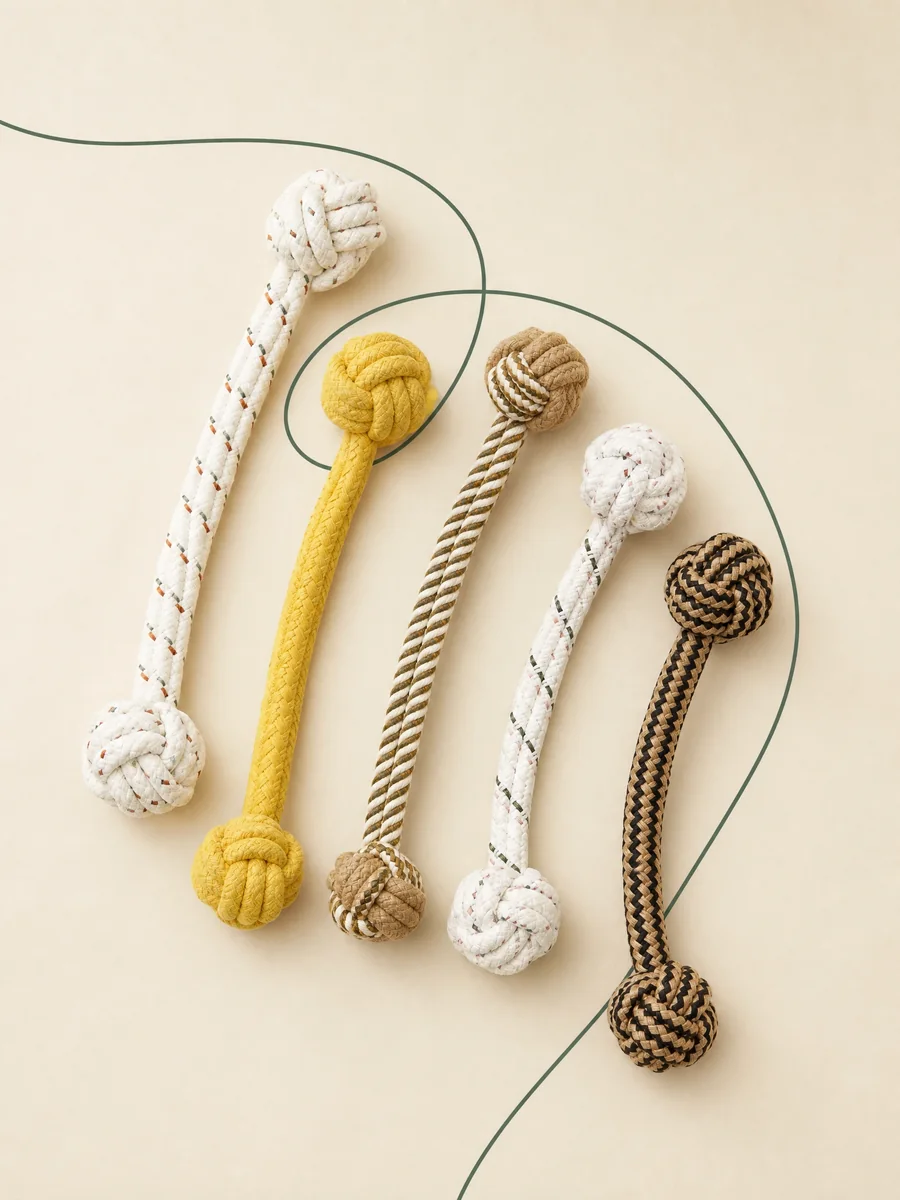
Textile pet toys wholesale requires tight coordination between buyer specifications and supplier capabilities. Unlike finished consumer electronics or simple plastic items, textile toys combine materials (multiple fabrics, fills, threads), mechanical operations (stitch patterns, bar tacks, seam allowances), and non-product elements such as labels and packaging. This guide covers the supply-chain interfaces where decisions matter most: fabric and trim selection, construction mapping, component records, sample regime, inspection, and pack-out. It focuses on buyer actions, supplier inputs, evidence needed, trade-offs, and practical next steps for reliable sourcing and scale-up.
This article is Part 1 of a modular sourcing playbook. It concentrates on design-to-production handoffs and the records that keep changes controlled. Where required, buyers should confirm regulatory, labelling, or safety requirements for their target markets; this guide signals where that confirmation belongs but does not substitute for it 3. Use the modules below as a checklist to reduce ambiguity, speed sampling, and make inspections meaningful when you evaluate textile pet toys wholesale suppliers.
Module 1 — Fabric, fill and trim specification decisions you must make
Start with a prioritized materials list: outer fabrics (face cloths), inner fabrics (backings, liners), fills (polyfill, pellets), threads, reinforcements, and trims (zips, squeakers, labels). For each material entry, specify at minimum: composition by generic name (e.g., polyester knits), nominal weight or denier where relevant, finish (water-repellent, brushed), color reference (supplier and buyer agreed swatch or Pantone), and acceptable suppliers or source regions. Buyers should decide which attributes are mandatory versus negotiable (e.g., color match mandatory; backing thickness negotiable within ±10%). Suppliers must return a component record that lists the chosen material, supplier lot code, and a short rationale for any substitutions.
Evidence: request physical swatches and mill certificates where available; require photos of the full roll showing lot codes. Trade-offs: higher-performance finishes or specialty yarns increase lead time and cost; simpler commodity fabrics reduce technical risk but may limit differentiation. Next steps: create a component matrix (see minimal example table below) and circulate to shortlisted vendors for confirmation before issuing development samples.
| Component | Minimum buyer spec | Supplier input required |
|---|---|---|
| Outer fabric | Composition, weight, color swatch | Mill name, lot code, sample photo |
| Fill | Type (e.g., hollow-fiber), weight per toy | Bag label photo, batch code |
Ensure material traceability by asking suppliers to keep sample cuttings from the production lot and attach a component record to the shipment. This limits disputes about color, shrinkage, or tactile complaints during quality checks. Component records are also essential when a buyer needs lab testing or third-party verification.
Module 2 — Stitching, seam and reinforcement decisions for durability and cost
Decide stitch types and seam allowances at the design stage: single needle lockstitch versus multi-needle overlock, seam allowances (e.g., 8–12 mm), and necessary reinforcements (bar tacks, boxed corners). Each decision affects machine choice, cycle time and unit cost. Buyers should specify critical stitch lines in a construction map—identify which seams are load-bearing (e.g., leash attachment points) and which are cosmetic. Suppliers should provide a production drawing that shows stitch type, thread size and needle specification for every seam.
Evidence: request a sewing-spec sheet and photos or short video clips of a supplier running a prototype on the intended machines. Trade-offs: heavy-duty stitching and larger seam allowances increase material usage and time per unit; finer stitches can improve aesthetic finish but may reduce mechanical strength. Next steps: include stitch type and thread number on the pre-production sample approval (PPS) form and lock them via change-control rules.
| Construction item | Buyer decision | Supplier evidence |
|---|---|---|
| Seam allowance | Specified mm per seam | Production drawing, PPS sign-off |
| Reinforcement | Specify bar tack counts | Photo of reinforced area, machine type |
Also require thread specifications (composition, tensile class) and whether thread color must match fabric or may be contrasting. When using appliqués, embroidery or laser-cut edges, define bonding or overlocking methods to prevent early fraying. Buyers should expect suppliers to identify any high-risk stitch interfaces that may need additional testing or inspection focus.
Module 3 — Component records, SKU-level conformity and traceability actions
Component records should be structured per SKU and updated every time a material source changes. The buyer must insist on SKU-level documentation that maps each finished SKU to the specific component lot numbers used in production runs. This record supports traceability, enables targeted rework, and simplifies shelf-life or complaint investigations. Note the distinction between a factory quality-management system and SKU conformity: a factory QMS creates process discipline; an SKU component record demonstrates what was actually used to make a specific batch 1.
Supplier inputs: a template that lists SKU, BOM lines, fabric lot numbers, thread batch, and trim supplier. Evidence: signed BOM and photos of each component attached to the manufacturing order. Trade-offs: tighter traceability increases administrative burden and requires disciplined lot control; relaxed traceability lowers cost but increases investigation time in case of failures. Next steps: require component records as a pack-file item and audit them during your first shipments to ensure that records match actual cartons.
A compact component-record template helps both parties. Below is a reduced example you can adapt to your ERP or shared document system.
| SKU | Outer fabric lot | Fill bag code | Thread batch |
|---|---|---|---|
| PT-TRI-001 | OF-2026-07-A | FB-1902 | TH-305-R |
Insist on a versioned record: when a supplier proposes a substitution, they must supply a pre-approved substitution request that includes equivalence evidence (swatch, tensile data if needed) and a discrete production hold until buyer approval.
Module 4 — Sample regimen: proto, pre-production, and pre-shipment approvals you must enforce
Define a clear sample schedule: prototype (concept), fit/functional sample, pre-production sample (PPS), and first-article inspection sample. Buyers should provide a prioritized checklist for each sample stage—what tolerances you will accept, which tests or inspections are mandatory before moving to the next stage, and who has sign-off authority. Suppliers should supply photos, dimensional sheets, and the physical samples by a mutually agreed method and timing. Clarify shipping responsibilities and who bears the cost for iterations.
Evidence: signed sample approval forms with annotated photos and dimensional callouts. Trade-offs: investing more time in thorough PPS reduces the likelihood of mass-production rework but increases development time and sampling cost. Next steps: make final PPS sign-off a gating item for production release and link it to your purchase order terms.
For quick decision-making, use a concise sample approval table for each SKU:
| Sample stage | Buyer deliverable | Supplier deliverable |
|---|---|---|
| Prototype | Comments within 3 business days | Prototype unit + photos |
| PPS | Sign-off or annotated changes | PPS unit + BOM confirmation |
Mid-article CTA — If you want a ready-to-use sample approval template and component-record spreadsheet tailored to textile pet toys wholesale, contact PawViso. We can provide editable templates and a supplier onboarding checklist to accelerate your development process.
Module 5 — Inspections, evidence and what to include in a checklist
Decide inspection focus areas before production: component verification (match to BOM), dimensional tolerances, seam integrity, fill weight, and pack-out conformity (labels, hangtags, UPC/GTIN data where required). Buyers should issue an inspection scope that specifies sampling plan (e.g., AQL or tightened parameters), critical defects versus major/minor, and required hold-and-release actions. Suppliers must be ready to provide documented evidence: component records, measurement logs, and photos of inspected sample units.
Evidence: inspection reports with annotated photos, measurement sheets, and signed disposition forms for any nonconformities. Trade-offs: stricter sampling and lower AQL reduce risk but increase inspection cost and potential shipment delays. Next steps: include inspection acceptance criteria in the purchase order and define the escalation path for defects found at the factory or during incoming inspection at your warehouse.
A compact inspection checklist helps standardize field audits:
| Inspection area | What to verify | Accept/Reject evidence |
|---|---|---|
| Components | Lot numbers match BOM | Photos + component record |
| Stitch/seam | No skipped stitches on critical seams | 10 sample photos |
| Pack-out | Labels and carton markings match spec | Photos of carton face and contents |
For GTIN/product data needed at pack-out, ensure the supplier includes printed labels and a packing list aligned with your product data guidelines; buyers should confirm which GTIN or barcode version is required for their sales channels 2. Where applicable, require suppliers to attach one retained sample from each production lot for future reference.
Module 6 — Change control: how to approve, document and test changes
Establish a written change-control process before starting production runs. Change requests can be initiated by supplier or buyer and must include: description of change, reason, proposed effective date, impact on cost or lead-time, and evidence of equivalency (swatches, performance data where required). Buyers should classify changes as minor (cosmetic color shade adjustment), major (material source change), or critical (change to a load-bearing seam or trim affecting performance) and define approval timelines for each class.
Supplier inputs: a completed change-request form that includes updated component records and a sample of the changed item. Evidence: when a change affects a critical attribute, require a new PPS and an inspection hold until the PPS is accepted. Trade-offs: too-rigid control slows continuous improvement; too-permissive control risks inconsistent SKUs and increased complaint rates. Next steps: include a default “no production change without approval” clause in contracts and require suppliers to use the change form for every proposed deviation.
Finally, map change-control actions to SKU records so that references, GTINs, pack-out artwork and component lots remain auditable. This reduces friction when a buyer needs to perform targeted recalls, relabeling, or market-specific adjustments.
- End of Part 1 -
Module 7 — construction mapping and stitch-line control (buyer decision: approve construction map or request revision)
A clear construction map is the buyer’s primary tool for locking down how a textile pet toy is built. The construction map should show every panel, seam, internal reinforcement, stitch type, and directional grain where fabric performance matters. For each stitch line, specify stitch type (e.g., lockstitch vs. overlock), stitch length, thread size, and any recommended stitch-tension range. If a toy includes a multi-layer assembly (for example, outer fabric + foam insert + lining), the map must indicate overlap allowances and securing points for inserts so stuffing or foam cannot migrate during use or wash. As a buyer, decide whether the supplier’s default construction methods are acceptable or whether you need modifications for perceived durability, cost, or packability; record that decision on the construction map and return a dated approval.
Attach photos or annotated CAD flats to the map where geometry or relative panel placement is difficult to describe in text. For round, tubular, or three-dimensional features (squeakers, rope channels, tails), provide sectional sketches that show cross-sectional layering and fastener placement. Require the supplier to send a pre-production sample built to the map, and keep the map versioned: each time a supplier proposes a variation (alternate seam, reduced seam allowance, different thread), they must submit a revision with a change-log noting who requested it and why. This prevents drifting production practices that change product handling or packing characteristics over time.
Module 8 — component records and material traceability (buyer decision: accept supplier BOM record or require audited chain-of-custody)
A Bill of Materials (BOM) for each SKU is a non-negotiable record for textile pet toys wholesale. The BOM should list every component by supplier, material name, composition, weight per unit area (for fabrics), denier or Tex (for threads), and finishing treatments (e.g., water-repellent finish, flame-retardant treatment, anti-pilling). For fillers and internal components (squeakers, foam, pellets), record nominal weights and part numbers. Insist that the supplier maintain a component lot-trace file linking finished goods to the component lot numbers used in that production run. This allows targeted corrective action if a component issue is later discovered.
Decide what level of traceability you require: a standard BOM maintained by the factory, or an audited chain-of-custody with supplier certificates and incoming QC checks. If you select audited traceability, negotiate who bears the cost and include expected lead times for certificate collection in the order terms. For regulated markets or private-label customers that require specific declarations (substances, fibers, flame performance), indicate those requirements up front so the supplier can source compliant components and retain the supporting documentation.
| Record type | Minimum content | Buyer decision point |
|---|---|---|
| Fabric record | Supplier, composition %, GSM, dye lot | Accept or require test CVs |
| Thread record | Fiber type, denier, color batch | Accept or require alternate supplier |
| Inliners/inserts | Part number, material spec, weight | Accept or request audit |
| Trim/hardware | Supplier, material, coating | Approve finish or request change |
Module 9 — sample program and approvals (buyer decision: sign-off on PP sample or request iterative revisions)
A structured sample program makes approvals measurable: define rounds (prototype, pre-production/PP, golden sample) and what each round must demonstrate. Prototype samples test concept and materials; expect cosmetic differences. The PP sample should be produced on the actual equipment and to the final construction map; this is the sample that most buyers sign off as representative of the bulk run. The golden sample is your retained production standard: keep one sealed golden sample and require the factory to reference it during inline checks. Specify what constitutes pass/fail for each sample round (stitch integrity, fit of components, seam alignment, stuffing fill) and require photographic documentation of the sample at multiple angles and in-pack orientation.
Define timelines and sample costs in advance. If you want iterative changes after a PP sample, list acceptable minor changes vs. major changes that require a new PP run. For textile pet toys wholesale, especially when multiple trims or finishing processes are involved, small adjustments (stitch-length, seam allowance tweaks) can be resolved in one round, while changing fabric or insert types should trigger a new PP. Make the decision criteria objective: e.g., “accept unless seam failures appear in a 10-stitch pull test” (specify test method elsewhere) — this reduces negotiation friction and shortens lead time from sample to production.
Module 10 — pack-out, packaging approval and distribution testing (buyer decision: approve pack-out or require distribution test) 5
Pack-out affects unit integrity, cartonization, palletization, and ultimately distribution cost. Define the unit pack (polybag, header card, blister), inner carton content, carton dimensions, and maximum carton weight. Provide artwork and dielines for printed packaging, and approve a mock-up before full print runs. For wholesale flows, indicate whether you require polybag barcodes, CSV/ASN labeling, or retail-ready hang-tags. The buyer decision here is whether to approve the supplier’s proposed pack-out or to require a distribution test to validate the packaging under real-world handling and e-commerce fulfilment scenarios.
If you choose distribution testing, specify the test package (number of cartons, pallet configuration, and target transport profile) and acceptance criteria (e.g., no more than X% of units with cosmetic damage after simulated handling). Distribution testing can reveal problems such as crushed stuffed toys, torn polybags, or shifted inserts that affect shelf presentation. Reference your logistics and carrier requirements when approving carton strength and pallet stacking patterns; depending on your handover terms, a higher-strength carton may reduce in-transit damage even if it increases freight volume. Include a signed pack-out approval that becomes part of the order pack file and requires re-approval if any packaging material or supplier changes.
| Pack-out item | Buyer input required | Typical approval note |
|---|---|---|
| Unit bag type | Material, IR print, barcode | Approve or request upgrade |
| Inner carton | Dimensions, stacking | Approve or require strength test |
| Palletization | Layers per pallet, shrink-wrap | Approve or request alternate pattern |
(See package/distribution-test context 5 for when to request lab or third-party distribution simulation.)
Module 11 — inspection, change control and release (buyer decision: accept factory QC plan or require third-party inspection)
Define inspection stages and acceptance criteria up front. Common stages are incoming component inspection, during-production checks (first piece, in-line), end-of-line final inspection, and random shipping-sample inspections. Specify inspection checklists keyed to the construction map and BOM: seam checks, stitch counts, dimensional tolerances, label/trim presence, and pack-out verification. For textile pet toys wholesale, visual and physical checks should be complemented by sampling plans that define sample size and AQL levels for cosmetic and functional defects. State whether QC records must be attached to each shipment (e.g., inspection certificates, digital photos of inspected lots).
Change control prevents unauthorized deviations during production. Require any change — from substitute thread color to alternate stuffing supplier — to be documented through a formal change request that includes reason, proposed date, and an impact assessment on cost, lead time and packaging. Decide whether the factory can implement minor changes autonomously (e.g., minor trim supplier swap with identical spec) or whether all changes require buyer approval. For high-volume or long-running programs, agree to periodic review points where the supplier can propose efficiency-driven changes; these proposals must be validated through sample runs and re-inspection before being accepted into standard production. If you want independent verification at shipment, contract a third-party inspection provider to perform release checks and attach their certificate to the shipping documents.
| Control | Buyer action required | When to escalate |
|---|---|---|
| Component substitution | Approve in writing | If spec differs from BOM |
| Construction change | Approve new PP sample | If affects durability/fit |
| Pack-out change | Re-approve mock-up | If carton dims/weight change |
(See trade terms and shipment-handover context 6 for which party is responsible for pre-shipment inspection and release.)
Frequently asked questions
Q: What sample rounds do I need to approve before production starts? A: At minimum, require a pre-production (PP) sample produced on the final line and a golden sample you retain. Decide in advance whether prototype samples are sufficient for concept approval or whether you need additional fit/function rounds.
Q: How much detail should the BOM contain for textile pet toys wholesale? A: Include supplier, material composition, critical dimensions, weight (GSM for fabrics), color batch, and any finishing. Component lot numbers should be tracked and linked to finished goods for traceability.
Q: When should I require a distribution test vs. relying on supplier pack-out practices? A: Request distribution testing when products are soft-filled, have fragile trims, or will be sent through multiple handling stages (e-commerce fulfilment, cross-docking). Use distribution tests to validate carton design and palletization before approving full production 5.
Q: Who signs off on change requests during production? A: Define approval levels in the change-control procedure: minor, non-impactful changes might be pre-authorized; any change affecting BOM, construction, or pack-out should require buyer sign-off and, in many cases, a new PP sample.
Q: Should I accept factory QC only, or add third-party inspection? A: For new suppliers, higher-value SKUs, or regulatory-sensitive markets, add third-party pre-shipment inspection or in-line audits. Specify the inspection points and who pays for inspection in your terms 6.
Conclusion
These modules complete the sourcing framework buyers need to manage textile pet-toy wholesale programs: from construction mapping and BOMs through sample approvals, pack-out validation, inspections and controlled change management. Use the decision points in each module to make approvals objective, reduce ambiguity with suppliers, and keep production aligned with your brand and distribution needs. Consistent records — construction maps, component lot files, approved samples and signed pack-outs — are the foundation for predictable quality and simpler issue resolution.
Project-specific product, regulatory and performance requirements must be confirmed by the buyer/importer; this guide does not provide legal, veterinary, or safety advice.
Final CTA — Start a controlled pet-toy sourcing conversation with PawViso. Share the product concept, target market, customization route, package direction and estimated order structure for a focused B2B discussion. Email: info@PawViso.com WhatsApp: +86 186 8106 4480 — https://wa.me/8618681064480
Related PawViso resources
- Continue with How to Create a Custom Pet Toy Sampling Plan. Use this pet-toy guide to structure approvals, samples and evidence.
- Browse the PawViso product catalogue to identify product formats for a sourcing brief.
- Follow the PawViso sourcing process and review the B2B buyer FAQ before sharing project requirements.
External reference
For independent quality-management system context, review ISO 9001 quality-management systems overview. Confirm the requirements that apply to the selected product, target market and order.